



Common Big-headed Frog
Oreobates quixensis
Silhouette: Dmitry Bogdanov (vectorized by T. Michael Keesey) · PhyloPic
- KingdomAnimalia (Animals)
- PhylumChordata (Chordates)
- ClassAmphibia (Amphibians)
- OrderAnura (Frogs and Toads)
- FamilyCraugastoridae (Fleshbelly and Terrestrial-breeding Frogs)
- GenusOreobates
- SpeciesOreobates quixensis (Common Big-headed Frog)
About the Common Big-headed Frog
Oreobates quixensis, also known as the common big-headed frog, is a species of frog in the family Strabomantidae. It is found in the upper Amazon Basin in Bolivia, western Brazil, Colombia, Ecuador, and Peru. It is a very common terrestrial frog of primary and secondary tropical moist forest, also to be found in clearings, open areas and banana groves.
Oreobates quixensis are large among the species of the genus Oreobates with adults measuring 35–63 mm (1.4–2.5 in) in snout–vent length. The head is large and wider than long; the snout is short. The dorsum is pale brown to dark brown with purple tonalities and cream flecks; the skin is granular, with round keratinized granules and small, sparse, prominent, and enlarged warts. Breeding is by direct development. Gravid females contain 15–51 eggs.
Phylogenomic analysis in 2021 revealed that O. quixensis is closely related to Oreobates saxatilis. The study found the two species to be mutually polyphyletic, meaning individuals of one species are sometimes genetically closer to the other than to their own kind. This suggests either recent divergence, historical gene flow, or that current morphological definitions... Wikipedia →
Recent sightings of Common Big-headed Frog in Yasuní National Park
LIVEiNaturalistClosest Relatives at Yasuní National Park
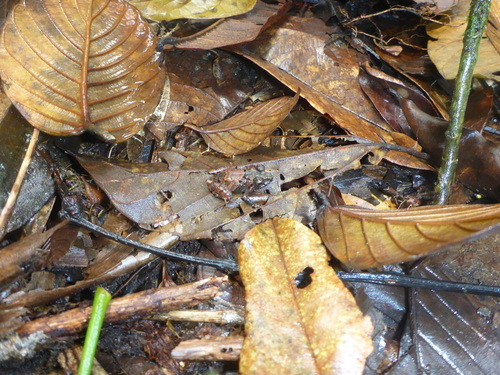
 Jatun Sacha Rain Frog
Pristimantis kichwarum

Chirping Robber Frog
Pristimantis conspicillatus

Diadem Rain Frog
Pristimantis diadematus
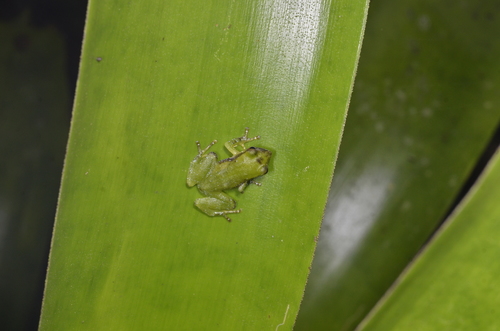
 Green Forest Rainfrog
Pristimantis omeviridis

Metallic Robber Frog
Pristimantis lanthanites
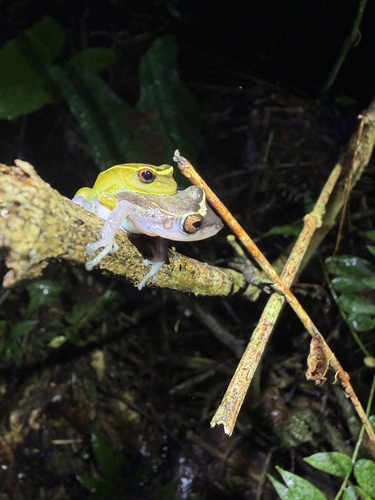
Yasuni Rain Frog
Pristimantis aureolineatus

Amazon Rain Frog
Pristimantis altamazonicus
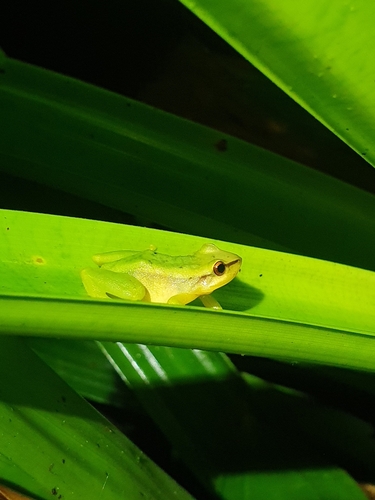
Obscure Rainfrog
Pristimantis enigmaticus
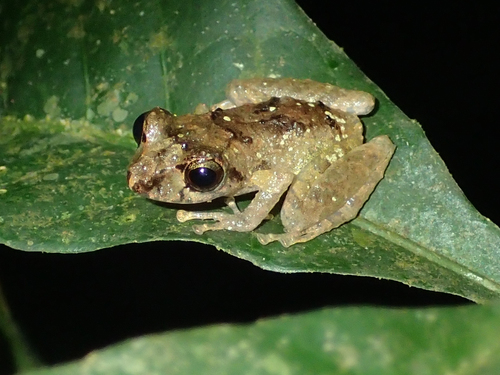
Luscombe's Rain Frog
Pristimantis luscombei

Black-banded Robber Frog
Niceforonia nigrovittata

Marti's Rain Frog
Pristimantis martiae
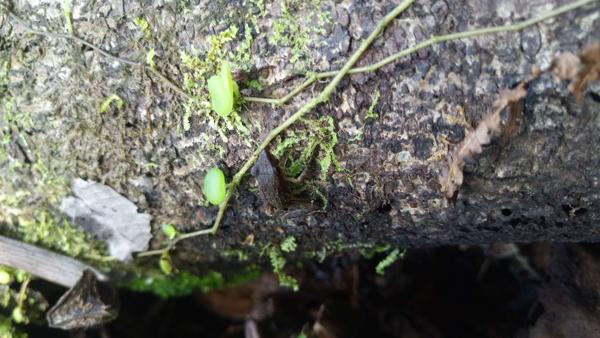
Variable Rain Frog
Pristimantis variabilis
Global Distribution
Warmer areas are where this animal is recorded most often.
Parks Where Found
| # | Park | Country | Daily sighting probability |
|---|---|---|---|
| 1 | Yasuní National Park | 🇪🇨 Ecuador | |
| 2 | Cuyabeno Wildlife Reserve | 🇪🇨 Ecuador | |
| 3 | Amacayacu National Natural Park | 🇨🇴 Colombia | |
| 4 | Manu National Park | 🇵🇪 Peru | |
| 5 | Cordillera Azul National Park | 🇵🇪 Peru | |
| 6 | Tambopata National Reserve | 🇵🇪 Peru |
Quick answers
What are the chances of seeing a Common Big-headed Frog in Yasuní National Park?
About 40% of wildlife watchers report a Common Big-headed Frog sighting in Yasuní National Park, based on 108 verified sightings from GBIF citizen-science data.
When is the best time to see Common Big-headed Frog in Yasuní National Park?
November has the highest sighting rate for Common Big-headed Frog in Yasuní National Park in our monthly data.