

riparian myotis
Myotis riparius
Silhouette: Archibald Thorburn · PhyloPic
- KingdomAnimalia (Animals)
- PhylumChordata (Chordates)
- ClassMammalia (Mammals)
- OrderChiroptera (Bats)
- FamilyVespertilionidae (Evening Bats)
- GenusMyotis (Mouse-eared Bats)
- SpeciesMyotis riparius (riparian myotis)
About the riparian myotis
The riparian myotis (Myotis riparius) is a vespertilionid bat species from South and Central America. It is a medium-sized bat compared to other South American myotis. The riparian myotis was originally described as a subspecies of velvety myotis in 1960. In 1973, it was raised to the species level.
The riparian myotis has long, woolly fur. The dorsal fur can vary geographically from a reddish to a blackish tinge. Individuals in the south tend to have a darker dorsal region, and individuals in the north tend to have a reddish dorsal region. The dorsal hairs are unicolor and the plagiopatagium is broadly attached to the foot at the base of the toes. The ears are short compared to the eyes and nostrils. The tragus is pointed and curves slightly outward. The ventral hairs are bicolored, with a dark-brown base and yellowish tips.
The riparian myotis is distributed widely throughout the neotropical region, and occurs from Honduras southward into Paraguay, northern Argentina and Uruguay. It can be found in rainforests, savannas, and open habitats throughout this region. It is most commonly seen from sea level to 2,000 meters above sea... Wikipedia →
Recent sightings of riparian myotis in Yasuní National Park
LIVEiNaturalistClosest Relatives at Yasuní National Park

 Black Myotis
Myotis nigricans

silver-tipped myotis
Myotis albescens

 Proboscis Bat
Rhynchonycteris naso

 Greater Sac-winged Bat
Saccopteryx bilineata

Greater Spear-nosed Bat
Phyllostomus hastatus

Striped Spearnosed Bat
Gardnerycteris crenulatum

Fischer's little fruit bat
Rhinophylla fischerae

chestnut short-tailed bat
Carollia castanea

 Dark Fruit-eating Bat
Artibeus obscurus
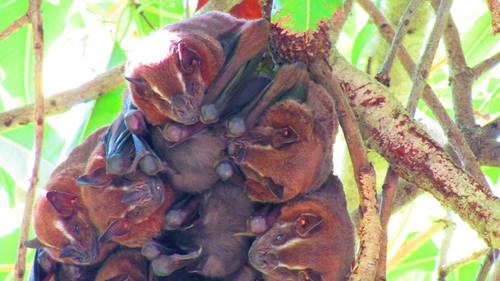
Great Fruit-eating Bat
Artibeus lituratus

Bidentate Yellow-eared Bat
Vampyriscus bidens

Northern Little Yellow-eared Bat
Vampyressa thyone
Global Distribution
Warmer areas are where this animal is recorded most often.
Parks Where Found
| # | Park | Country | Daily sighting probability |
|---|---|---|---|
| 1 | Yasuní National Park | 🇪🇨 Ecuador | |
| 2 | Soberanía National Park | 🇵🇦 Panama | |
| 3 | Cuyabeno Wildlife Reserve | 🇪🇨 Ecuador |