

Gray Toad
Rhinella poeppigii
Silhouette: Dennis C. Murphy, after http://bit.ly/4q6IESe · PhyloPic
- KingdomAnimalia (Animals)
- PhylumChordata (Chordates)
- ClassAmphibia (Amphibians)
- OrderAnura (Frogs and Toads)
- FamilyBufonidae (True Toads)
- GenusRhinella (Beaked Toads)
- SpeciesRhinella poeppigii (Gray Toad)
About the Gray Toad
Rhinella poeppigii (common names: gray toad, Poepiggi's toad) is a species of toad in the family Bufonidae that is known from the eastern Andean slopes of Ecuador, Peru, and Bolivia, as well as from Serranía de Sira in Amazonian Peru. Its distinctiveness from Rhinella marina has been debated, but it is currently accepted as a valid species. It is named after Eduard Friedrich Poeppig, German botanist and naturalist who made scientific expeditions to South America.
Rhinella poeppigii resembles Rhinella marina but is smaller. Males measure 81–111 mm (3.2–4.4 in) and females 122–128 mm (4.8–5.0 in) in snout–vent length. They are grayish brown in colour and with rough, tuberculate skin. Belly has lighter colour and lacks markings, or has pale markings only.
Natural habitats of Rhinella poeppigii are cloud forests on the Andean slopes, and tropical moist forest in the Amazonian foothills. It is typically found near streams and standing water. Its altitudinal range is 260–1,800 m (850–5,910 ft) asl.
There are no threats to this reasonably abundant species. It is also present in many protected areas. Wikipedia →
Recent sightings of Gray Toad in Amboró National Park
LIVEiNaturalistClosest Relatives at Amboró National Park
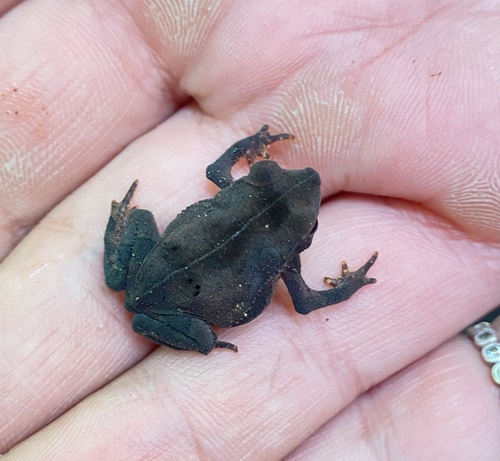
 Rhinella stanlaii

Eastern Cane Toad
Rhinella marina

Cururu Toad
Rhinella diptycha

Argentine Toad
Rhinella arenarum

 Spot-legged Poison Frog
Ameerega picta

 Salta Tree Frog
Boana marianitae

 Painted Antnest Frog
Lithodytes lineatus

Sara Tree Frog
Boana steinbachi

 Pristimantis koehleri

Rioja Tree Frog
Boana riojana

Fuscous-blotched Snouted Tree Frog
Scinax fuscovarius

 Pristimantis samaipatae
Global Distribution
Warmer areas are where this animal is recorded most often.
Parks Where Found
| # | Park | Country | Daily sighting probability |
|---|---|---|---|
| 1 | Podocarpus National Park | 🇪🇨 Ecuador | |
| 2 | Amboró National Park | 🇧🇴 Bolivia | |
| 3 | Madidi National Park | 🇧🇴 Bolivia |