Biebrza National Park
🇵🇱 Poland
🐦 Biebrza's Premier Crane MigrationBiebrza National Park lies in north‑eastern Poland and protects a mosaic of wetlands, river valleys and temperate forest. The landscape is dominated by expansive peat bogs, reed beds and scattered woodlands that flood in spring and dry into grassy meadows in summer.
53.310° N 22.554° E
Wildlife
⭐ Iconic Species
 ★
★  Common Crane
Grus grus
 ★
★  Western Marsh-Harrier
Circus aeruginosus
 ★
★  Eurasian Moose
Alces alces
📊 Most Spotted

 Mallard
Anas platyrhynchos

 European Starling
Sturnus vulgaris

 Northern Lapwing
Vanellus vanellus

 Hooded Crow
Corvus cornix

 Chaffinch
Fringilla coelebs

 Greylag Goose
Anser anser

 Reed Bunting
Emberiza schoeniclus

 Yellowhammer
Emberiza citrinella

 Western Roe Deer
Capreolus capreolus

 Barn Swallow
Hirundo rustica

 Eurasian Magpie
Pica pica

 Grey Heron
Ardea cinerea
⭐ Iconic Species
📊 Most Spotted
Western Roe Deer
Capreolus capreolus

 Red Fox
Vulpes vulpes

 Brown Hare
Lepus europaeus

 Eurasian Red Squirrel
Sciurus vulgaris

 Eurasian Beaver
Castor fiber

 European Mole
Talpa europaea

 Red Deer
Cervus elaphus

 Gray Wolf
Canis lupus

 Northern White-breasted Hedgehog
Erinaceus roumanicus

 European Badger
Meles meles

 Pine Marten
Martes martes

 Mainland Raccoon Dog
Nyctereutes procyonoides
⭐ Iconic Species
📊 Most Spotted
Mallard
Anas platyrhynchos
European Starling
Sturnus vulgaris
Northern Lapwing
Vanellus vanellus
Hooded Crow
Corvus cornix
Chaffinch
Fringilla coelebs
Greylag Goose
Anser anser
Reed Bunting
Emberiza schoeniclus
Yellowhammer
Emberiza citrinella
Barn Swallow
Hirundo rustica
Eurasian Magpie
Pica pica
Grey Heron
Ardea cinerea

 Wood Pigeon
Columba palumbus
📊 Most Spotted

 grass snake
Natrix natrix

 Sand Lizard
Lacerta agilis

 Viviparous Lizard
Zootoca vivipara

 Slow Worm
Anguis fragilis

Eastern Slow-worm
Anguis colchica

 Adder
Adder
Vipera berus
📊 Most Spotted

 European Toad
Bufo bufo

 Moor Frog
Rana arvalis

 European Fire-Bellied Toad
Bombina bombina

 European Common Frog
Rana temporaria

 Common Spadefoot
Pelobates fuscus

 Shelkovnikov's Tree Frog
Hyla orientalis

 Smooth Newt
Lissotriton vulgaris
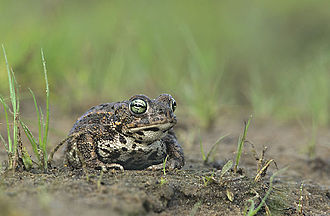
 Natterjack Toad
Epidalea calamita

 Marsh Frog
Pelophylax ridibundus

 Great Crested Newt
Triturus cristatus

Pool Frog
Pelophylax lessonae
Recent sightings in Biebrza National Park
LIVEiNaturalistAnimal Events
1Spring Crane Migration
Thousands of Common Cranes stage in Biebrza’s wetlands during their northward migration, creating spectacular dawn choruses and communal roosts.
2Moose Rutting Season
Male moose engage in dramatic rutting battles in the flooded meadows, a rare spectacle visible from observation towers.
3Marsh-Harrier Breeding Display
Aerial courtship flights and nest-building of Western Marsh-Harriers are visible over reed beds, a hallmark of Biebrza’s biodiversity.
Sighting Calendar
Average chance of spotting the park's most-spotted species, month by month
- 1Spring Crane Migration
- 2Moose Rutting Season
- 3Marsh-Harrier Breeding Display
Sighting Zones
Warmer areas are where all species together are recorded most often.
Essentials
Climate
What visitors saw
Quick answers
What animals can you see in Biebrza National Park?
The most likely sightings are Common Crane (seen by about 70% of wildlife watchers), Mallard (seen by about 70% of wildlife watchers), European Starling (seen by about 60% of wildlife watchers), Eurasian Moose (seen by about 60% of wildlife watchers), Northern Lapwing (seen by about 60% of wildlife watchers) — among 422 recorded vertebrate species, based on citizen-science data from GBIF.
When is the best time to visit Biebrza National Park for wildlife?
May has the highest combined sighting rate for the park's top species in our month-by-month GBIF data. The full sighting calendar on this page shows each species' best months.
Can you see Common Crane in Biebrza National Park?
Yes — about 70% of wildlife watchers report a Common Crane sighting in Biebrza National Park, based on 1,892 verified sightings from GBIF citizen-science data.
Can you see Western Marsh-Harrier in Biebrza National Park?
Yes — about 50% of wildlife watchers report a Western Marsh-Harrier sighting in Biebrza National Park, based on 1,228 verified sightings from GBIF citizen-science data.
Can you see Eurasian Moose in Biebrza National Park?
Yes — about 60% of wildlife watchers report a Eurasian Moose sighting in Biebrza National Park, based on 84 verified sightings from GBIF citizen-science data.
Where Wildlife Score
How good is this park for seeing wildlife?Biodiversity
GoodHow rich is the wildlife?
Sighting
Very goodHow likely to see animals?
Experience
GoodHow easy and pleasant is the visit?


_on_hemp-agrimony_(Eupatorium_cannabinum).jpg/330px-European_tree_frog_(Hyla_arborea)_on_hemp-agrimony_(Eupatorium_cannabinum).jpg)