
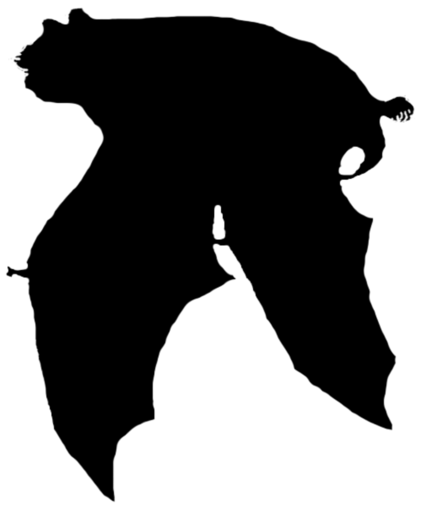
Yuma Myotis
Myotis yumanensis
Silhouette: Archibald Thorburn · PhyloPic
- KingdomAnimalia (Animals)
- PhylumChordata (Chordates)
- ClassMammalia (Mammals)
- OrderChiroptera (Bats)
- FamilyVespertilionidae (Evening Bats)
- GenusMyotis (Mouse-eared Bats)
- SpeciesMyotis yumanensis (Yuma Myotis)
About the Yuma Myotis
The Yuma myotis (Myotis yumanensis) is a species of vesper bat native to western North America. The Yuma myotis is a relatively small myotis, measuring 3.9 to 4.8 cm (1.5 to 1.9 in) in head-body length, with an average wingspan of 24 cm (9.4 in) and a weight of about 6 g (0.21 oz). The simple dental formula of a bat species in the genus Myotis is 2.1.3.33.1.3.3, for a total of 38 teeth. This dental formula applies to Myotis yumanensis as well. Individuals vary in color across their range, and can be anything from dark brown to pale tan, or even greyish. The fur is short and dull, and significantly paler, sometimes even whitish, on the underside of the animal. The tail is 2.7 to 4.0 cm (1.1 to 1.6 in) in length, with only the tip extending beyond the edge of the uropatagium. The calcar is long, extending about 60% of the distance from the ankle to the tail, and, unlike that of many other North American species of Myotis, lacks a keel. The feet are large and broad, and the ears moderately long, with a slim, straight tragus. The head has a short, broad snout, and a rounded cranium.
It is similar to Myotis occultus, but most closely resembles the little brown bat, from... Wikipedia →
Recent sightings of Yuma Myotis in Big Bend National Park
LIVEiNaturalistClosest Relatives at Big Bend National Park

 Fringed Myotis
Myotis thysanodes

 Pallid Bat
Antrozous pallidus

 Hoary Bat
Aeorestes cinereus

 Canyon Bat
Parastrellus hesperus

 Townsend's Big-eared Bat
Corynorhinus townsendii

Big Brown Bat
Eptesicus fuscus

Western Yellow Bat
Dasypterus xanthinus

 Mexican Free-tailed Bat
Tadarida brasiliensis

 Ghost-faced Bat
Mormoops megalophylla

Pocketed Free-tailed Bat
Nyctinomops femorosaccus
Global Distribution
Warmer areas are where this animal is recorded most often.
Parks Where Found
| # | Park | Country | Daily sighting probability |
|---|---|---|---|
| 1 | Yosemite National Park | 🇺🇸 United States |
More parks will be added in future updates.