



Cunningham's Skink
Egernia cunninghami
Silhouette: Kailah Thorn & Ben King · PhyloPic
- KingdomAnimalia (Animals)
- PhylumChordata (Chordates)
- ClassSquamata
- FamilyScincidae (Skinks)
- GenusEgernia (Spiny-tailed and Crevice Skinks)
- SpeciesEgernia cunninghami (Cunningham's Skink)
About the Cunningham's Skink
Cunningham's spiny-tailed skink (Egernia cunninghami), also known commonly as Cunningham's skink, is a species of large skink, a lizard in the family Scincidae. The species is native to southeastern Australia. Both the specific name, cunninghami, and the common names are in honour of English botanist and explorer Allan Cunningham.
E. cunninghami can reach up to 40 cm (16 inches) in total length (including tail), and may be confused with the blue-tongued lizards (genus Tiliqua). Cunningham's spiny-tailed skink has a distinctive keel on each scale, which gives it a slightly spiny appearance. It is extremely variable in colour, ranging from dark brown to black, with or without blotchy patches, speckles, or narrow bands.
E. cunninghami prefers to live communally in the crevices of rocky outcrops or hollow logs. Cunningham's spiny-tailed skink is primarily herbivorous. There is currently research being done on the isolated population of Cunningham's skink that inhabits the southern Mount Lofty Ranges in South Australia. This population is considered vulnerable due to the fragmented (disjunct) distribution... Wikipedia →
Recent sightings of Cunningham's Skink in Blue Mountains National Park
LIVEiNaturalistClosest Relatives at Blue Mountains National Park

 Black Crevice-skink
Egernia saxatilis

 Eastern Water Skink
Eulamprus quoyii

Southern Water Skink
Eulamprus heatwolei

Blotched Bluetongue
Tiliqua nigrolutea

Common Bluetongue
Tiliqua scincoides

Southern Weasel Skink
Saproscincus mustelinus

Copper-tailed Ctenotus
Ctenotus taeniolatus

 Pale-flecked Garden Sunskink
Lampropholis guichenoti

 Pink-Tongued Lizard
Cyclodomorphus gerrardii

Rainbow Skink
Lampropholis delicata
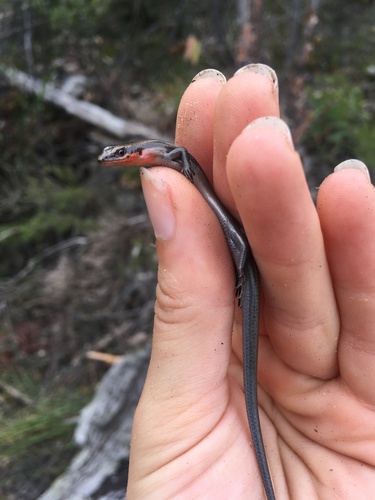
Red-throated Cool-skink
Acritoscincus platynotus

Elegant Snake-eyed Skink
Cryptoblepharus pulcher
Global Distribution
Warmer areas are where this animal is recorded most often.
Parks Where Found
| # | Park | Country | Daily sighting probability |
|---|---|---|---|
| 1 | Kosciuszko National Park | 🇦🇺 Australia | |
| 2 | Blue Mountains National Park | 🇦🇺 Australia | |
| 3 | Royal National Park | 🇦🇺 Australia |
Quick answers
What are the chances of seeing a Cunningham's Skink in Blue Mountains National Park?
About 30% of wildlife watchers report a Cunningham's Skink sighting in Blue Mountains National Park, based on 146 verified sightings from GBIF citizen-science data.
When is the best time to see Cunningham's Skink in Blue Mountains National Park?
January has the highest sighting rate for Cunningham's Skink in Blue Mountains National Park in our monthly data.