



Pale-flecked Garden Sunskink
Lampropholis guichenoti
Silhouette: Michael Scroggie · PhyloPic
- KingdomAnimalia (Animals)
- PhylumChordata (Chordates)
- ClassSquamata
- FamilyScincidae (Skinks)
- GenusLampropholis (Australian Sunskinks)
- SpeciesLampropholis guichenoti (Pale-flecked Garden Sunskink)
About the Pale-flecked Garden Sunskink
The common garden skink (Lampropholis guichenoti) is a small species of lizard in the family Scincidae. The species is endemic to Australia. Additional common names for L. guichenoti include grass skink, Guichenot's grass skink, pale-flecked garden sunskink, and penny lizard.
The specific name, guichenoti, is in honor of French zoologist Antoine Alphonse Guichenot. In Australia, L. guichenoti is often seen in suburban gardens in Adelaide, Melbourne, Perth, Sydney, Canberra and Brisbane, but also is common across most of Southern Australia, Tasmania, and some of New South Wales.
L. guichenoti can grow to a maximum length, including its tail, of 14 cm (5.5 in), but the average total length is 8–10 cm (3.1–3.9 in). The average common garden skink lives for 2–3 years. It usually has a browny black colour and may appear a dark shade of red when bathing in the sun. The lighter its colour, the more energetic it is. It has small sharp teeth which easily slice through smaller prey. Even wild individuals are very docile, and rarely bite humans when touched or picked up.
The female pale-flecked garden sunskink has a yellowish, almost orange... Wikipedia →
Recent sightings of Pale-flecked Garden Sunskink in Blue Mountains National Park
LIVEiNaturalistClosest Relatives at Blue Mountains National Park

 Rainbow Skink
Lampropholis delicata

 Eastern Water Skink
Eulamprus quoyii

Southern Water Skink
Eulamprus heatwolei

Blotched Bluetongue
Tiliqua nigrolutea

 Cunningham's Skink
Egernia cunninghami

Common Bluetongue
Tiliqua scincoides

Southern Weasel Skink
Saproscincus mustelinus

Copper-tailed Ctenotus
Ctenotus taeniolatus

Black Crevice-skink
Egernia saxatilis

 Pink-Tongued Lizard
Cyclodomorphus gerrardii
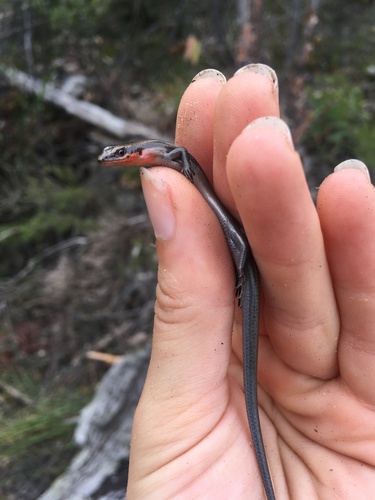
Red-throated Cool-skink
Acritoscincus platynotus

Elegant Snake-eyed Skink
Cryptoblepharus pulcher
Global Distribution
Warmer areas are where this animal is recorded most often.
Parks Where Found
| # | Park | Country | Daily sighting probability |
|---|---|---|---|
| 1 | Grampians National Park | 🇦🇺 Australia | |
| 2 | Flinders Chase | 🇦🇺 Australia | |
| 3 | Kosciuszko National Park | 🇦🇺 Australia | |
| 4 | Wilsons Promontory National Park | 🇦🇺 Australia | |
| 5 | Great Otway National Park | 🇦🇺 Australia | |
| 6 | Blue Mountains National Park | 🇦🇺 Australia | |
| 7 | Royal National Park | 🇦🇺 Australia |
Quick answers
What are the chances of seeing a Pale-flecked Garden Sunskink in Blue Mountains National Park?
About 20% of wildlife watchers report a Pale-flecked Garden Sunskink sighting in Blue Mountains National Park, based on 88 verified sightings from GBIF citizen-science data.
When is the best time to see Pale-flecked Garden Sunskink in Blue Mountains National Park?
November has the highest sighting rate for Pale-flecked Garden Sunskink in Blue Mountains National Park in our monthly data.