Parma Wallaby
Macropus parma
Silhouette: Pascal Abel · PhyloPic
- KingdomAnimalia (Animals)
- PhylumChordata (Chordates)
- ClassMammalia (Mammals)
- OrderDiprotodontia (Kangaroos, Possums, Wombats, and Allies)
- FamilyMacropodidae (Kangaroos, Wallabies and Allies)
- GenusMacropus (Grey Kangaroos)
- SpeciesMacropus parma (Parma Wallaby)
About the Parma Wallaby
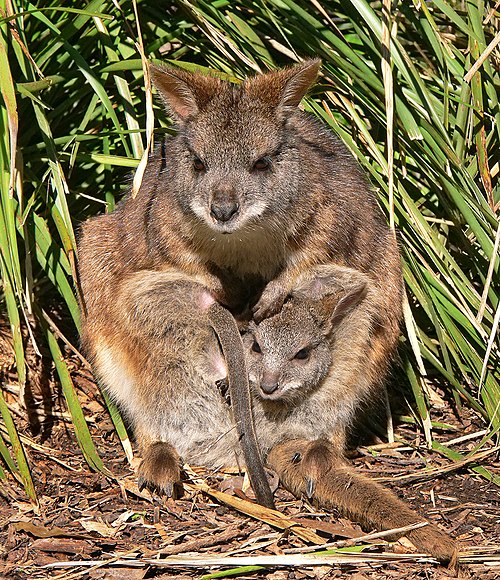
The parma wallaby (Notamacropus parma) is a small marsupial macropod mammal native to forests and densely-vegetated areas of northeastern New South Wales, Australia, close to the border with Queensland. An introduced population exists on New Zealand's Kawau Island. About the size of a stout cat, it lives mainly under thick plant cover, and is only active at night when it emerges to feed on grasses and small plants. It is the smallest of the wallabies (short, kangaroo-like marsupial mammals of the genus Notamacropus) and carries its young in a pouch, as with other marsupials. Shy and elusive, it was believed extinct until its rediscovery in the 1960s.
Parma wallabies are threatened by habitat loss, and, in addition to native predators (such as birds of prey, monitor lizards, and snakes), they are easily preyed upon by dingoes and non-native feral cats and red foxes. The parma wallaby was first described by British naturalist John Gould in about 1840. Its epithet parma (Waterhouse 1845) comes after a word from a New South Wales Aboriginal language, but the exact source word and language have not been identified.
In 2019, a reassessment of macropod taxonomy determined that... Wikipedia →
Recent sightings of Parma Wallaby in Blue Mountains National Park
LIVEiNaturalistClosest Relatives at Blue Mountains National Park

 Eastern Grey Kangaroo
Macropus giganteus

 Wallaroo
Macropus robustus

 Swamp Wallaby
Wallabia bicolor

 Red-necked Wallaby
Notamacropus rufogriseus

 Brush-tailed Rock-wallaby
Petrogale penicillata

 Common Wombat
Vombatus ursinus

 Common Brushtail
Trichosurus vulpecula

 Common Ringtail Possum
Pseudocheirus peregrinus

 Greater Glider
Petauroides volans

 Koala
Phascolarctos cinereus

 Sugar Glider
Petaurus breviceps

 Eastern Pygmy Possum
Cercartetus nanus
Global Distribution
Warmer areas are where this animal is recorded most often.
Parks Where Found
| # | Park | Country | Daily sighting probability |
|---|---|---|---|
| 1 | Blue Mountains National Park | 🇦🇺 Australia |
More parks will be added in future updates.