


California King Snake
Lampropeltis californiae
- KingdomAnimalia (Animals)
- PhylumChordata (Chordates)
- ClassSquamata
- FamilyColubridae (Colubrid Snakes)
- GenusLampropeltis (Kingsnakes and Milk Snakes)
- SpeciesLampropeltis californiae (California King Snake)
About the California King Snake
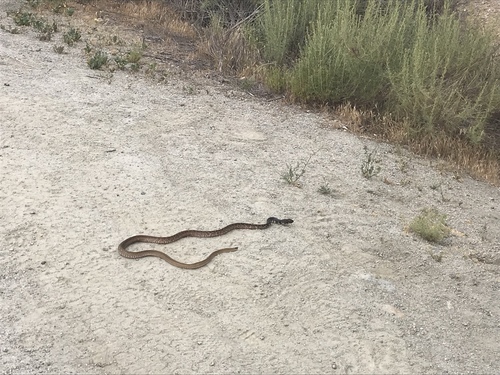
The California kingsnake (Lampropeltis californiae) is a nonvenomous colubrid snake endemic to the western United States and northern Mexico, and is found in a variety of habitats. Due to ease of care and a wide range of color variations, the California kingsnake is one of the most popular snakes in captivity.
Wild California kingsnakes are typically encountered at a length of 2.5–3.5 feet (76–107 cm), though they can grow larger; California kingsnakes on Isla Ángel de la Guarda, Baja California, Mexico, have been documented growing to 78 inches (2 m). A wide range of color morphs exist in the wild; they are usually found with alternating dark and light bands ranging in color from black and white to brown and cream. Some populations may have longitudinal stripes instead of bands. Most California kingsnakes live to be around ten to fifteen years old, even surpassing twenty if well cared for in captivity.
California kingsnakes stripes and bands are essential to their survival as the patterns camouflage the snakes body to hide from predators. Their predators include hawks, eagles, coyotes, skunks, foxes, bobcats, and other kingsnakes.
The California... Wikipedia →


Global Distribution
Where this species is recorded worldwide. Restricted to human observations from 2019 onwards — the same kind of record and the same period the probabilities on this page are built from, so collar-tracking studies, camera-trap arrays and museum specimens are excluded. Around Santa Rosa that removes 5,924 GPS fixes from a handful of tagged jaguars.
where this species is recorded (GBIF density — it tracks where observers go, not how likely a sighting is) · parks where it occurs — tap a pin for the sighting probability there
Parks Where Found
| # | Park | Country | Daily sighting probability |
|---|---|---|---|
| 1 | Death Valley National Park | 🇺🇸 United States | |
| 2 | Zion National Park | 🇺🇸 United States | |
| 3 | Sequoia and Kings Canyon National Parks | 🇺🇸 United States | |
| 4 | Grand Canyon National Park | 🇺🇸 United States | |
| 5 | Saguaro National Park | 🇺🇸 United States | |
| 6 | Joshua Tree National Park | 🇺🇸 United States | |
| 7 | Channel Islands National Park | 🇺🇸 United States | |
| 8 | Cabo Pulmo National Park | 🇲🇽 Mexico | |
| 9 | El Vizcaíno Biosphere Reserve | 🇲🇽 Mexico | |
| 10 | Redwood National Park | 🇺🇸 United States | |
| 11 | Yosemite National Park | 🇺🇸 United States | |
| 12 | Table Mountain National Park | 🇿🇦 South Africa |