


Gray Whale
Eschrichtius robustus
- KingdomAnimalia (Animals)
- PhylumChordata (Chordates)
- ClassMammalia (Mammals)
- OrderCetacea
- FamilyEschrichtiidae (Grey Whales)
- GenusEschrichtius (Grey whales)
- SpeciesEschrichtius robustus (Gray Whale)
About the Gray Whale
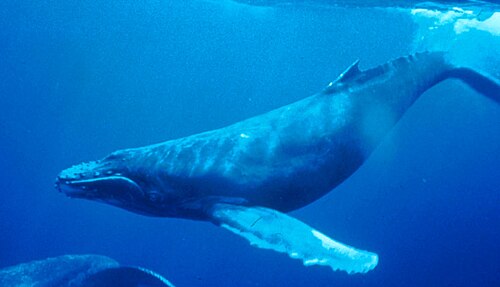
The gray whale (Eschrichtius robustus), also known as the grey whale, is a baleen whale that migrates between feeding and breeding grounds yearly. It reaches a length of 14.9–15.2 m (49–50 ft), a weight of up to 41 to 45 tonnes (45 to 50 short tons; 40 to 44 long tons) and lives between 55 and 70 years, although one female was estimated to be 75–80 years of age. One of the longest-living gray whales currently is a female, first sighted in 1977, and estimated to be 53–55 years old as of 2024. The common name of the whale comes from the gray patches and white mottling on its dark skin. Gray whales were once called "devil fish" because of their fighting behavior when hunted, with mothers accompanied by their calves fighting viciously to protect their young if they are attacked. The gray whale is the sole living species in the genus Eschrichtius. It is the sole living genus in the family Eschrichtiidae; however, some recent studies classify it as a member of the family Balaenopteridae. This mammal is descended from filter-feeding whales that appeared during the Neogene.
The gray whale is distributed in a Northeast Pacific (North American), and an endangered Northwest Pacific (Asian), population. North Atlantic populations were extirpated (perhaps by whaling) on the European coast in the 12th to 14th centuries, and on the American and African Atlantic coasts around the late 17th to early 18th centuries. However, in the 2010s and 2020s there have been rare sightings of gray whales in the North Atlantic, Mediterranean, and even off South Atlantic coasts. Wikipedia →
Closest Relatives at Cabo Pulmo National Park


Global Distribution
Where this species is recorded worldwide. Restricted to human observations from 2019 onwards — the same kind of record and the same period the probabilities on this page are built from, so collar-tracking studies, camera-trap arrays and museum specimens are excluded. Around Santa Rosa that removes 5,924 GPS fixes from a handful of tagged jaguars.
where this species is recorded (GBIF density — it tracks where observers go, not how likely a sighting is) · parks where it occurs — tap a pin for the sighting probability there
Parks Where Found
| # | Park | Country | Daily sighting probability |
|---|---|---|---|
| 1 | El Vizcaíno Biosphere Reserve | 🇲🇽 Mexico | |
| 2 | Cabo Pulmo National Park | 🇲🇽 Mexico | |
| 3 | Pacific Rim National Park Reserve | 🇨🇦 Canada | |
| 4 | Redwood National Park | 🇺🇸 United States | |
| 5 | Channel Islands National Park | 🇺🇸 United States | |
| 6 | Olympic National Park | 🇺🇸 United States | |
| 7 | Great Bear Rainforest | 🇨🇦 Canada | |
| 8 | Kenai Fjords National Park | 🇺🇸 United States | |
| 9 | Bahía de Loreto National Park | 🇲🇽 Mexico |
Quick answers
What are the chances of seeing a Gray Whale in Cabo Pulmo National Park?
About 20% of wildlife watchers report a Gray Whale sighting in Cabo Pulmo National Park, based on 7 verified sightings from GBIF citizen-science data.
When is the best time to see Gray Whale in Cabo Pulmo National Park?
February has the highest sighting rate for Gray Whale in Cabo Pulmo National Park in our monthly data.