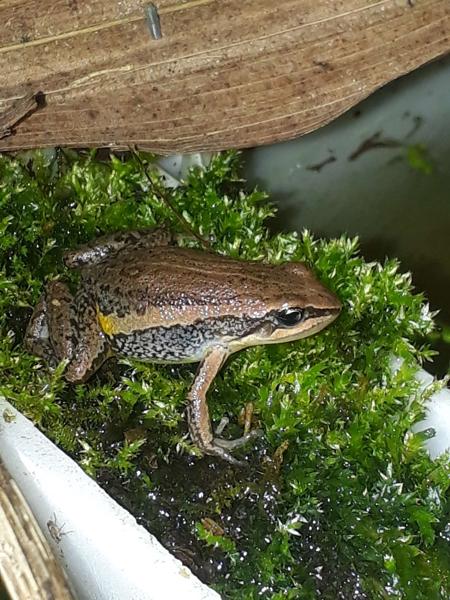
Boulenger's Rocket Frog
Hyloxalus vertebralis
Silhouette: Steven Traver · PhyloPic
- KingdomAnimalia (Animals)
- PhylumChordata (Chordates)
- ClassAmphibia (Amphibians)
- OrderAnura (Frogs and Toads)
- FamilyDendrobatidae (Poison Dart Frogs)
- GenusHyloxalus
- SpeciesHyloxalus vertebralis (Boulenger's Rocket Frog)
About the Boulenger's Rocket Frog
Hyloxalus vertebralis is a species of frog in the family Dendrobatidae. It is endemic to southern Ecuador and occurs in the inter-Andean valleys and on the western slopes of the Andes. The adult male frog measures 14.1–17.5 mm in snout-vent length and the adult female frog 17–20.2 long. This frog has ventral marks that are darker in the male than in the female. The testicles are white in color.
This frog lives in cloud forests in valleys high in the Andes mountains. It also lives in open areas where livestock graze, in parks, and in human-made gardens. This frog is always observed near puddles or streams. The frogs perch on plants.3 to 3 meters above the ground. This frog has been observed between 1770 and 3500 meters above sea level.
The frog's known range includes several protected parks, for example Parque Nacional Cajas, Parque Nacional Río Negro Sopladora, Páramo, Matorral Interandino, Bosque Montano Oriental, and Bosque Montano Occidental. The female frog lays eggs on the ground. The male frog carries the tadpoles on his back to streams. The IUCN classifies this frog as vulnerable to extinction. During the 1990s... Wikipedia →
Recent sightings of Boulenger's Rocket Frog in Cajas National Park
LIVEiNaturalistClosest Relatives at Cajas National Park




Global Distribution
Warmer areas are where this animal is recorded most often.
Parks Where Found
| # | Park | Country | Daily sighting probability |
|---|---|---|---|
| 1 | Cajas National Park | 🇪🇨 Ecuador |
More parks will be added in future updates.