
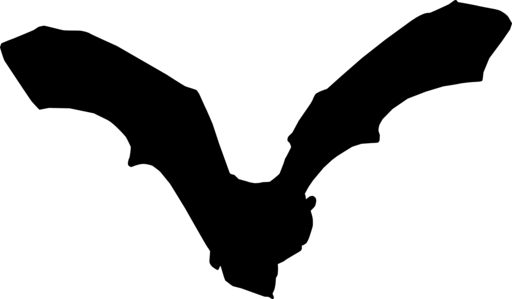
Van Gelder's bat
Bauerus dubiaquercus
Silhouette: Margot Michaud · PhyloPic
- KingdomAnimalia (Animals)
- PhylumChordata (Chordates)
- ClassMammalia (Mammals)
- OrderChiroptera (Bats)
- FamilyVespertilionidae (Evening Bats)
- GenusBauerus
- SpeciesBauerus dubiaquercus (Van Gelder's bat)
About the Van Gelder's bat
Van Gelder's bat or Van Gelder's big-eared bat (Bauerus dubiaquercus) is a species of vesper bat in the family Vespertilionidae. It is found in Belize, Costa Rica, Honduras, and Mexico. The species is monotypic within its genus. It is part of the tribe Antrozoini within the subfamily Vespertilioninae and is related to the pallid bat (Antrozous pallidus). The bat is found in forest habitat from sea level to elevations as high as 2300 m, although not usually above 1300 m, and is insectivorous and crepuscular. It apparently has a fragmented distribution, and is threatened by deforestation.
The bat was discovered by Richard Van Gelder, then curator of mammalogy at the American Museum of Natural History. The bat was collected on the AMNH Puritan Expedition to Baja California in 1957 on the Tres Maria Islands (south of Baja) by Richard Zweifel (expedition herpetologist) and Oakes Plimpton (expedition assistant). Van Gelder dubbed the bat "dubiaquercus" in honor of the collectors: dubia means "doubt" in Latin, as zweifel does in German; quercus is Latin for "oak".
Van Gelder's bat is found in Central America where its range includes Belize... Wikipedia →
Recent sightings of Van Gelder's bat in Calakmul Biosphere Reserve
LIVEiNaturalistClosest Relatives at Calakmul Biosphere Reserve

 Yucatán Yellow Bat
Rhogeessa aenea
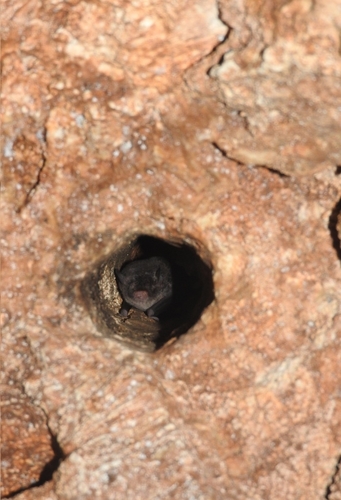
 Northern Hairy-legged Myotis
Myotis pilosatibialis

 Greater Sac-winged Bat
Saccopteryx bilineata

Espirito Santo Free-tailed Bat
Nyctinomops laticaudatus

 Jamaican Fruit-eating Bat
Artibeus jamaicensis

 Big-eared Woolly Bat
Chrotopterus auritus

Pygmy Fruit Eating Bat
Artibeus phaeotis
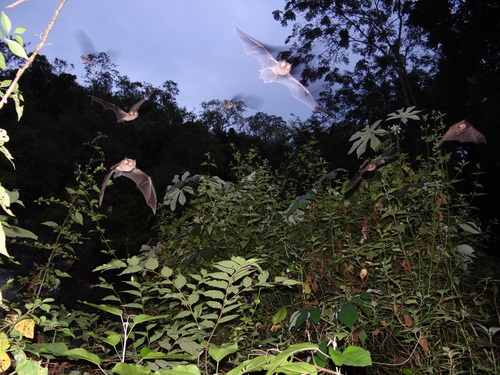
Mesoamerican Common Mustached Bat
Pteronotus mesoamericanus

 wrinkle-faced bat
Centurio senex
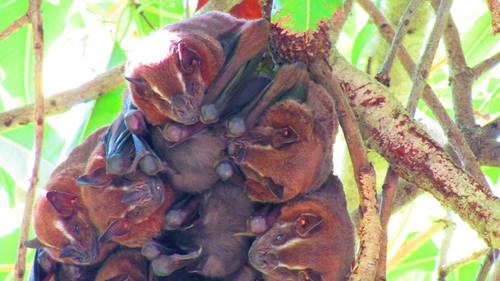
Great Fruit-eating Bat
Artibeus lituratus

Cozumelan Golden Bat
Mimon cozumelae

Vampire Bat
Desmodus rotundus
Global Distribution
Warmer areas are where this animal is recorded most often.
Parks Where Found
| # | Park | Country | Daily sighting probability |
|---|---|---|---|
| 1 | Calakmul Biosphere Reserve | 🇲🇽 Mexico |
More parks will be added in future updates.