



Yucatán Squirrel
Sciurus yucatanensis
Silhouette: Ferran Sayol · PhyloPic
- KingdomAnimalia (Animals)
- PhylumChordata (Chordates)
- ClassMammalia (Mammals)
- OrderRodentia (Rodents)
- FamilySciuridae (Squirrels)
- GenusSciurus (Tree Squirrels)
- SpeciesSciurus yucatanensis (Yucatán Squirrel)
About the Yucatán Squirrel
The Yucatan squirrel (Sciurus yucatanensis), originally named the Yucatan gray squirrel, also once named the Campeche squirrel, is a tree squirrel in the genus Sciurus found in the Yucatán Peninsula and adjacent areas. It is native to northern Belize, northeastern Guatemala, and southeast Mexico.
The Yucatan squirrel lives in dry deciduous and evergreen forests, semiarid pine-oak woodlands, and secondary forest growing in formerly logged areas. They are found in lowlands below an altitude of 750 metres (2,460 ft). They are active during the day and rest during the night, spending most of their time in trees. They are most active in the early morning, but may be seen sunning on a branch later in the day.
Their dreys (or nests), to be found in branches high up in the trees, are built from leaves and twigs. Their food consists of soft fruit, nuts and seeds, whilst Reid in 2009 concluded that their main diet consists of flowers, buds, and shoots. Females generally give birth to two or three young during the April to August dry season.
They are predated by birds of prey, wild cats and dogs, procyonids, primates, and snakes. The Yucatan squirrel... Wikipedia →
Recent sightings of Yucatán Squirrel in Calakmul Biosphere Reserve
LIVEiNaturalistClosest Relatives at Calakmul Biosphere Reserve

 Deppe's Squirrel
Sciurus deppei

 Central American Agouti
Dasyprocta punctata

 Hispid Pocket Gopher
Orthogeomys hispidus

 Hatt's Vesper Rat
Otonyctomys hatti

Big-eared Climbing Rat
Ototylomys phyllotis

Gaumer's Spiny Pocket Mouse
Heteromys gaumeri

 Spotted Paca
Cuniculus paca
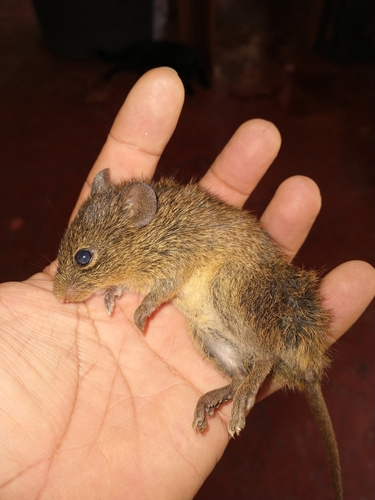
 Toltec Cotton Rat
Sigmodon toltecus

 Mexican Hairy Dwarf Porcupine
Sphiggurus mexicanus

Sumichrast's Vesper Rat
Nyctomys sumichrasti
Global Distribution
Warmer areas are where this animal is recorded most often.
Parks Where Found
| # | Park | Country | Daily sighting probability |
|---|---|---|---|
| 1 | Tikal National Park | 🇬🇹 Guatemala | |
| 2 | Biotopo Cerro Cahuí | 🇬🇹 Guatemala | |
| 3 | Calakmul Biosphere Reserve | 🇲🇽 Mexico | |
| 4 | Sian Ka'an Biosphere Reserve | 🇲🇽 Mexico | |
| 5 | Montes Azules Biosphere Reserve | 🇲🇽 Mexico | |
| 6 | Ría Lagartos Biosphere Reserve | 🇲🇽 Mexico | |
| 7 | Cañón del Sumidero National Park | 🇲🇽 Mexico |
Quick answers
What are the chances of seeing a Yucatán Squirrel in Calakmul Biosphere Reserve?
About 30% of wildlife watchers report a Yucatán Squirrel sighting in Calakmul Biosphere Reserve, based on 61 verified sightings from GBIF citizen-science data.
When is the best time to see Yucatán Squirrel in Calakmul Biosphere Reserve?
January has the highest sighting rate for Yucatán Squirrel in Calakmul Biosphere Reserve in our monthly data.