


Olive Sea Snake
Aipysurus laevis
- KingdomAnimalia (Animals)
- PhylumChordata (Chordates)
- ClassSquamata
- FamilyElapidae (Elapid Snakes)
- GenusAipysurus (Aipysurus Sea Snakes)
- SpeciesAipysurus laevis (Olive Sea Snake)
About the Olive Sea Snake
Aipysurus laevis is a species of venomous sea snake found in the Indo-Pacific. Its common names include golden sea snake, olive sea snake, and olive-brown sea snake. A species was first described by Bernard Germain de Lacépède in 1804, assigning it to a new genus Aipysurus.
A name published by John Edward Gray, Aipysurus jukesii, is regarded as a synonym for this species. Currently, two subspecies are recognized, including the nominotypical subspecies described below. The subspecies A. l. pooleorum has been elevated to full species status as A. pooleorum.
Aipysurus derives from the Greek aipys "high and steep" and oura "tail"; the term loosely meaning "high tail" was coined to denote "the laterally compressed tail that is higher than the depth of the body". Laevis, a variant form of Latin levis, means "smooth". The specific name, pooleorum (masculine, genitive plural), is in honor of Australian fishermen "W. and W. Poole" who collected the holotype.
It is a common, widespread species that lives on coral reefs, including the Great Barrier Reef. It can be found in the tropical eastern Indian Ocean and the western Pacific Ocean... Wikipedia →
Closest Relatives at Cape Range
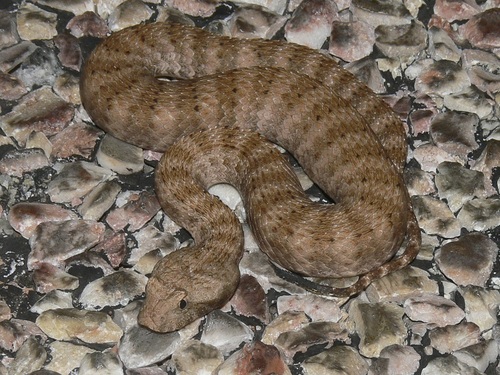
Pilbara Death Adder
Acanthophis wellsi

Mulga Snake
Pseudechis australis

Orange-naped Snake
Furina ornata
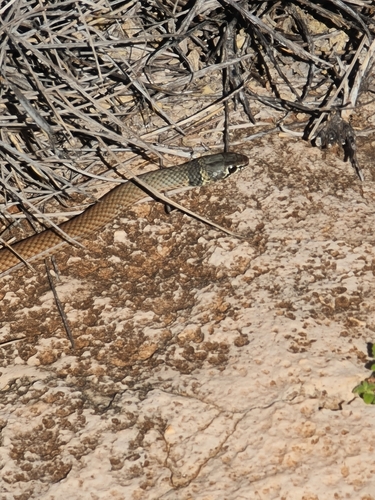
Black-necked Whipsnake
Demansia calodera

Western Brown Snake
Pseudonaja mengdeni

Desert Banded Snake
Simoselaps bertholdi
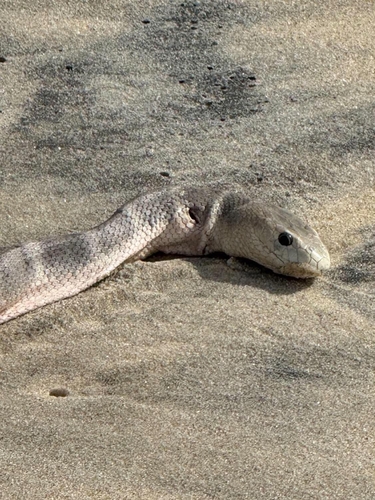
Spotted Sea Snake
Hydrophis ocellatus
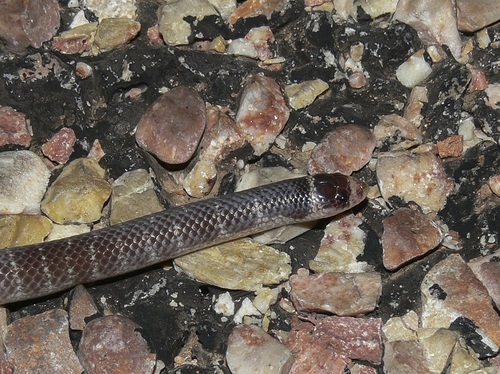
North-western Shovel-nosed Snake
Brachyurophis approximans
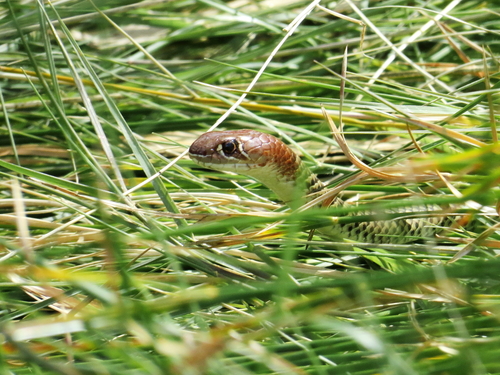
Reticulated Whipsnake
Demansia reticulata
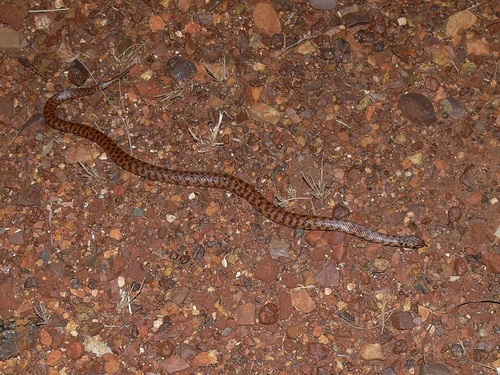
Rosen's Snake
Suta fasciata
Global Distribution
Where this species is recorded worldwide. Restricted to human observations from 2019 onwards — the same kind of record and the same period the probabilities on this page are built from, so collar-tracking studies, camera-trap arrays and museum specimens are excluded. Around Santa Rosa that removes 5,924 GPS fixes from a handful of tagged jaguars.
where this species is recorded (GBIF density — it tracks where observers go, not how likely a sighting is) · parks where it occurs — tap a pin for the sighting probability there
Parks Where Found
| # | Park | Country | Daily sighting probability |
|---|---|---|---|
| 1 | Ningaloo Marine Park | 🇦🇺 Australia | |
| 2 | Cape Range | 🇦🇺 Australia | |
| 3 | Daintree National Park | 🇦🇺 Australia |