Cat Tien National Park
🇻🇳 Vietnam
🐒 Gibbon Song at First LightCat Tien National Park is a protected lowland reserve in southern Vietnam, defined by sweeping tropical dry forest and dense bamboo groves. Unlike water-logged southern deltas, this terrain experiences distinct seasonal dry spells that shape a resilient canopy of deciduous trees and ancient timber stands.
11.677° N 107.343° E
Wildlife
⭐ Iconic Species
 ★
★  Southern Yellow-cheeked Gibbon
Nomascus gabriellae
 ★
★  Black-shanked Douc Langur
Pygathrix nigripes
 ★
★  Green Peafowl
Pavo muticus
 ★
★  Sunda Pangolin
Manis javanica
📊 Most Spotted

 Vietnamese Blue Crested Lizard
Calotes bachae

 White-rumped Shama
Copsychus malabaricus

 Ashy Drongo
Dicrurus leucophaeus

 Greater Racket-tailed Drongo
Dicrurus paradiseus
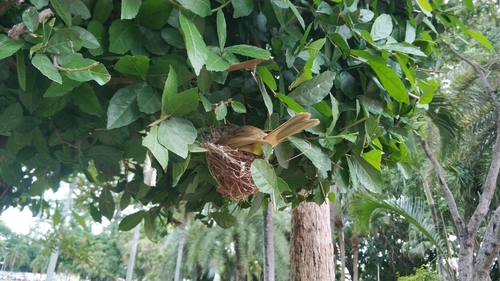
 Ayeyarwady Bulbul
Pycnonotus blanfordi

Stripe-throated Bulbul
Pycnonotus finlaysoni

 Siamese Crocodile
Crocodylus siamensis

 Tokay Gecko
Gekko gecko

 White-nest Swiftlet
Aerodramus fuciphagus

 Spot-legged Tree Frog
Polypedates megacephalus

 Sambar
Rusa unicolor

 Zebra Dove
Geopelia striata
⭐ Iconic Species
★ Southern Yellow-cheeked Gibbon
Nomascus gabriellae
★ Black-shanked Douc Langur
Pygathrix nigripes
★ Sunda Pangolin
Manis javanica
📊 Most Spotted
Sambar
Rusa unicolor

 Pallas's Squirrel
Callosciurus erythraeus

 Indian Muntjac
Muntiacus muntjak

 Northern Treeshrew
Tupaia belangeri

 Crab-eating Macaque
Macaca fascicularis

 Cambodian Striped Squirrel
Tamiops rodolphii

 Northern Smooth-tailed Treeshrew
Dendrogale murina

 Indochinese Ground Squirrel
Menetes berdmorei

 Northern Pig-tailed Macaque
Macaca leonina

 Common Palm Civet
Paradoxurus hermaphroditus

Grand Leaf-nosed Bat
Hipposideros grandis
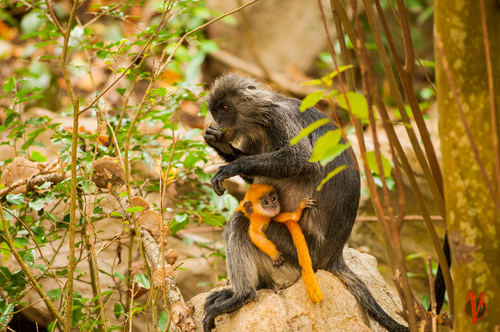
 Annamese Langur
Trachypithecus margarita
⭐ Iconic Species
📊 Most Spotted
White-rumped Shama
Copsychus malabaricus
Ashy Drongo
Dicrurus leucophaeus
Greater Racket-tailed Drongo
Dicrurus paradiseus
Ayeyarwady Bulbul
Pycnonotus blanfordi
Stripe-throated Bulbul
Pycnonotus finlaysoni
White-nest Swiftlet
Aerodramus fuciphagus
Zebra Dove
Geopelia striata

 Greater Coucal
Centropus sinensis

Bronzed Drongo
Dicrurus aeneus

 Black-hooded Oriole
Oriolus xanthornus

 Dollarbird
Eurystomus orientalis

 Oriental Pied Hornbill
Anthracoceros albirostris
📊 Most Spotted
Vietnamese Blue Crested Lizard
Calotes bachae
Siamese Crocodile
Crocodylus siamensis
Tokay Gecko
Gekko gecko

 Clouded Monitor
Varanus nebulosus

 Ruby-eyed Green Pitviper
Craspedocephalus rubeus

 Cattien Bent-toed Gecko
Cyrtodactylus cattienensis

 Spotted Forest Skink
Sphenomorphus maculatus

 Flat-tailed House Gecko
Hemidactylus platyurus

 Crowned Pricklenape
Acanthosaura coronata

 Many-lined Sun-skink
Eutropis multifasciata

Allapalli Grass Skink
Eutropis macularia

 Common Mock Viper
Psammodynastes pulverulentus
📊 Most Spotted
Spot-legged Tree Frog
Polypedates megacephalus

 Common Indian Toad
Duttaphrynus melanostictus

 Asian Painted Frog
Kaloula pulchra

 Round-tongued Floating Frog
Occidozyga martensii

 Mukhlesur's Narrow-mouthed Frog
Microhyla mukhlesuri

Mada Paddy Frog
Micryletta erythropoda

Spotted Narrow-mouthed Frog
Kalophrynus interlineatus

Alpine Cricket Frog
Fejervarya limnocharis

Vietnamese Bug-eyed Frog
Theloderma vietnamense

Burmese Squat Frog
Glyphoglossus guttulatus
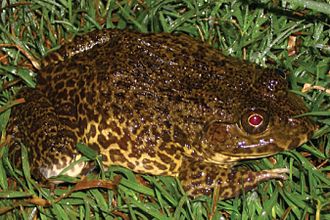
Asian Peters Frog
Hoplobatrachus rugulosus

Arcuate-spotted Pygmy Frog
Microhyla heymonsi
Recent sightings in Cat Tien National Park
LIVEiNaturalistAnimal Events
1Gibbon Dawn Chorus
The haunting, melodic calls of gibbons echo through the forest at dawn as troops mark territory and communicate, peaking during the dry season.
2Douc Langur Foraging Flocks
Black-shanked douc langurs move in large, colorful troops through the canopy, feeding on leaves and fruits, especially during fruiting seasons.
3Siamese Crocodile Nesting Season
Siamese crocodiles nest in riverbanks and marshes, with hatchlings emerging in the dry season, offering rare sightings for guided night patrols.
Sighting Calendar
Average chance of spotting the park's most-spotted species, month by month
- 1Gibbon Dawn Chorus
- 2Douc Langur Foraging Flocks
- 3Siamese Crocodile Nesting Season
Sighting Zones
Warmer areas are where all species together are recorded most often.
Essentials
Climate
What visitors saw
We saw a total of 23 mammal species, including a reintroduced Pangolin and two Gibbon species.
The first woodpecker we saw was a pair of Greater Flamebacks.
Birds gather there too. fruit Press enter or click to view image in full size tree height over 4 meters I still feel thrilled just writing this — it was the day I saw my lifer Asian Fairy-bluebird, both male and female. (With some luck, you might spot a Muntjac there, especially when fruits have fallen to the ground.
Quick answers
What animals can you see in Cat Tien National Park?
The most likely sightings are Southern Yellow-cheeked Gibbon (seen by about 70% of wildlife watchers), Vietnamese Blue Crested Lizard (seen by about 70% of wildlife watchers), Black-shanked Douc Langur (seen by about 70% of wildlife watchers), White-rumped Shama (seen by about 70% of wildlife watchers), Ashy Drongo (seen by about 70% of wildlife watchers) — among 1040 recorded vertebrate species, based on citizen-science data from GBIF.
When is the best time to visit Cat Tien National Park for wildlife?
April has the highest combined sighting rate for the park's top species in our month-by-month GBIF data. The full sighting calendar on this page shows each species' best months.
Can you see Southern Yellow-cheeked Gibbon in Cat Tien National Park?
Yes — about 70% of wildlife watchers report a Southern Yellow-cheeked Gibbon sighting in Cat Tien National Park, based on 255 verified sightings from GBIF citizen-science data.
Can you see Black-shanked Douc Langur in Cat Tien National Park?
Yes — about 70% of wildlife watchers report a Black-shanked Douc Langur sighting in Cat Tien National Park, based on 199 verified sightings from GBIF citizen-science data.
Can you see Green Peafowl in Cat Tien National Park?
Yes — about 40% of wildlife watchers report a Green Peafowl sighting in Cat Tien National Park, based on 632 verified sightings from GBIF citizen-science data.
Can you see Sunda Pangolin in Cat Tien National Park?
It's possible but not guaranteed: about 10% of wildlife watchers report a Sunda Pangolin sighting in Cat Tien National Park, based on 5 verified sightings from GBIF citizen-science data. Sightings take luck and time in the field.
Where Wildlife Score
How good is this park for seeing wildlife?Biodiversity
ExcellentHow rich is the wildlife?
Sighting
ExcellentHow likely to see animals?
Experience
GoodHow easy and pleasant is the visit?


