Kaeng Krachan National Park
🇹🇭 Thailand
🐒 Dusky Leaf-monkey Rainforest HavenKaeng Krachan National Park lies in western Thailand, protecting a stretch of tropical rainforest that climbs from river valleys to mist‑clad hills. The dense canopy shelters the Oriental Pied Hornbill, which perches on emergent trees, and the Dusky Leaf‑monkey, which swings through mid‑level foliage.
12.928° N 99.382° E
Wildlife
⭐ Iconic Species
 ★
★  Dusky Leaf-monkey
Trachypithecus obscurus
 ★
★  Lar Gibbon
Hylobates lar
 ★
★  Great Hornbill
Buceros bicornis
📊 Most Spotted

 Oriental Pied Hornbill
Anthracoceros albirostris

 White-rumped Shama
Copsychus malabaricus

 Black-naped Monarch
Hypothymis azurea
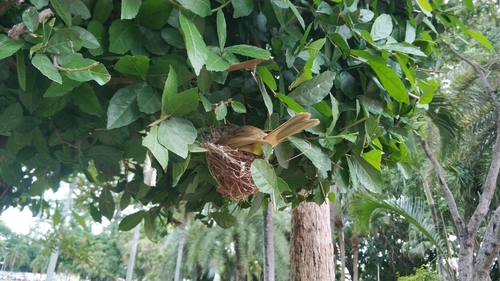
 Ayeyarwady Bulbul
Pycnonotus blanfordi

 Red Junglefowl
Gallus gallus

 Greater Racket-tailed Drongo
Dicrurus paradiseus

Stripe-throated Bulbul
Pycnonotus finlaysoni

 Ashy Drongo
Dicrurus leucophaeus

 Pearl-necked Dove
Spilopelia chinensis

Asian Emerald Dove
Chalcophaps indica

 Himalayan Striped Squirrel
Tamiops mcclellandii

Hair-crested Drongo
Dicrurus hottentottus
⭐ Iconic Species
📊 Most Spotted
Himalayan Striped Squirrel
Tamiops mcclellandii

 Gray-bellied Squirrel
Callosciurus caniceps

 Sun Bear
Helarctos malayanus

 Lesser Oriental Chevrotain
Tragulus kanchil

 Northern Treeshrew
Tupaia belangeri

 Stump-tailed Macaque
Macaca arctoides

 Black Giant Squirrel
Ratufa bicolor

Indochinese Ground Squirrel
Menetes berdmorei

 Robinson’s Banded Langur
Presbytis robinsoni

 Malayan Porcupine
Hystrix brachyura

 Asian Elephant
Elephas maximus

 Indian Muntjac
Muntiacus muntjak
⭐ Iconic Species
📊 Most Spotted
Oriental Pied Hornbill
Anthracoceros albirostris
White-rumped Shama
Copsychus malabaricus
Black-naped Monarch
Hypothymis azurea
Ayeyarwady Bulbul
Pycnonotus blanfordi
Red Junglefowl
Gallus gallus
Greater Racket-tailed Drongo
Dicrurus paradiseus
Stripe-throated Bulbul
Pycnonotus finlaysoni
Ashy Drongo
Dicrurus leucophaeus
Pearl-necked Dove
Spilopelia chinensis
Asian Emerald Dove
Chalcophaps indica
Hair-crested Drongo
Dicrurus hottentottus

 Red-wattled Lapwing
Vanellus indicus
📊 Most Spotted

 Tokay Gecko
Gekko gecko

 Flat-tailed House Gecko
Hemidactylus platyurus

 Emma Gray's Forest Lizard
Calotes emma

 Clouded Monitor
Varanus nebulosus

 Oriental Whipsnake
Ahaetulla prasina

Common Water Monitor
Varanus salvator

 White-lipped Pit Viper
Trimeresurus albolabris

 Spotted Forest Skink
Sphenomorphus maculatus

 Boulenger's Pricklenape
Acanthosaura crucigera

 Common House Gecko
Hemidactylus frenatus

 Phetchaburi Bent-toed Gecko
Cyrtodactylus phetchaburiensis

 Many-lined Sun-skink
Eutropis multifasciata
📊 Most Spotted

 Common Indian Toad
Duttaphrynus melanostictus

 Spot-legged Tree Frog
Polypedates megacephalus

 Alpine Cricket Frog
Fejervarya limnocharis

 Asian Painted Frog
Kaloula pulchra

 Mukhlesur's Narrow-mouthed Frog
Microhyla mukhlesuri

 Green Paddy Frog
Hylarana erythraea

 Penelope's Hill Frog
Clinotarsus penelope

Arcuate-spotted Pygmy Frog
Microhyla heymonsi

Sapgreen stream frog
Sylvirana nigrovittata

Butler's Ricefrog
Microhyla butleri

Blyth's River Frog
Limnonectes blythii

 Smith's Litter Frog
Leptobrachium smithi
Recent sightings in Kaeng Krachan National Park
LIVEiNaturalistAnimal Events
1Gibbon Dawn Chorus
The park’s Lar Gibbons perform their hauntingly beautiful territorial calls at dawn, creating a chorus that echoes through the forest canopy and signals the start of the day.
2Hornbill Nesting Season
Great Hornbills congregate in large fig trees to nest, where females seal themselves into tree cavities to incubate eggs, while males bring food through small openings—a rare and dramatic nesting strategy.
3Mammal Trails in Dry Season
As water sources shrink, large mammals like Dusky Leaf-monkeys and Sambar deer congregate near remaining waterholes, creating visible trails and increasing sighting opportunities for visitors.
Sighting Calendar
Average chance of spotting the park's most-spotted species, month by month
- 1Gibbon Dawn Chorus
- 2Hornbill Nesting Season
- 3Mammal Trails in Dry Season
Sighting Zones
Warmer areas are where all species together are recorded most often.
Essentials
Climate
What visitors saw
In the first few minutes, we spotted: a Great hornbill, Stripe-throated bulbul, Oriental pied hornbill, Asian fairy bluebird, Red-throated barbet, Lineated barbet, Black-capped kingfisher and Forest wagtail.
I also hoped to see a black Leopard, which Kaeng Krachan has become famous for, as well as the Sun Bears that regularly visit the campsites.
While we went in search of butterflies, we found much more: dusky spectacled langurs, gibbons, a sun bear, interesting insects, and many types of birds.
We had watched YouTube videos of leopards on forest trails, hornbills flying right overhead, pittas hopping into view, and felt the pull grow stronger.
Quick answers
What animals can you see in Kaeng Krachan National Park?
The most likely sightings are Oriental Pied Hornbill (seen by about 70% of wildlife watchers), White-rumped Shama (seen by about 70% of wildlife watchers), Dusky Leaf-monkey (seen by about 60% of wildlife watchers), Black-naped Monarch (seen by about 60% of wildlife watchers), Ayeyarwady Bulbul (seen by about 60% of wildlife watchers) — among 1216 recorded vertebrate species, based on citizen-science data from GBIF.
When is the best time to visit Kaeng Krachan National Park for wildlife?
March has the highest combined sighting rate for the park's top species in our month-by-month GBIF data. The full sighting calendar on this page shows each species' best months.
Can you see Dusky Leaf-monkey in Kaeng Krachan National Park?
Yes — about 60% of wildlife watchers report a Dusky Leaf-monkey sighting in Kaeng Krachan National Park, based on 468 verified sightings from GBIF citizen-science data.
Can you see Lar Gibbon in Kaeng Krachan National Park?
Yes — about 50% of wildlife watchers report a Lar Gibbon sighting in Kaeng Krachan National Park, based on 267 verified sightings from GBIF citizen-science data.
Can you see Great Hornbill in Kaeng Krachan National Park?
Yes — about 40% of wildlife watchers report a Great Hornbill sighting in Kaeng Krachan National Park, based on 1,782 verified sightings from GBIF citizen-science data.
Where Wildlife Score
How good is this park for seeing wildlife?Biodiversity
ExcellentHow rich is the wildlife?
Sighting
ExcellentHow likely to see animals?
Experience
Very goodHow easy and pleasant is the visit?


