Corcovado National Park
🇨🇷 Costa Rica
🐗 Baird's Tapir on the Sirena TrailsCalled “the most biologically intense place on Earth” by National Geographic, Corcovado protects the last major Pacific coastal rainforest in Central America. It is the only park in Costa Rica where all four monkey species coexist alongside jaguars, tapirs, and the largest wild scarlet macaw population in the country. One of the few remaining places where jaguars and pumas share territory.
8.508° N 83.542° W
Wildlife
⭐ Iconic Species
 ★
★  Central American Spider Monkey
Ateles geoffroyi
 ★
★  Baird's Tapir
Tapirella bairdii
 ★
★  Scarlet Macaw
Ara macao
 ★
★  Central American Squirrel Monkey
Saimiri oerstedii
📊 Most Spotted

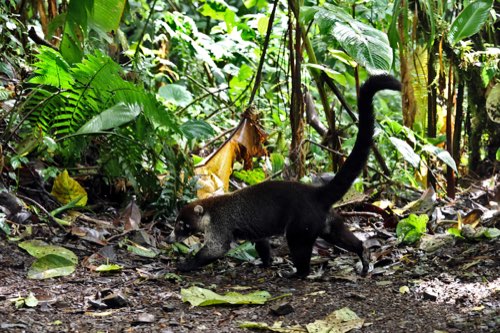
 White-nosed Coati
Nasua narica

 Black-mandibled Toucan
Ramphastos ambiguus

 Common Basilisk
Basiliscus basiliscus

 Osa Anole
Anolis osa

 Chestnut-backed Antbird
Myrmeciza exsul

 Northern Tamandua
Tamandua mexicana

 Black Vulture
Coragyps atratus

Black-hooded Antshrike
Thamnophilus bridgesi

Scarlet-rumped Tanager
Ramphocelus passerinii

 Riverside Wren
Cantorchilus semibadius

 Mantled Howler Monkey
Alouatta palliata

 Collared Peccary
Pecari tajacu
⭐ Iconic Species
★ Central American Spider Monkey
Ateles geoffroyi
★ Baird's Tapir
Tapirella bairdii
★ Central American Squirrel Monkey
Saimiri oerstedii
📊 Most Spotted
White-nosed Coati
Nasua narica
Northern Tamandua
Tamandua mexicana
Mantled Howler Monkey
Alouatta palliata
Collared Peccary
Pecari tajacu

 Central American White-faced Capuchin
Cebus imitator

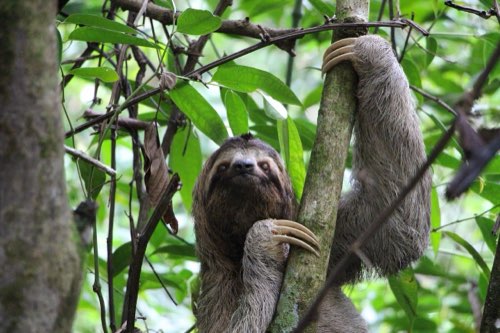
 Brown-throated Sloth
Bradypus variegatus

 Central American Agouti
Dasyprocta punctata

 Hoffmann's Two-toed Sloth
Choloepus hoffmanni

 Red-tailed Squirrel
Sciurus granatensis

 Central American Red Brocket
Mazama temama

 Mountain Lion
Puma concolor

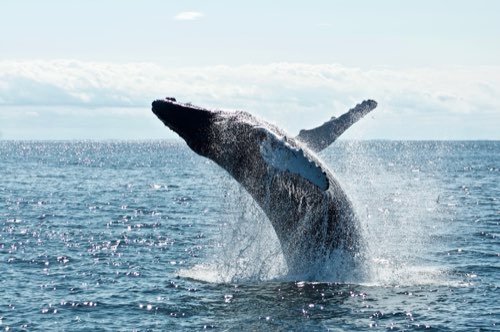
 Humpback Whale
Megaptera novaeangliae
⭐ Iconic Species
📊 Most Spotted
Black-mandibled Toucan
Ramphastos ambiguus
Chestnut-backed Antbird
Myrmeciza exsul
Black Vulture
Coragyps atratus
Black-hooded Antshrike
Thamnophilus bridgesi
Scarlet-rumped Tanager
Ramphocelus passerinii
Riverside Wren
Cantorchilus semibadius

 Cocoa Woodcreeper
Xiphorhynchus susurrans

 Great Kiskadee
Pitangus sulphuratus

 Short-billed Pigeon
Patagioenas nigrirostris

Common Black-Hawk
Buteogallus anthracinus

 Tropical Kingbird
Tyrannus melancholicus

 Turkey Vulture
Cathartes aura
📊 Most Spotted
Common Basilisk
Basiliscus basiliscus
Osa Anole
Anolis osa

 Fer-de-lance
Bothrops asper

 American Crocodile
Crocodylus acutus

 Black Spiny-tailed Iguana
Ctenosaura similis

 Common Caiman
Caiman crocodilus

Four-lined Ameiva
Holcosus quadrilineatus

 Green Iguana
Iguana iguana

Helmeted Iguana
Corytophanes cristatus

 Central American Boa
Boa imperator

Bighead Anole
Anolis capito

Middle American Ameiva
Holcosus festivus
📊 Most Spotted

 Giant Marine Toad
Rhinella horribilis

 Rosenberg's Gladiator Frog
Boana rosenbergi

 Savage's Thin-toed Frog
Leptodactylus savagei

 Green and Black Dart-poison Frog
Dendrobates auratus

 Red-eyed Treefrog
Agalychnis callidryas

 Masked Tree Frog
Smilisca phaeota

 Golfo Dulce Poison-Dart Frog
Phyllobates vittatus

 Stejneger's Robber Frog
Craugastor stejnegerianus

Granular Poison Frog
Oophaga granulifera

Fitzinger's Robber Frog
Craugastor fitzingeri

 Guayaquil Dwarf Frog
Engystomops pustulosus

Rainforest Rocket Frog
Silverstoneia flotator
Recent sightings in Corcovado National Park
LIVEiNaturalistAnimal Events
2Scarlet Macaw Nesting Season
Scarlet Macaws pair off and retreat to hollow trees to raise their chicks, their brilliant red, blue and gold plumage flashing as bonded couples fly and forage together. Nesting season concentrates these loud, unmistakable parrots around the canopy, making them easier than ever to spot.
1Olive Ridley Turtle Nesting
Olive Ridley sea turtles haul ashore under cover of night to dig their nests and lay clutches of eggs on Corcovado's remote beaches, later joined by nesting Green Turtles. Watching a heavy female drag herself up the sand and cover her nest is one of the coast's most primal wildlife spectacles.


3Poison Dart Frog Breeding
During the breeding season the tiny Golfo Dulce and Granular poison-dart frogs grow bold, males calling from the leaf litter and ferrying tadpoles to water-filled bromeliads. Their jewel-bright warning colors make these thumbnail-sized amphibians a rainforest highlight for anyone who looks down at the forest floor.
Sighting Calendar
Average chance of spotting the park's most-spotted species, month by month
- 1Olive Ridley Turtle Nesting
- 2Scarlet Macaw Nesting Season
- 3Poison Dart Frog Breeding
* Sirena station (the main sector) typically closes in October due to heavy rains, adverse trail conditions, and annual maintenance. Other sectors like San Pedrillo and La Leona remain open with reduced services.
Sighting Zones
Warmer areas are where all species together are recorded most often.
Essentials
Climate
What visitors saw
Within 1km, we had seen three of Costa Rica’s four species of monkey: the agile spider monkey, the hear-it-before-you-see-it howler monkey, and the cute capuchin monkey (also referred to as carablanca, or white-faced monkey, in Central America).
Every day we saw toucans, Aracaris, chachalacas (forest chickens), hummingbirds, countless tanagers, parrots and the amazing scarlet macaws.
Then we head out on the trail – initially in the direction where the guide saw tapirs yesterday and a puma a few days ago.
The birds were everywhere mot mots, jacamars, curacaos, a trogon, and euphonias to start and we even saw some bats in a hollow tree..
Quick answers
What animals can you see in Corcovado National Park?
The most likely sightings are Scarlet Macaw (seen by about 70% of wildlife watchers), White-nosed Coati (seen by about 70% of wildlife watchers), Black-mandibled Toucan (seen by about 60% of wildlife watchers), Baird's Tapir (seen by about 60% of wildlife watchers), Central American Spider Monkey (seen by about 60% of wildlife watchers) — among 1068 recorded vertebrate species, based on citizen-science data from GBIF.
When is the best time to visit Corcovado National Park for wildlife?
June has the highest combined sighting rate for the park's top species in our month-by-month GBIF data. The full sighting calendar on this page shows each species' best months.
Can you see Central American Spider Monkey in Corcovado National Park?
Yes — about 60% of wildlife watchers report a Central American Spider Monkey sighting in Corcovado National Park, based on 412 verified sightings from GBIF citizen-science data.
Can you see Baird's Tapir in Corcovado National Park?
Yes — about 60% of wildlife watchers report a Baird's Tapir sighting in Corcovado National Park, based on 384 verified sightings from GBIF citizen-science data.
Can you see Scarlet Macaw in Corcovado National Park?
Yes — about 70% of wildlife watchers report a Scarlet Macaw sighting in Corcovado National Park, based on 2,800 verified sightings from GBIF citizen-science data.
Can you see Central American Squirrel Monkey in Corcovado National Park?
Yes — about 50% of wildlife watchers report a Central American Squirrel Monkey sighting in Corcovado National Park, based on 247 verified sightings from GBIF citizen-science data.
Where Wildlife Score
How good is this park for seeing wildlife?Biodiversity
Very goodHow rich is the wildlife?
Sighting
ExcellentHow likely to see animals?
Experience
GoodHow easy and pleasant is the visit?