Piedras Blancas National Park
🇨🇷 Costa Rica
🐒 All Four Monkeys, Golfo Dulce DolphinsSharing the same rich lowland rainforest as its famous neighbor Corcovado, Piedras Blancas protects one of Costa Rica's last pristine tropical forests along the shores of the Golfo Dulce. With 96 mammal species, 375+ birds, resident dolphin pods, and a fraction of the visitors, this is the Osa Peninsula's best-kept wildlife secret.
8.703° N 83.268° W
Wildlife
⭐ Iconic Species
 ★
 Central American Squirrel Monkey
Saimiri oerstedii
 ★
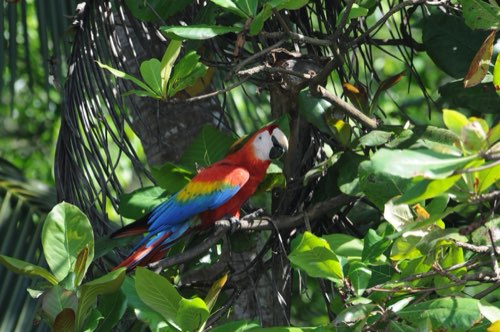
 Scarlet Macaw
Ara macao
 ★
 Central American Spider Monkey
Ateles geoffroyi
 ★
 Bottlenose Dolphin
Tursiops truncatus
📊 Most Spotted

 Common Basilisk
Basiliscus basiliscus

 Scarlet-rumped Tanager
Ramphocelus passerinii

 Many-scaled Anole
Anolis polylepis

 Central American Agouti
Dasyprocta punctata

 Common Caiman
Caiman crocodilus

 Giant Marine Toad
Rhinella horribilis

 Black-mandibled Toucan
Ramphastos ambiguus

White-tipped Dove
Leptotila verreauxi

 Rosenberg's Gladiator Frog
Boana rosenbergi

Variable Seedeater
Sporophila corvina

 Red-eyed Treefrog
Agalychnis callidryas

 Great Kiskadee
Pitangus sulphuratus
⭐ Iconic Species
★ Central American Squirrel Monkey
Saimiri oerstedii
★ Central American Spider Monkey
Ateles geoffroyi
★ Bottlenose Dolphin
Tursiops truncatus
📊 Most Spotted
Central American Agouti
Dasyprocta punctata

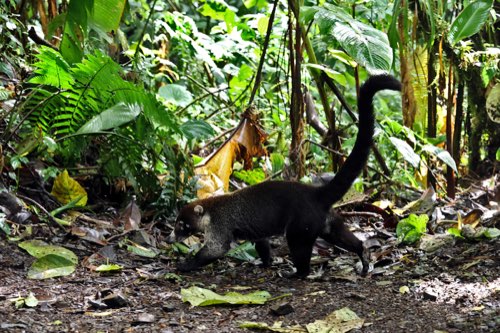
 White-nosed Coati
Nasua narica

 Central American White-faced Capuchin
Cebus imitator

 Northern Tamandua
Tamandua mexicana

 Collared Peccary
Pecari tajacu

 Mantled Howler Monkey
Alouatta palliata

 Proboscis Bat
Rhynchonycteris naso

 Hoffmann's Two-toed Sloth
Choloepus hoffmanni

 Variegated Squirrel
Sciurus variegatoides

 Common Raccoon
Procyon lotor

 Pantropical Spotted Dolphin
Stenella attenuata

 Kinkajou
Potos flavus
⭐ Iconic Species
📊 Most Spotted
Scarlet-rumped Tanager
Ramphocelus passerinii
Black-mandibled Toucan
Ramphastos ambiguus
White-tipped Dove
Leptotila verreauxi
Variable Seedeater
Sporophila corvina
Great Kiskadee
Pitangus sulphuratus

 Tropical Kingbird
Tyrannus melancholicus

Gray-cowled Wood-Rail
Aramides cajanea

 Riverside Wren
Cantorchilus semibadius

 Rufous-tailed Hummingbird
Amazilia tzacatl

 Black-striped Sparrow
Arremonops conirostris

 Social Flycatcher
Myiozetetes similis

 Clay-colored Thrush
Turdus grayi
📊 Most Spotted
Common Basilisk
Basiliscus basiliscus
Many-scaled Anole
Anolis polylepis
Common Caiman
Caiman crocodilus

 Fer-de-lance
Bothrops asper

 Middle American Ameiva
Holcosus festivus
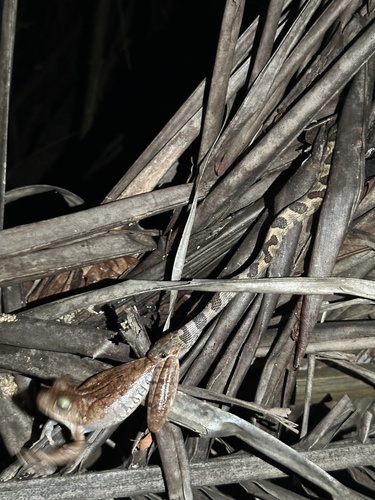
 Ornate Cat-eyed Snake
Leptodeira ornata

 Green Iguana
Iguana iguana

 Turniptail Gecko
Thecadactylus rapicauda

 Border Anole
Anolis limifrons

 White-throated Gecko
Gonatodes albogularis

Delicate Ameiva
Holcosus leptophrys

Bighead Anole
Anolis capito
📊 Most Spotted
Giant Marine Toad
Rhinella horribilis
Rosenberg's Gladiator Frog
Boana rosenbergi
Red-eyed Treefrog
Agalychnis callidryas

 Savage's Thin-toed Frog
Leptodactylus savagei

 Guayaquil Dwarf Frog
Engystomops pustulosus

 Rainforest Toad
Incilius aucoinae

Green Climbing Toad
Incilius coniferus

 Masked Tree Frog
Smilisca phaeota

Boulenger's Snouted Tree Frog
Scinax boulengeri

Drab Tree Frog
Smilisca sordida

 Sipurio Snouted Treefrog
Scinax elaeochroa

 Fitzinger's Robber Frog
Craugastor fitzingeri
Recent sightings in Piedras Blancas National Park
LIVEiNaturalistAnimal Events
1Golfo Dulce Cetacean Season
Bottlenose dolphins gather to feed in the calm, tropical-fjord waters of Golfo Dulce, cruising and surfacing in loose pods along the shoreline. Their fishing forays often bring them close enough to watch bow-riding and cooperative feeding from boat and beach.
2Scarlet Macaw Nesting
Scarlet macaws pair off and claim hollow tree cavities to raise their chicks, filling the canopy with brilliant red, blue, and gold as mates fly in tandem to and from the nest. Their raucous squawks make an active nesting tree hard to miss.
3Squirrel Monkey Troop Season
Fast-moving troops of Central American squirrel monkeys sweep through the mid-canopy in search of fruit and insects, often trailed by bolder white-faced capuchins working the same fruiting trees. When both species forage together the forest erupts with chatter and rustling branches.
4Rainy-Season Frog Breeding
When the wet season fills forest pools, red-eyed treefrogs and tiny granular poison frogs launch into breeding, the males calling through the humid nights to draw in mates. It is the best time to spot the treefrog's flame-orange feet and the poison frog's jewel-bright colors.


Sighting Calendar
Average chance of spotting the park's most-spotted species, month by month
- 1Golfo Dulce Cetacean Season
- 2Scarlet Macaw Nesting
- 3Squirrel Monkey Troop Season
- 4Rainy-Season Frog Breeding
Sighting Zones
Warmer areas are where all species together are recorded most often.
Essentials
Climate
What visitors saw
While we were there, we were in the park, we were able to spot toucans, peccaries, agoutis, curacaos, and phytoplankton.
See more photos of both male & female in my Blue-black Grosbeak Gallery.
Iguana- Common Basilisk ( Basiliscus basiliscus) I have also spotted scarlet macaws at our camp.
With Amy’s keen eye for birds, we’ve spotted scarlet macaws and toucans among the dense canopy.
Quick answers
What animals can you see in Piedras Blancas National Park?
The most likely sightings are Common Basilisk (seen by about 80% of wildlife watchers), Scarlet-rumped Tanager (seen by about 80% of wildlife watchers), Many-scaled Anole (seen by about 70% of wildlife watchers), Central American Agouti (seen by about 60% of wildlife watchers), Common Caiman (seen by about 60% of wildlife watchers) — among 1068 recorded vertebrate species, based on citizen-science data from GBIF.
When is the best time to visit Piedras Blancas National Park for wildlife?
February has the highest combined sighting rate for the park's top species in our month-by-month GBIF data. The full sighting calendar on this page shows each species' best months.
Can you see Central American Squirrel Monkey in Piedras Blancas National Park?
Yes — about 40% of wildlife watchers report a Central American Squirrel Monkey sighting in Piedras Blancas National Park, based on 55 verified sightings from GBIF citizen-science data.
Can you see Scarlet Macaw in Piedras Blancas National Park?
Yes — about 30% of wildlife watchers report a Scarlet Macaw sighting in Piedras Blancas National Park, based on 630 verified sightings from GBIF citizen-science data.
Can you see Central American Spider Monkey in Piedras Blancas National Park?
Yes — about 30% of wildlife watchers report a Central American Spider Monkey sighting in Piedras Blancas National Park, based on 9 verified sightings from GBIF citizen-science data.
Can you see Bottlenose Dolphin in Piedras Blancas National Park?
Yes — about 30% of wildlife watchers report a Bottlenose Dolphin sighting in Piedras Blancas National Park, based on 29 verified sightings from GBIF citizen-science data.
Where Wildlife Score
How good is this park for seeing wildlife?Biodiversity
Very goodHow rich is the wildlife?
Sighting
ExcellentHow likely to see animals?
Experience
GoodHow easy and pleasant is the visit?