


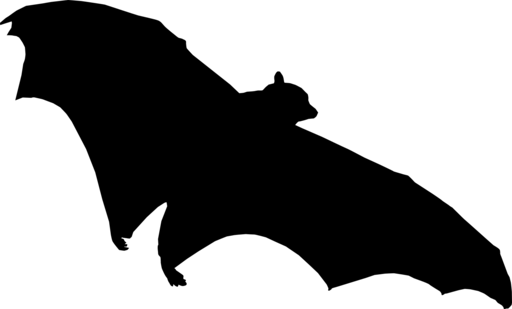
Black Flying-fox
Pteropus alecto
Silhouette: Margot Michaud · PhyloPic
- KingdomAnimalia (Animals)
- PhylumChordata (Chordates)
- ClassMammalia (Mammals)
- OrderChiroptera (Bats)
- FamilyPteropodidae (Old World Fruit Bats)
- GenusPteropus (Flying-foxes)
- SpeciesPteropus alecto (Black Flying-fox)
About the Black Flying-fox
The black flying fox or black fruit bat (Pteropus alecto) is a bat in the family Pteropodidae. It is among the largest bats in the world, but is considerably smaller than the largest species in its genus, Pteropus. The black flying fox is native to Australia, Papua New Guinea, and Indonesia. It is not a threatened species.
Juvenile specimens of this species from Moa Island in Torres Strait have been described as a separate species, Pteropus banakrisi. This supposed species was known as the "Torresian flying fox" or "Moa Island fruit bat". The black flying fox has short, black hair with a contrasting reddish-brown mantle, and a mean forearm length of 164 mm (6.46 in) and a mean weight of 710 g (1.57 lb). It is one of the largest bat species in the world, and has a wingspan of more than 1 metre (39 in).
Black flying foxes are native to Australia (New South Wales, Queensland, Northern Territory and Western Australia), Papua New Guinea (Western Province) and Indonesia (West Papua, Sulawesi, Sumba, and Savu). During the day, individuals reside in large roosts (colonies or 'camps') consisting of hundreds to tens of... Wikipedia →
Recent sightings of Black Flying-fox in Daintree National Park
LIVEiNaturalistClosest Relatives at Daintree National Park

 Spectacled Flying Fox
Pteropus conspicillatus

Little Red Flying Fox
Pteropus scapulatus

 Queensland Tube-nosed Fruit Bat
Nyctimene robinsoni

 Southern Blossom Bat
Syconycteris australis

 Smaller Horseshoe Bat
Rhinolophus megaphyllus

 Diadem Roundleaf Bat
Hipposideros diadema

Dusky Roundleaf Bat
Hipposideros ater

 Eastern Long-eared Bat
Nyctophilus bifax
Global Distribution
Warmer areas are where this animal is recorded most often.
Parks Where Found
| # | Park | Country | Daily sighting probability |
|---|---|---|---|
| 1 | Cape Range | 🇦🇺 Australia | |
| 2 | Litchfield National Park | 🇦🇺 Australia | |
| 3 | Ningaloo Marine Park | 🇦🇺 Australia | |
| 4 | Nitmiluk National Park | 🇦🇺 Australia | |
| 5 | Kakadu National Park | 🇦🇺 Australia | |
| 6 | Springbrook National Park | 🇦🇺 Australia | |
| 7 | Daintree National Park | 🇦🇺 Australia |