


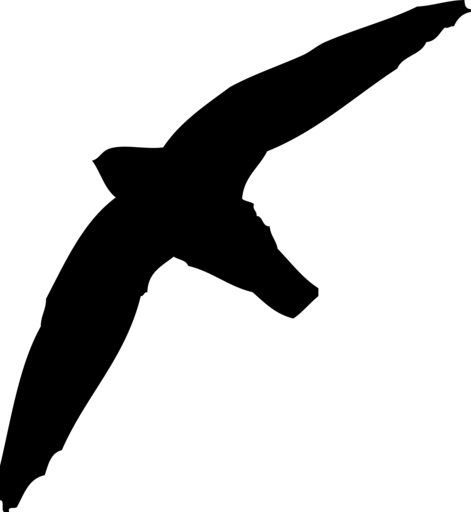
White-throated Swift
Aeronautes saxatalis
Silhouette: Aviceda (vectorized by T. Michael Keesey) · PhyloPic
- KingdomAnimalia (Animals)
- PhylumChordata (Chordates)
- ClassAves (Birds)
- OrderApodiformes (Swifts and Hummingbirds)
- FamilyApodidae (Swifts)
- GenusAeronautes (Aeronautes Swifts)
- SpeciesAeronautes saxatalis (White-throated Swift)
About the White-throated Swift
The white-throated swift (Aeronautes saxatalis) is a swift of the family Apodidae native to western North America, south to cordilleran western Honduras. Its coastal range extends as far north as Northern California, while inland it has migratory populations found throughout the Great Basin and Rocky Mountain regions, ranging as far north as southern British Columbia. White-throated swifts are found in open areas near cliffs, rock faces, or man-made structures, where they roost. Swifts are social birds, and groups are often seen roosting and foraging for flying insects together.
The white-throated swift is medium-sized bird that is primarily black and white. Its back and wings are blackish-brown or black, and its breast, belly, chin, and throat are white. In newly molted adults, the dark feathers may have a slight greenish sheen, though this is rarely observable in the field. Sexes cannot be distinguished by plumage. Juvenile (first basic) plumage is similar to adult (definitive basic) plumage, but with the feathers on juveniles' heads and necks appearing duller and paler.
Adults are generally 15–18 centimeters in length, and have a tail with a relatively shallow 10... Wikipedia →
Recent sightings of White-throated Swift in Death Valley National Park
LIVEiNaturalistClosest Relatives at Death Valley National Park

 Vaux's Swift
Chaetura vauxi

 Costa's Hummingbird
Calypte costae

Anna's Hummingbird
Calypte anna

 Black-chinned Hummingbird
Archilochus alexandri

 Rufous Hummingbird
Selasphorus rufus

Broad-tailed Hummingbird
Selasphorus platycercus

Broad-billed Hummingbird
Cynanthus latirostris

Calliope Hummingbird
Selasphorus calliope
Global Distribution
Warmer areas are where this animal is recorded most often.
Parks Where Found
| # | Park | Country | Daily sighting probability |
|---|---|---|---|
| 1 | Yosemite National Park | 🇺🇸 United States | |
| 2 | Joshua Tree National Park | 🇺🇸 United States | |
| 3 | Bahía de Loreto National Park | 🇲🇽 Mexico | |
| 4 | Saguaro National Park | 🇺🇸 United States | |
| 5 | El Vizcaíno Biosphere Reserve | 🇲🇽 Mexico | |
| 6 | Celaque National Park | 🇭🇳 Honduras | |
| 7 | Reserva de la Biosfera Mariposa Monarca | 🇲🇽 Mexico | |
| 8 | La Tigra National Park | 🇭🇳 Honduras |
Quick answers
What are the chances of seeing a White-throated Swift in Death Valley National Park?
About 10% of wildlife watchers report a White-throated Swift sighting in Death Valley National Park, based on 207 verified sightings from GBIF citizen-science data.
When is the best time to see White-throated Swift in Death Valley National Park?
May has the highest sighting rate for White-throated Swift in Death Valley National Park in our monthly data.