Reserva de la Biosfera Mariposa Monarca
🇲🇽 Mexico
🐦 Ruby-crowned Kinglet's Cloud Forest SongReserva de la Biosfera Mariposa Monarca sits within the rugged mountain highlands of central Mexico, protecting a cool tropical pine forest shaped by steep volcanic ridges and dense evergreen canopies. Winding dirt footpaths cross through towering fir trees and damp leaf litter, where the habitat transitions from high-altitude woodland to shaded ravines.
19.583° N 100.259° W
Wildlife
⭐ Iconic Species
 ★
★  White-eared Hummingbird
Basilinna leucotis
 ★
★  Ruby-crowned Kinglet
Regulus calendula
 ★
★ Mexican Violetear
Colibri thalassinus
 ★
★  Mountain Horned Lizard
Phrynosoma orbiculare
📊 Most Spotted

 Yellow-eyed Junco
Junco phaeonotus

 House Finch
Haemorhous mexicanus

 Slate-throated Redstart
Myioborus miniatus

 Yellow-rumped Warbler
Setophaga coronata

 Townsend's Warbler
Setophaga townsendi

 Red Warbler
Cardellina rubra

 Michoacan Stream Salamander
Ambystoma rivulare

 American Robin
Turdus migratorius

Orange-crowned Warbler
Leiothlypis celata

 Brown-backed Solitaire
Myadestes occidentalis

 Vermilion Flycatcher
Pyrocephalus rubinus

Golden-crowned Kinglet
Regulus satrapa
📊 Most Spotted

 White-nosed Coati
Nasua narica

 Ringtail
Bassariscus astutus

 Bobcat
Lynx rufus

 Rock Squirrel
Otospermophilus variegatus

 Common Raccoon
Procyon lotor

 Eastern Cottontail
Sylvilagus floridanus

 Mexican Vole
Microtus mexicanus

 bee shrew
Cryptotis parva

Mexican Free-tailed Bat
Tadarida brasiliensis

 Gray Fox
Urocyon cinereoargenteus

Hooded Skunk
Mephitis macroura

 Smoky Pocket Gopher
Cratogeomys fumosus
⭐ Iconic Species
★ White-eared Hummingbird
Basilinna leucotis
★ Ruby-crowned Kinglet
Regulus calendula
★ Mexican Violetear
Colibri thalassinus
📊 Most Spotted
Yellow-eyed Junco
Junco phaeonotus
House Finch
Haemorhous mexicanus
Slate-throated Redstart
Myioborus miniatus
Yellow-rumped Warbler
Setophaga coronata
Townsend's Warbler
Setophaga townsendi
Red Warbler
Cardellina rubra
American Robin
Turdus migratorius
Orange-crowned Warbler
Leiothlypis celata
Brown-backed Solitaire
Myadestes occidentalis
Vermilion Flycatcher
Pyrocephalus rubinus
Golden-crowned Kinglet
Regulus satrapa

 Common Raven
Corvus corax
⭐ Iconic Species
📊 Most Spotted

 Graphic Spiny Lizard
Sceloporus grammicus

 Mexican Brown Snake
Storeria storerioides

Crevice Swift
Sceloporus torquatus

Mexican Highlands Gartersnake
Thamnophis pulchrilatus

 Dusky Rattlesnake
Crotalus triseriatus

Middle American Gopher Snake
Pituophis lineaticollis

Transvolcanic Alligator Lizard
Barisia imbricata

Lined Tolucan Ground Snake
Conopsis lineata

 Rough-necked Alligator Lizard
Barisia rudicollis

Longtail Alpine Garter Snake
Thamnophis scalaris

 Guerreran Arboreal Alligator Lizard
Abronia deppii

Mexican Bull Snake
Pituophis deppei
📊 Most Spotted
Michoacan Stream Salamander
Ambystoma rivulare

 Canyon Tree Frog
Dryophytes arenicolor
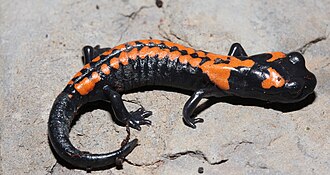
 Bell's False Brook Salamander
Isthmura bellii

 Mountain Treefrog
Dryophytes eximius

 Northern Streamside Tree Frog
Sarcohyla hapsa

Ridged Treefrog
Dryophytes plicatus

 Montezuma Leopard Frog
Lithobates montezumae

 American Bullfrog
Lithobates catesbeianus

 Pine Toad
Incilius occidentalis

 Plateau Toad
Anaxyrus compactilis

Showy Leopard Frog
Lithobates spectabilis

 Peters' Shiny Peeping Frog
Eleutherodactylus nitidus
Recent sightings in Reserva de la Biosfera Mariposa Monarca
LIVEiNaturalistAnimal Events
1Monarch Butterfly Winter Arrival and Clustering
During the winter months monarch butterflies descend onto the oyamel fir forest, forming dense clusters that create a spectacular orange‑white carpet; the Ruby‑crowned Kinglet is often heard singing nearby as it forages among the insects attracted to the butterflies.
2Amphibian Emergence and Rainy Season Activity
The onset of the rainy season triggers the emergence of the Michoacan Stream Salamander from its aquatic habitats, where it breeds in fast‑flowing streams while the forest comes alive with amphibian calls.
3High‑Altitude Foraging and Raptor Migration
As raptors migrate south, the Yellow‑rumped Warbler intensifies its foraging in the upper canopy, providing a crucial food source for passing birds of prey and highlighting the park's role as a migratory corridor.
Sighting Calendar
Average chance of spotting the park's most-spotted species, month by month
- 1Monarch Butterfly Winter Arrival and Clustering
- 2Amphibian Emergence and Rainy Season Activity
- 3High‑Altitude Foraging and Raptor Migration
Sighting Zones
Warmer areas are where all species together are recorded most often.
Essentials
Climate
Quick answers
What animals can you see in Reserva de la Biosfera Mariposa Monarca?
The most likely sightings are White-eared Hummingbird (seen by about 70% of wildlife watchers), Yellow-eyed Junco (seen by about 70% of wildlife watchers), Ruby-crowned Kinglet (seen by about 60% of wildlife watchers), House Finch (seen by about 50% of wildlife watchers), Slate-throated Redstart (seen by about 50% of wildlife watchers) — among 703 recorded vertebrate species, based on citizen-science data from GBIF.
When is the best time to visit Reserva de la Biosfera Mariposa Monarca for wildlife?
February has the highest combined sighting rate for the park's top species in our month-by-month GBIF data. The full sighting calendar on this page shows each species' best months.
Can you see White-eared Hummingbird in Reserva de la Biosfera Mariposa Monarca?
Yes — about 70% of wildlife watchers report a White-eared Hummingbird sighting in Reserva de la Biosfera Mariposa Monarca, based on 261 verified sightings from GBIF citizen-science data.
Can you see Ruby-crowned Kinglet in Reserva de la Biosfera Mariposa Monarca?
Yes — about 60% of wildlife watchers report a Ruby-crowned Kinglet sighting in Reserva de la Biosfera Mariposa Monarca, based on 191 verified sightings from GBIF citizen-science data.
Can you see Mexican Violetear in Reserva de la Biosfera Mariposa Monarca?
Yes — about 40% of wildlife watchers report a Mexican Violetear sighting in Reserva de la Biosfera Mariposa Monarca, based on 158 verified sightings from GBIF citizen-science data.
Can you see Mountain Horned Lizard in Reserva de la Biosfera Mariposa Monarca?
Yes — about 30% of wildlife watchers report a Mountain Horned Lizard sighting in Reserva de la Biosfera Mariposa Monarca, based on 13 verified sightings from GBIF citizen-science data.
Where Wildlife Score
How good is this park for seeing wildlife?Biodiversity
Very goodHow rich is the wildlife?
Sighting
GoodHow likely to see animals?
Experience
GoodHow easy and pleasant is the visit?


_-_Celestun_Biosphere_Reserve.jpg/330px-American_Flamingoes_(Phoenicopterus_ruber)_-_Celestun_Biosphere_Reserve.jpg)