


Bibron's Thick-toed Gecko
Chondrodactylus bibronii
Silhouette: Jose Carlos Arenas-Monroy · PhyloPic
- KingdomAnimalia (Animals)
- PhylumChordata (Chordates)
- ClassSquamata
- FamilyGekkonidae (Typical Geckos)
- GenusChondrodactylus (Comb-toed Geckos)
- SpeciesChondrodactylus bibronii (Bibron's Thick-toed Gecko)
About the Bibron's Thick-toed Gecko
Chondrodactylus bibronii, commonly known as Bibron's thick-toed gecko, Bibron's sand gecko, or simply Bibron's gecko, is a species of lizard in the family Gekkonidae. The species is native to southern Africa. C. bibronii has been used as an animal model in bioastronautic research examining the effects of spaceflight on the morphology and physiology of vertebrates.
The specific name, bibronii, is in honor of French herpetologist Gabriel Bibron, as are several common names. Bibron's gecko is distributed across the southern part of the African continent in Namibia, South Africa, and Eswatini. It is common in South Africa, where it is one of the largest gecko species.
C. bibronii has been introduced in the southeastern United States. Populations have been found in Manatee County, Florida. A moderate-sized gecko, C. bibronii reaches a total length (including tail) of 6 to 8 in (15 to 20 cm). It has a stockier build than most other geckos. The female is generally smaller than the male. Its base color is brown, and it has a beaded pattern dorsally, with black crossbars. The male has white dots; the female may, as well. The belly is white... Wikipedia →
Recent sightings of Bibron's Thick-toed Gecko in Etosha National Park
LIVEiNaturalistClosest Relatives at Etosha National Park

 Fischer's Thick-toed Gecko
Chondrodactylus laevigatus
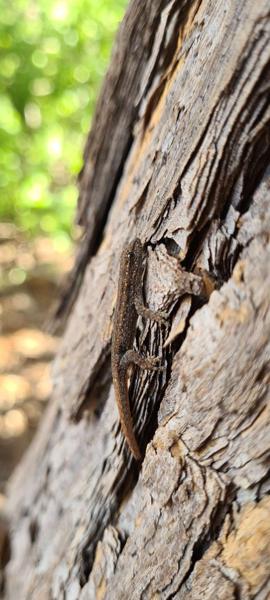
 Bradfield's Dwarf Gecko
Lygodactylus bradfieldi

 Pointed Thick-toed Gecko
Pachydactylus punctatus

Barnard's Namib Day Gecko
Rhoptropus barnardi
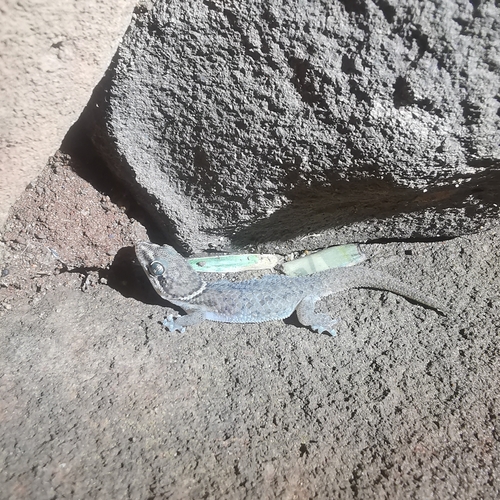
Large-scaled gecko
Pachydactylus scutatus

Boulton's Namib Day Gecko
Rhoptropus boultoni

Lawrence's Dwarf Gecko
Lygodactylus lawrencei

Striped Thick-toed Gecko
Pachydactylus fasciatus

Namib Sand Gecko
Pachydactylus rangei
Global Distribution
Warmer areas are where this animal is recorded most often.
Parks Where Found
| # | Park | Country | Daily sighting probability |
|---|---|---|---|
| 1 | Kgalagadi Transfrontier Park | 🇿🇦 South Africa | |
| 2 | Namib-Naukluft National Park | 🇳🇦 Namibia | |
| 3 | Table Mountain National Park | 🇿🇦 South Africa | |
| 4 | Etosha National Park | 🇳🇦 Namibia | |
| 5 | Addo Elephant National Park | 🇿🇦 South Africa |