
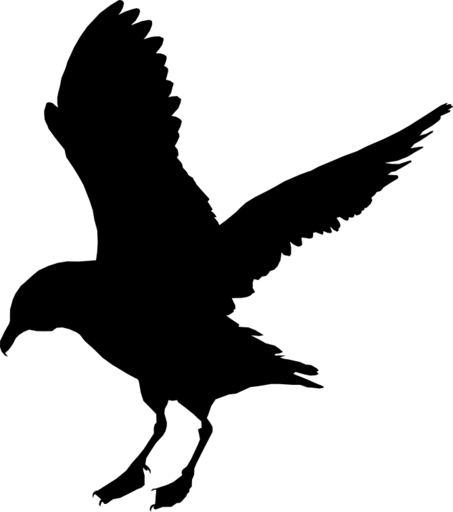
Brown Skua
Stercorarius antarcticus
Silhouette: Liam Quinn (photo) and Albertonykus (silhouette) · PhyloPic
- KingdomAnimalia (Animals)
- PhylumChordata (Chordates)
- ClassAves (Birds)
- OrderCharadriiformes (Shorebirds and Allies)
- FamilyStercorariidae (Skuas and Jaegers)
- GenusStercorarius (Skuas and Jaegers)
- SpeciesStercorarius antarcticus (Brown Skua)
About the Brown Skua
The brown skua (Stercorarius antarcticus), also known as the Antarctic skua, Subantarctic skua, southern great skua, southern skua, or hākoakoa (Māori), is a large seabird that breeds in the subantarctic and Antarctic zones and moves farther north when not breeding. Its taxonomy is highly complex and a matter of dispute, with some splitting it into two or three species: Falkland skua (S. antarcticus), Tristan skua (S. hamiltoni), and subantarctic skua (S. lonnbergi). To further confuse, it hybridizes with both the south polar and Chilean skuas, and the entire group has been considered to be a subspecies of the great skua, a species otherwise restricted to the Northern Hemisphere.
This is the heaviest species of skua and rivals the largest gulls, the great black-backed gull and glaucous gull, as the heaviest species in the shorebird order although not as large in length or wingspan. It is 52–64 cm (20–25 in) in length, 126–160 cm (50–63 in) in wingspan and has a body mass of 1.2–2.18 kg (2.6–4.8 lb). S. a. hamiltoni measured on Gough Island, weighed an average of 1.43 kg (3.2 lb) in 9 males and 1.65 kg (3.6 lb) in 9 females. S. a. lonnbergi measured in the Chatham Islands... Wikipedia →
Recent sightings of Brown Skua in Fiordland National Park
LIVEiNaturalistClosest Relatives at Fiordland National Park

 South Polar Skua
Stercorarius maccormicki

Parasitic Jaeger
Stercorarius parasiticus
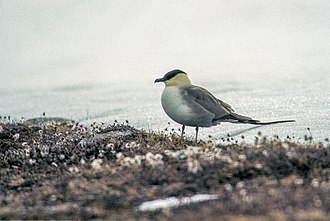
 Long-tailed Jaeger
Stercorarius longicaudus

 Dominican Gull
Larus dominicanus

 Black-billed Gull
Chroicocephalus bulleri

Silver Gull
Chroicocephalus novaehollandiae

 Masked Lapwing
Vanellus miles

 Black-fronted Tern
Chlidonias albostriatus

 VOC
Haematopus unicolor

South Island Pied Oystercatcher
Haematopus finschi

 White-headed Stilt
Himantopus leucocephalus

 White-fronted Tern
Sterna striata
Global Distribution
Warmer areas are where this animal is recorded most often.
Parks Where Found
| # | Park | Country | Daily sighting probability |
|---|---|---|---|
| 1 | Rakiura National Park | 🇳🇿 New Zealand | |
| 2 | Garden Route National Park | 🇿🇦 South Africa | |
| 3 | Table Mountain National Park | 🇿🇦 South Africa | |
| 4 | Namib-Naukluft National Park | 🇳🇦 Namibia | |
| 5 | Fiordland National Park | 🇳🇿 New Zealand | |
| 6 | Tierra del Fuego National Park | 🇦🇷 Argentina | |
| 7 | Addo Elephant National Park | 🇿🇦 South Africa | |
| 8 | Península Valdés | 🇦🇷 Argentina | |
| 9 | iSimangaliso Wetland Park | 🇿🇦 South Africa | |
| 10 | Great Otway National Park | 🇦🇺 Australia |
Quick answers
What are the chances of seeing a Brown Skua in Fiordland National Park?
Under 5% of wildlife watchers report a Brown Skua sighting in Fiordland National Park, based on 7 verified sightings from GBIF citizen-science data.
When is the best time to see Brown Skua in Fiordland National Park?
January has the highest sighting rate for Brown Skua in Fiordland National Park in our monthly data.