


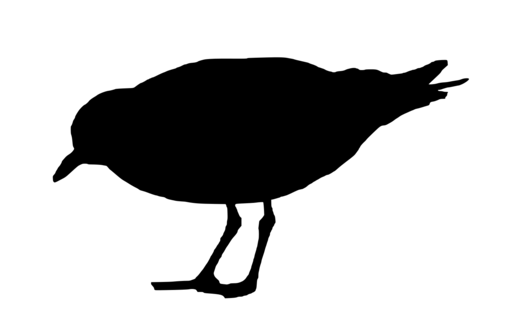
Silver Gull
Chroicocephalus novaehollandiae
Silhouette: Michael Scroggie · PhyloPic
- KingdomAnimalia (Animals)
- PhylumChordata (Chordates)
- ClassAves (Birds)
- OrderCharadriiformes (Shorebirds and Allies)
- FamilyLaridae (Gulls, Terns, and Skimmers)
- GenusChroicocephalus (Masked Gulls and allies)
- SpeciesChroicocephalus novaehollandiae (Silver Gull)
About the Silver Gull
The silver gull (Chroicocephalus novaehollandiae) is a gull in Oceania. It is the most common gull of Australia. It has been found throughout the continent, but particularly at or near coastal areas. It is smaller than the Pacific gull (Larus pacificus), which also lives in Australia.
The silver gull should not be confused with the herring gull, which is called "silver gull" in many other languages (scientific name Larus argentatus, German Silbermöwe, French Goéland argenté, Dutch zilvermeeuw), but is a much larger, robust gull with no overlap in range.
It has traditionally been placed in the genus Larus, as is the case with many gulls, but is now placed in the genus Chroicocephalus. Hartlaub's gull (C. hartlaubii) of South Africa was formerly sometimes considered to be subspecies of the silver gull.
There are three subspecies: C. n. forsteri (Mathews, 1912) – north and northeast Australia, New Caledonia, Loyalty Islands C. n. novaehollandiae (Stephens, 1826) – southern Australia and Tasmania C. n. scopulinus (Forster, JR, 1844) or red-billed gull – New Zealand
The head, body, and tail of an adult silver gull are white, and the wings are... Wikipedia →
Recent sightings of Silver Gull in Fiordland National Park
LIVEiNaturalistClosest Relatives at Fiordland National Park

 Black-billed Gull
Chroicocephalus bulleri

 Dominican Gull
Larus dominicanus

 Black-fronted Tern
Chlidonias albostriatus

 White-fronted Tern
Sterna striata

 Caspian Tern
Hydroprogne caspia

White-winged Tern
Chlidonias leucopterus

 Little Tern
Sternula albifrons

 Masked Lapwing
Vanellus miles

 VOC
Haematopus unicolor

South Island Pied Oystercatcher
Haematopus finschi

 White-headed Stilt
Himantopus leucocephalus

 Bar-tailed Godwit
Limosa lapponica
Global Distribution
Warmer areas are where this animal is recorded most often.
Parks Where Found
Quick answers
What are the chances of seeing a Silver Gull in Fiordland National Park?
About 30% of wildlife watchers report a Silver Gull sighting in Fiordland National Park, based on 1,178 verified sightings from GBIF citizen-science data.
When is the best time to see Silver Gull in Fiordland National Park?
February has the highest sighting rate for Silver Gull in Fiordland National Park in our monthly data.