


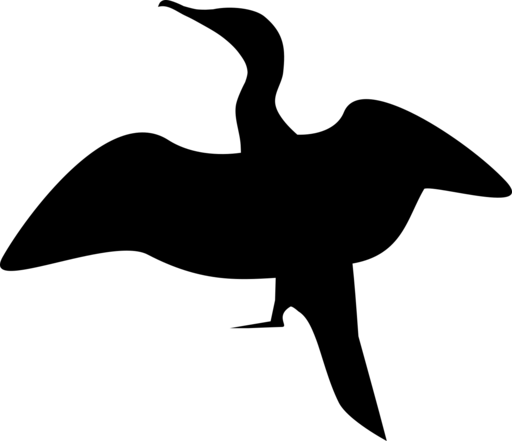
Black-faced Cormorant
Phalacrocorax fuscescens
Silhouette: L. Shyamal · PhyloPic
- KingdomAnimalia (Animals)
- PhylumChordata (Chordates)
- ClassAves (Birds)
- OrderSuliformes (Gannets, Cormorants, and Allies)
- FamilyPhalacrocoracidae (Cormorants and Shags)
- GenusPhalacrocorax (Typical Old World Cormorants)
- SpeciesPhalacrocorax fuscescens (Black-faced Cormorant)
About the Black-faced Cormorant
The black-faced cormorant (Phalacrocorax fuscescens), also known as the black-faced shag, is a medium-sized member of the cormorant family. Upperparts, including facial skin and bill, are black, with white underparts. It is endemic to coastal regions of southern Australia.
Like other cormorant species, the black-faced cormorant is a large aquatic bird, with a long hooked bill, webbed feet, and monochromatic plumage. This is one of the largest cormorants found in south-western Australia and has pied plumage with the upper half of its body black and the undersides white. Its face is naked and black, hence the "black-faced" name, and the tail, feet, and thighs are also black. The back feathers are glossy, and its bill is dark grey with a prominent hook at the tip. It has blue-green eyes. When flying, it holds its head level or lower than its body and holds its wings in a cross-shape like most cormorants.
Species that are similar in appearance include the pied cormorant (slightly larger) and the little pied cormorant (slightly smaller). The breeding and non-breeding plumages are very similar, with the formation of fine white streaks along the neck during... Wikipedia →
Recent sightings of Black-faced Cormorant in Freycinet National Park
LIVEiNaturalistClosest Relatives at Freycinet National Park


Global Distribution
Warmer areas are where this animal is recorded most often.
Parks Where Found
| # | Park | Country | Daily sighting probability |
|---|---|---|---|
| 1 | Maria Island National Park | 🇦🇺 Australia | |
| 2 | Freycinet National Park | 🇦🇺 Australia | |
| 3 | Wilsons Promontory National Park | 🇦🇺 Australia | |
| 4 | Great Otway National Park | 🇦🇺 Australia | |
| 5 | Flinders Chase | 🇦🇺 Australia |
Quick answers
What are the chances of seeing a Black-faced Cormorant in Freycinet National Park?
About 40% of wildlife watchers report a Black-faced Cormorant sighting in Freycinet National Park, based on 130 verified sightings from GBIF citizen-science data.
When is the best time to see Black-faced Cormorant in Freycinet National Park?
May has the highest sighting rate for Black-faced Cormorant in Freycinet National Park in our monthly data.