


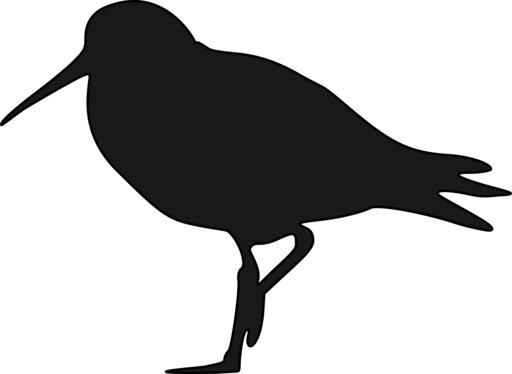
Sooty Oystercatcher
Haematopus fuliginosus
Silhouette: terngirl · PhyloPic
- KingdomAnimalia (Animals)
- PhylumChordata (Chordates)
- ClassAves (Birds)
- OrderCharadriiformes (Shorebirds and Allies)
- FamilyHaematopodidae (Oystercatchers)
- GenusHaematopus (Oystercatchers)
- SpeciesHaematopus fuliginosus (Sooty Oystercatcher)
About the Sooty Oystercatcher
The sooty oystercatcher (Haematopus fuliginosus) is a species of oystercatcher. It is a wading bird endemic to Australia and commonly found on its coastline. It prefers rocky coastlines, but will occasionally live in estuaries. All of its feathers are black. It has a red eye, eye ring and bill, and pink legs.
John Gould described the sooty oystercatcher in 1845. Its species name is the Latin adjective fuliginosus, "sooty". Two subspecies are recognised, the nominate from the coastline of southern Australia and subspecies ophthalmicus from northern Australia. The southern subspecies is larger and heavier than the northern. The northern one, with a more yellowish eye ring, is found from the Kimberleys across the top of the country to Mackay in central Queensland. There is considerable overlap, as the southern subspecies has been found up to Cape York. Subspecies ophthalmicus has been thought distinctive enough to warrant species status and needs further investigation. Black redbill is a local name.
Measuring 42 to 52 cm (16.5 to 20.5 in) long with a bill length of 5–8 cm (2–3 in), the sooty oystercatcher has all black plumage, with pink-red legs and scarlet... Wikipedia →
Recent sightings of Sooty Oystercatcher in Freycinet National Park
LIVEiNaturalistClosest Relatives at Freycinet National Park

 Pied Oystercatcher
Haematopus longirostris

 Silver Gull
Chroicocephalus novaehollandiae

 Pacific Gull
Larus pacificus

 Crested Tern
Thalasseus bergii

 Dominican Gull
Larus dominicanus

 Masked Lapwing
Vanellus miles

 Caspian Tern
Hydroprogne caspia

 Hooded Plover
Thinornis cucullatus

 Ruddy Turnstone
Arenaria interpres

 Latham's Snipe
Gallinago hardwickii

 Painted Buttonquail
Turnix varius

 Bar-tailed Godwit
Limosa lapponica
Global Distribution
Warmer areas are where this animal is recorded most often.
Parks Where Found
| # | Park | Country | Daily sighting probability |
|---|---|---|---|
| 1 | Wilsons Promontory National Park | 🇦🇺 Australia | |
| 2 | Freycinet National Park | 🇦🇺 Australia | |
| 3 | Flinders Chase | 🇦🇺 Australia | |
| 4 | Maria Island National Park | 🇦🇺 Australia | |
| 5 | Booderee National Park | 🇦🇺 Australia | |
| 6 | Noosa National Park | 🇦🇺 Australia | |
| 7 | Ningaloo Marine Park | 🇦🇺 Australia | |
| 8 | Great Otway National Park | 🇦🇺 Australia | |
| 9 | Royal National Park | 🇦🇺 Australia | |
| 10 | Cape Range | 🇦🇺 Australia | |
| 11 | Daintree National Park | 🇦🇺 Australia |
Quick answers
What are the chances of seeing a Sooty Oystercatcher in Freycinet National Park?
About 30% of wildlife watchers report a Sooty Oystercatcher sighting in Freycinet National Park, based on 121 verified sightings from GBIF citizen-science data.
When is the best time to see Sooty Oystercatcher in Freycinet National Park?
May has the highest sighting rate for Sooty Oystercatcher in Freycinet National Park in our monthly data.