
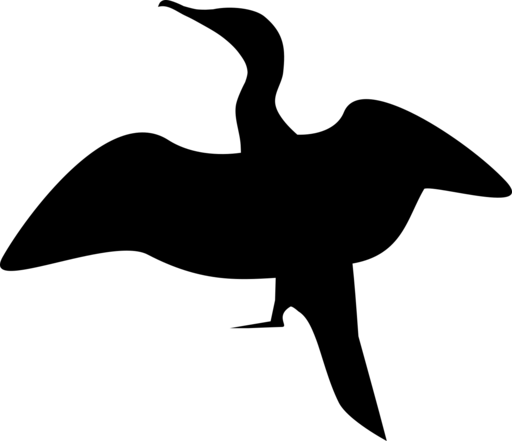
Flightless Cormorant
Phalacrocorax harrisi
Silhouette: L. Shyamal · PhyloPic
- KingdomAnimalia (Animals)
- PhylumChordata (Chordates)
- ClassAves (Birds)
- OrderSuliformes (Gannets, Cormorants, and Allies)
- FamilyPhalacrocoracidae (Cormorants and Shags)
- GenusPhalacrocorax (Typical Old World Cormorants)
- SpeciesPhalacrocorax harrisi (Flightless Cormorant)
About the Flightless Cormorant
The flightless cormorant (Nannopterum harrisi), also known as the Galápagos cormorant, is a cormorant endemic to the Galápagos Islands, and an example of the highly unusual fauna there. It is unique in that it is the only known cormorant that has lost the ability to fly. It was placed in its own genus, Nannopterum, but was later placed with most of the other cormorants in the genus Phalacrocorax. A 2014 study supported reclassifying it and two other American cormorant species back into Nannopterum. The IOU followed this classification in 2021.
The flightless cormorant is the largest extant member of its family, measuring 89–100 cm (35–39.5 in) in length and weighing 2.5–5.0 kg (5.5–11.0 lb), and its wings are about one-third the size that would be required for a bird of its proportions to fly. The keel on the breastbone, where birds attach the large muscles needed for flight, is also significantly reduced.
Like all cormorants, this bird has webbed feet and sturdy legs that propel it through the water as it seeks its prey of fish, small octopuses, and other little marine creatures. The species feeds near the sea floor and no more than 200 metres offshore. The flightless... Wikipedia →
Recent sightings of Flightless Cormorant in Galápagos Islands
LIVEiNaturalist


Global Distribution
Warmer areas are where this animal is recorded most often.
Parks Where Found
| # | Park | Country | Daily sighting probability |
|---|---|---|---|
| 1 | Galápagos Islands | 🇪🇨 Ecuador |
More parks will be added in future updates.
Quick answers
What are the chances of seeing a Flightless Cormorant in Galápagos Islands?
About 10% of wildlife watchers report a Flightless Cormorant sighting in Galápagos Islands, based on 1,850 verified sightings from GBIF citizen-science data.
When is the best time to see Flightless Cormorant in Galápagos Islands?
April has the highest sighting rate for Flightless Cormorant in Galápagos Islands in our monthly data.