Galápagos Islands
🇪🇨 Ecuador
🦎 Marine Iguanas Basking on Black LavaNowhere else do wild animals ignore people so completely. Galápagos sea lions lie on the landings on virtually every visit, marine iguanas — the only lizard in the world that feeds in the sea — pack the black rock on nineteen visits in twenty.
0.138° N 90.629° W
Wildlife
⭐ Iconic Species
 ★
★  Marine Iguana
Amblyrhynchus cristatus
 ★
★  Galápagos Giant Tortoise
Chelonoidis niger
 ★
★  Galapagos Sealion
Zalophus wollebaeki
 ★
★ Common Land Iguana
Conolophus subcristatus
📊 Most Spotted

 Brown Pelican
Pelecanus occidentalis

 Yellow Warbler
Setophaga petechia

 Blue-footed Booby
Sula nebouxii

 Magnificent Frigatebird
Fregata magnificens

 Small Ground-Finch
Geospiza fuliginosa

 Whitetip Reef Shark
Triaenodon obesus

 Requiem shark
Carcharhinus limbatus

 White-spotted Eagle Ray
Aetobatus ocellatus

 Brown Noddy
Anous stolidus

 Striated Heron
Butorides striata

 Green Sea Turtle
Chelonia mydas

 Diamond Stingray
Hypanus dipterurus
⭐ Iconic Species
📊 Most Spotted

 Galápagos Fur Seal
Arctocephalus galapagoensis

 Bottlenose Dolphin
Tursiops truncatus

 Killer Whale
Orcinus orca

 Humpback Whale
Megaptera novaeangliae

 Common Dolphin
Delphinus delphis

 Galápagos Rice Rat
Aegialomys galapagoensis

 Short-finned Pilot Whale
Globicephala macrorhynchus

 Bryde's Whale
Balaenoptera edeni

 Blue Whale
Balaenoptera musculus

 Sperm Whale
Physeter macrocephalus

 Cuvier's Beaked Whale
Ziphius cavirostris

 Minke Whale
Balaenoptera acutorostrata
📊 Most Spotted
Brown Pelican
Pelecanus occidentalis
Yellow Warbler
Setophaga petechia
Blue-footed Booby
Sula nebouxii
Magnificent Frigatebird
Fregata magnificens
Small Ground-Finch
Geospiza fuliginosa
Brown Noddy
Anous stolidus
Striated Heron
Butorides striata

Lava Heron
Butorides sundevalli

 Elliot's Storm Petrel
Oceanites gracilis

 Galápagos Shearwater
Puffinus subalaris

 Galápagos Mockingbird
Mimus parvulus

 Nazca Booby
Sula granti
⭐ Iconic Species
★ Marine Iguana
Amblyrhynchus cristatus
★ Galápagos Giant Tortoise
Chelonoidis niger
★ Common Land Iguana
Conolophus subcristatus
📊 Most Spotted
Green Sea Turtle
Chelonia mydas

 Santa Cruz Lava Lizard
Microlophus indefatigabilis

San Cristobal Lava Lizard
Microlophus bivittatus

Isabela Lava Lizard
Microlophus albemarlensis

Indefatigable Island Giant Tortoise
Chelonoidis porteri

 Mourning Gecko
Lepidodactylus lugubris

Hood Lava Lizard
Microlophus delanonis

Santiago Lava Lizard
Microlophus jacobii

Santa Fe Land Iguana
Conolophus pallidus

Floreana Lava Lizard
Microlophus grayii

 Common House Gecko
Hemidactylus frenatus

Santa Fe Lava Lizard
Microlophus barringtonensis


📊 Most Spotted
Whitetip Reef Shark
Triaenodon obesus
Requiem shark
Carcharhinus limbatus
White-spotted Eagle Ray
Aetobatus ocellatus
Diamond Stingray
Hypanus dipterurus

 Golden Cownose Ray
Rhinoptera steindachneri

 Scalloped Hammerhead
Sphyrna lewini

Blotched Fantail Ray
Taeniurops meyeni

 Galápagos Shark
Carcharhinus galapagensis

 Oceanic Manta Ray
Mobula birostris

 Peruvian horn shark
Heterodontus quoyi

 Lesser Devil Ray
Mobula thurstoni

 Whale Shark
Rhincodon typus
Recent sightings in Galápagos Islands
LIVEiNaturalistAnimal Events
1Marine Iguanas and Giant Tortoises
Marine iguanas pack the shoreline rocks to warm up and giant tortoises move through the uplands.
2Sea Lions and Fur Seals Pupping
Galápagos sea lions and fur seals fill the beaches and landings with pups.
3Boobies and Frigatebirds Court
Blue-footed boobies dance in their courtship display and magnificent frigatebirds inflate their red throat pouches.
Sighting Calendar
Average chance of spotting the park's most-spotted species, month by month
- 1Marine Iguanas and Giant Tortoises
- 2Sea Lions and Fur Seals Pupping
- 3Boobies and Frigatebirds Court
Sighting Zones
Warmer areas are where all species together are recorded most often.
Essentials
Climate
What visitors saw
Other than tropical fish, things we spotted while snorkelling included: sea lions, green sea turtles, penguins, flightless cormorants, pelicans, sharks and rays.
I could see dozens of two foot long Blacktip Reef Sharks circling in the water, along with Spotted Eagle Rays, big and small, and Galapagos Green Sea Turtles, munching on leaves blown in by the wind.
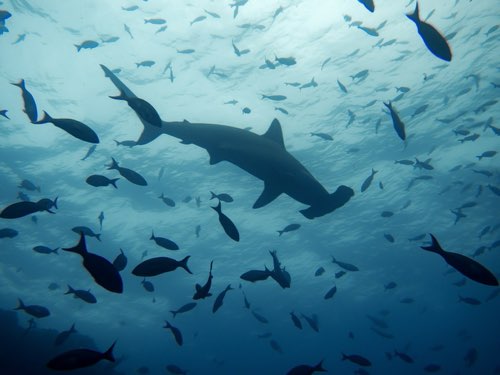
We saw 15 scalloped hammerhead sharks (Sphyrna lewini), Galápagos sharks (Carcharhinus galapagensis), Pacific spotted eagle rays (Aetobatus laticeps), and four Japanese devil rays (Mobula japanica).
Refreshments awaited us at the ship’s basecamp after each activity At midday Steve went deep-water snorkeling and was thrilled to see sharks, turtles, penguins, sea lions and huge schools of fish during his adventures: While the morning zodiac ride was exciting, our afternoon trip at Punta Moreno kicked it up a notch.
Quick answers
What animals can you see in Galápagos Islands?
The most likely sightings are Brown Pelican (seen by about 80% of wildlife watchers), Yellow Warbler (seen by about 80% of wildlife watchers), Blue-footed Booby (seen by about 80% of wildlife watchers), Marine Iguana (seen by about 80% of wildlife watchers), Galapagos Sealion (seen by about 80% of wildlife watchers) — among 388 recorded vertebrate species, based on citizen-science data from GBIF.
When is the best time to visit Galápagos Islands for wildlife?
July has the highest combined sighting rate for the park's top species in our month-by-month GBIF data. The full sighting calendar on this page shows each species' best months.
Can you see Marine Iguana in Galápagos Islands?
Yes — about 80% of wildlife watchers report a Marine Iguana sighting in Galápagos Islands, based on 5,790 verified sightings from GBIF citizen-science data.
Can you see Galápagos Giant Tortoise in Galápagos Islands?
Yes — about 50% of wildlife watchers report a Galápagos Giant Tortoise sighting in Galápagos Islands, based on 1,312 verified sightings from GBIF citizen-science data.
Can you see Galapagos Sealion in Galápagos Islands?
Yes — about 80% of wildlife watchers report a Galapagos Sealion sighting in Galápagos Islands, based on 5,078 verified sightings from GBIF citizen-science data.
Can you see Common Land Iguana in Galápagos Islands?
Yes — about 60% of wildlife watchers report a Common Land Iguana sighting in Galápagos Islands, based on 1,674 verified sightings from GBIF citizen-science data.
Where Wildlife Score
How good is this park for seeing wildlife?Biodiversity
GoodHow rich is the wildlife?
Sighting
Very goodHow likely to see animals?
Experience
ExcellentHow easy and pleasant is the visit?