



Black Crevice-skink
Egernia saxatilis
Silhouette: Kailah Thorn & Ben King · PhyloPic
- KingdomAnimalia (Animals)
- PhylumChordata (Chordates)
- ClassSquamata
- FamilyScincidae (Skinks)
- GenusEgernia (Spiny-tailed and Crevice Skinks)
- SpeciesEgernia saxatilis (Black Crevice-skink)
About the Black Crevice-skink
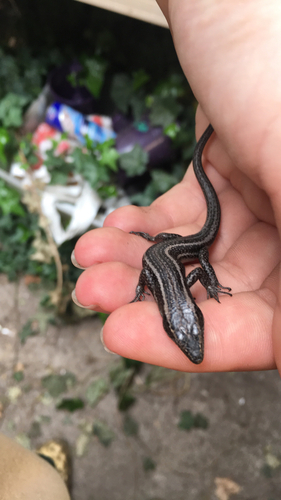
The black rock skink (Egernia saxatilis) is a species of large skink native to Eastern and Southern Australia from central New South Wales to Grampians National Park in Victoria. A large, dark colored skink, up to 135 mm from snout to base of the tail, the black rock skink is the first reptile discovered to have a "nuclear family" structure where the parents form a pair and care for their offspring for more than one year. The black rock skink is a viviparous skink meaning females give birth to live offspring instead of laying eggs. They defend their home range and families against conspecifics for up to several years.
Egernia saxatilis is divided into two separate subspecies: E. saxatilis saxatilis and E. saxatilis intermedia. Morphological and ecological differences exist between the two subspecies. The two subspecies differ in their scale counts and degree of spinosity, along with being found in two different parts of Southeastern Australia in different types of habitats.
E. saxatilis saxatilis and E. saxatilis intermedia appear similar except for the spinose auricular lobules of E. s. saxatilis and E. s. intermedia's lack thereof. E. s. saxatilis has a slightly... Wikipedia →
Recent sightings of Black Crevice-skink in Grampians National Park
LIVEiNaturalistClosest Relatives at Grampians National Park

 Shingleback Lizard
Tiliqua rugosa

Cool-temperate Water Skink
Eulamprus tympanum

 Pale-flecked Garden Sunskink
Lampropholis guichenoti

White's Rock-skink
Liopholis whitii

 Southeastern Slider
Lerista bougainvillii

Ragged Snake-eyed Skink
Cryptoblepharus pannosus

Eastern Striped Skink
Ctenotus robustus

Blotched Bluetongue
Tiliqua nigrolutea

Common Bluetongue
Tiliqua scincoides
 Trunk-climbing Cool-skink
Pseudemoia spenceri

Entrecasteaux's Skink
Pseudemoia entrecasteauxii

Eastern Three-lined Skink
Acritoscincus duperreyi
Global Distribution
Warmer areas are where this animal is recorded most often.
Parks Where Found
| # | Park | Country | Daily sighting probability |
|---|---|---|---|
| 1 | Grampians National Park | 🇦🇺 Australia | |
| 2 | Kosciuszko National Park | 🇦🇺 Australia | |
| 3 | Blue Mountains National Park | 🇦🇺 Australia |
Quick answers
What are the chances of seeing a Black Crevice-skink in Grampians National Park?
About 60% of wildlife watchers report a Black Crevice-skink sighting in Grampians National Park, based on 160 verified sightings from GBIF citizen-science data.
When is the best time to see Black Crevice-skink in Grampians National Park?
January has the highest sighting rate for Black Crevice-skink in Grampians National Park in our monthly data.