



Shingleback Lizard
Tiliqua rugosa
Silhouette: David Orr · PhyloPic
- KingdomAnimalia (Animals)
- PhylumChordata (Chordates)
- ClassSquamata
- FamilyScincidae (Skinks)
- GenusTiliqua (Bluetongues)
- SpeciesTiliqua rugosa (Shingleback Lizard)
About the Shingleback Lizard
Tiliqua rugosa, most commonly known as the shingleback skink, shingleback lizard, bobtail lizard, and the two-headed skink (often simply shingleback or bobtail); is a short-tailed, slow-moving species of blue-tongued skink (genus Tiliqua) endemic to Australia. Three of its four recognised subspecies are found in Western Australia, where the bobtail name is most frequently used. The fourth subspecies, T. rugosa asper, is the only one native to eastern Australia, where it goes by the common name of the eastern shingleback.
Apart from bobtail and shingleback, a variety of other common names are used in different states, including two-headed skink, stumpy lizard, stumpy-tailed lizard, pinecone lizard, bogeye or boggi, and less commonly: sleepy lizard. The Noongar Aboriginal people refer to T. rugosa as yoorn in their language.
T. rugosa has a short, wide, stumpy tail that resembles its head and may serve the purpose of confusing predators. The tail also contains fat reserves, which are drawn upon during brumation in winter, during which many lizards perform a behaviour similar to hibernation except they require water every day, but can go without food. This skink is an omnivore; it eats snails and plants and spends much of its time browsing through vegetation for food. In human habitation, it is often seen basking on roadsides or other paved areas. Wikipedia →
Recent sightings of Shingleback Lizard in Grampians National Park
LIVEiNaturalistClosest Relatives at Grampians National Park

 Blotched Bluetongue
Tiliqua nigrolutea

Common Bluetongue
Tiliqua scincoides

Cool-temperate Water Skink
Eulamprus tympanum

 Black Crevice-skink
Egernia saxatilis

 Pale-flecked Garden Sunskink
Lampropholis guichenoti

White's Rock-skink
Liopholis whitii

 Southeastern Slider
Lerista bougainvillii

Ragged Snake-eyed Skink
Cryptoblepharus pannosus

Eastern Striped Skink
Ctenotus robustus
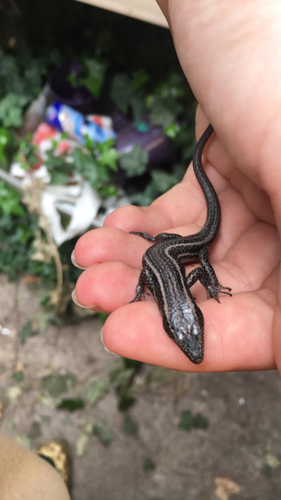
 Trunk-climbing Cool-skink
Pseudemoia spenceri

Entrecasteaux's Skink
Pseudemoia entrecasteauxii

Eastern Three-lined Skink
Acritoscincus duperreyi
Global Distribution
Warmer areas are where this animal is recorded most often.
Parks Where Found
| # | Park | Country | Daily sighting probability |
|---|---|---|---|
| 1 | Grampians National Park | 🇦🇺 Australia | |
| 2 | Flinders Ranges National Park | 🇦🇺 Australia | |
| 3 | Ningaloo Marine Park | 🇦🇺 Australia | |
| 4 | Blue Mountains National Park | 🇦🇺 Australia |
Quick answers
What are the chances of seeing a Shingleback Lizard in Grampians National Park?
About 70% of wildlife watchers report a Shingleback Lizard sighting in Grampians National Park, based on 272 verified sightings from GBIF citizen-science data.
When is the best time to see Shingleback Lizard in Grampians National Park?
October has the highest sighting rate for Shingleback Lizard in Grampians National Park in our monthly data.