


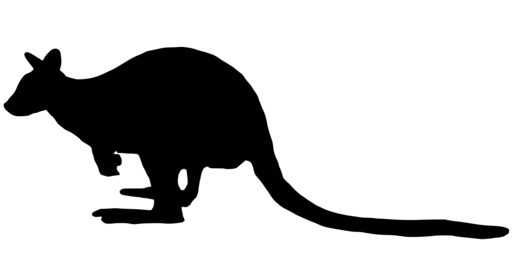
Swamp Wallaby
Wallabia bicolor
Silhouette: Michael Scroggie · PhyloPic
- KingdomAnimalia (Animals)
- PhylumChordata (Chordates)
- ClassMammalia (Mammals)
- OrderDiprotodontia (Kangaroos, Possums, Wombats, and Allies)
- FamilyMacropodidae (Kangaroos, Wallabies and Allies)
- GenusWallabia (Swamp Wallabies)
- SpeciesWallabia bicolor (Swamp Wallaby)
About the Swamp Wallaby
The swamp wallaby (Wallabia bicolor) is a small macropod marsupial of eastern Australia. This wallaby is also commonly known as the black wallaby, with other names including black-tailed wallaby, fern wallaby, black pademelon, stinker (in Queensland), and black stinker (in New South Wales) on account of its characteristic swampy odour.
The swamp wallaby is the only living member of the genus Wallabia. Historic names for the swamp wallaby include Aroe kangaroo. The swamp wallaby is known as banggarai in the Dharawal language. The swamp wallaby is found from the northernmost areas of Cape York Peninsula in Queensland, down the entire east coast and around to western Victoria and south-eastern South Australia, where it has greatly expanded its distribution over the past four decades. Advances in rabbit control appear to have resulted in extension of the swamp wallaby's distribution, which has expanded since the time of European settlement.
It inhabits thick undergrowth in forests and woodlands, or shelters during the day in thick grass or ferns, emerging at night to feed. They have been found to inhabit diverse habitats such as open farmland... Wikipedia →
Recent sightings of Swamp Wallaby in Great Otway National Park
LIVEiNaturalistClosest Relatives at Great Otway National Park

 Eastern Grey Kangaroo
Macropus giganteus

 Red-necked Wallaby
Notamacropus rufogriseus

 Koala
Phascolarctos cinereus

 Common Ringtail Possum
Pseudocheirus peregrinus

 Common Brushtail
Trichosurus vulpecula

 Yellow-bellied Glider
Petaurus australis

 Inland Sugar Glider
Petaurus notatus

 Long-nosed Potoroo
Potorous tridactylus

 Feather-tailed Glider
Acrobates pygmaeus

 Eastern Pygmy Possum
Cercartetus nanus
Global Distribution
Warmer areas are where this animal is recorded most often.
Parks Where Found
| # | Park | Country | Daily sighting probability |
|---|---|---|---|
| 1 | Wilsons Promontory National Park | 🇦🇺 Australia | |
| 2 | Grampians National Park | 🇦🇺 Australia | |
| 3 | Booderee National Park | 🇦🇺 Australia | |
| 4 | Great Otway National Park | 🇦🇺 Australia | |
| 5 | Kosciuszko National Park | 🇦🇺 Australia | |
| 6 | Springbrook National Park | 🇦🇺 Australia | |
| 7 | Blue Mountains National Park | 🇦🇺 Australia | |
| 8 | Royal National Park | 🇦🇺 Australia | |
| 9 | Lamington National Park | 🇦🇺 Australia | |
| 10 | Daintree National Park | 🇦🇺 Australia | |
| 11 | Noosa National Park | 🇦🇺 Australia |
Quick answers
What are the chances of seeing a Swamp Wallaby in Great Otway National Park?
About 40% of wildlife watchers report a Swamp Wallaby sighting in Great Otway National Park, based on 202 verified sightings from GBIF citizen-science data.
When is the best time to see Swamp Wallaby in Great Otway National Park?
September has the highest sighting rate for Swamp Wallaby in Great Otway National Park in our monthly data.