


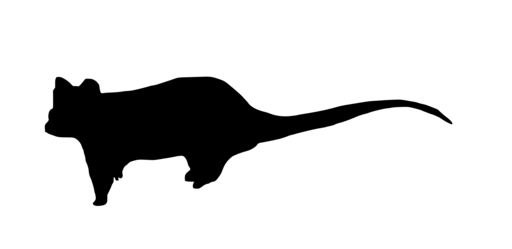
Common Ringtail Possum
Pseudocheirus peregrinus
Silhouette: Michael Scroggie · PhyloPic
- KingdomAnimalia (Animals)
- PhylumChordata (Chordates)
- ClassMammalia (Mammals)
- OrderDiprotodontia (Kangaroos, Possums, Wombats, and Allies)
- FamilyPseudocheiridae (Ring-tailed Possums and Greater Gliders)
- GenusPseudocheirus (Australian Ring-tailed Possums)
- SpeciesPseudocheirus peregrinus (Common Ringtail Possum)
About the Common Ringtail Possum
The common ringtail possum (Pseudocheirus peregrinus, Greek for "false hand" and Latin for "pilgrim" or "alien") is an Australian marsupial. The possum lives in a variety of habitats and eats a variety of leaves of both native and introduced plants, as well as flowers, fruits and sap. It also consumes caecotropes, which are material fermented in the caecum and expelled during the daytime when it is resting in a nest. This behaviour is called caecotrophy and is similar to that seen in rabbits.
The possum carries its young in a pouch, where it develops for 120–130 days before leaving. They are affected by land clearing, which destroys their habitat. The red fox is an introduced invasive species and predator that negatively impacts the possum.
The common ringtail possum is currently classified as one of the two living species in the genus Pseudocheirus; the species of Pseudochirulus and other ringtail genera were formerly also classified in Pseudocheirus. Several subspecies have been described:
Pseudocheirus peregrinus pereginus, the type subspecies based on a collection made at Endeavour River Pseudocheirus peregrinus convolutor, (Eastern ringtail possum or Southeastern... Wikipedia →
Recent sightings of Common Ringtail Possum in Great Otway National Park
LIVEiNaturalistClosest Relatives at Great Otway National Park

 Koala
Phascolarctos cinereus

 Eastern Grey Kangaroo
Macropus giganteus

 Swamp Wallaby
Wallabia bicolor

 Common Brushtail
Trichosurus vulpecula

 Red-necked Wallaby
Notamacropus rufogriseus

 Yellow-bellied Glider
Petaurus australis

 Inland Sugar Glider
Petaurus notatus

 Long-nosed Potoroo
Potorous tridactylus

 Feather-tailed Glider
Acrobates pygmaeus

 Eastern Pygmy Possum
Cercartetus nanus
Global Distribution
Warmer areas are where this animal is recorded most often.
Parks Where Found
| # | Park | Country | Daily sighting probability |
|---|---|---|---|
| 1 | Lamington National Park | 🇦🇺 Australia | |
| 2 | Great Otway National Park | 🇦🇺 Australia | |
| 3 | Maria Island National Park | 🇦🇺 Australia | |
| 4 | Cradle Mountain-Lake St Clair National Park | 🇦🇺 Australia | |
| 5 | Blue Mountains National Park | 🇦🇺 Australia | |
| 6 | Noosa National Park | 🇦🇺 Australia | |
| 7 | Grampians National Park | 🇦🇺 Australia | |
| 8 | Springbrook National Park | 🇦🇺 Australia | |
| 9 | Royal National Park | 🇦🇺 Australia | |
| 10 | Wilsons Promontory National Park | 🇦🇺 Australia | |
| 11 | Kosciuszko National Park | 🇦🇺 Australia | |
| 12 | Flinders Chase | 🇦🇺 Australia | |
| 13 | Booderee National Park | 🇦🇺 Australia |
Quick answers
What are the chances of seeing a Common Ringtail Possum in Great Otway National Park?
About 30% of wildlife watchers report a Common Ringtail Possum sighting in Great Otway National Park, based on 99 verified sightings from GBIF citizen-science data.
When is the best time to see Common Ringtail Possum in Great Otway National Park?
September has the highest sighting rate for Common Ringtail Possum in Great Otway National Park in our monthly data.