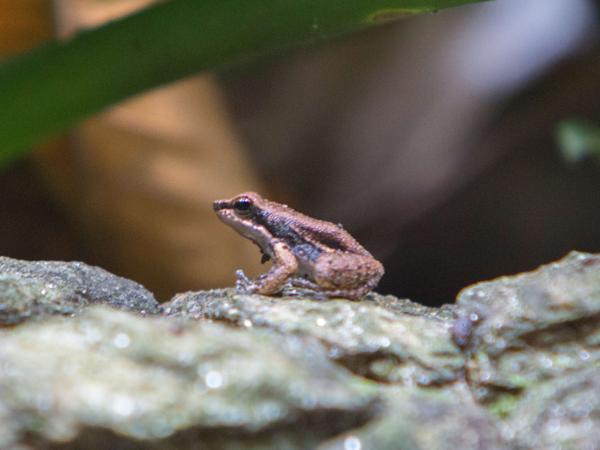

Hermina's Poison Frog
Mannophryne herminae
Silhouette: Dmitry Bogdanov (vectorized by T. Michael Keesey) · PhyloPic
- KingdomAnimalia (Animals)
- PhylumChordata (Chordates)
- ClassAmphibia (Amphibians)
- OrderAnura (Frogs and Toads)
- FamilyAromobatidae (Cryptic Forest Frogs)
- GenusMannophryne (Fingered Poison Frogs)
- SpeciesMannophryne herminae (Hermina's Poison Frog)
About the Hermina's Poison Frog
Mannophryne herminae is a species of frog in the family Aromobatidae. It is endemic to Venezuela. This diurnal frog lives near narrow streams that run through in forests on mountains and in lowlands. It can survive in primary forest, secondary forest, and on coffee and cocoa plantations that have sufficient shade. Scientists have seen the frog between 0 and 1200 meters above sea level.
There are two national parks in the frog's range: San Esteban National Park and Henri Pittier National Park. The male frogs perch on rocks near streams and call to the female frogs. The female frogs exhibit some territorial behavior. The female frogs lay eggs in the leaf litter near streams. After the eggs hatch, the male frogs carry the tadpoles to ponds in the streams.
Mannophryne herminae is classified as Near Threatened (NT) on both the IUCN Red List and Venezuelan Fauna Red List. It is threatened by habitat loss associated with human-set fires, unrestricted tourism, and forest conversion to agriculture and urban areas. Venezuela does not always enforce the laws that it has in place to protect these forests.
Scientists have reported the fungus Batrachochytrium... Wikipedia →
Recent sightings of Hermina's Poison Frog in Henri Pittier National Park
LIVEiNaturalistClosest Relatives at Henri Pittier National Park

 Banana Tree Dwelling Frog
Boana platanera

 Puerto Cabello Tree Frog
Flectonotus pygmaeus

Rivero's Robber Frog
Pristimantis riveroi

 Johnstone's Whistling Frog
Eleutherodactylus johnstonei

 Eastern Cane Toad
Rhinella marina

 Puerto Cabello Robber Frog
Strabomantis biporcatus
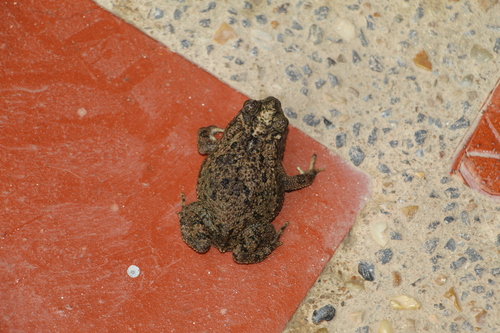
Beebe's Toad
Rhinella beebei

 Spotted Foam-nest Frog
Leptodactylus insularum

Secret Robber Frog
Pristimantis incertus
Global Distribution
Warmer areas are where this animal is recorded most often.
Parks Where Found
| # | Park | Country | Daily sighting probability |
|---|---|---|---|
| 1 | Henri Pittier National Park | 🇻🇪 Venezuela |
More parks will be added in future updates.