

Puerto Cabello Tree Frog
Flectonotus pygmaeus
Silhouette: Dmitry Bogdanov (vectorized by T. Michael Keesey) · PhyloPic
- KingdomAnimalia (Animals)
- PhylumChordata (Chordates)
- ClassAmphibia (Amphibians)
- OrderAnura (Frogs and Toads)
- FamilyHemiphractidae (Neotropical Horned Frogs)
- GenusFlectonotus (Venezuelan Marsupial Frogs)
- SpeciesFlectonotus pygmaeus (Puerto Cabello Tree Frog)
About the Puerto Cabello Tree Frog
Flectonotus pygmaeus (also known as: Puerto Cabello treefrog, Spanish: ranita marsupial pigmea) is a species of frog in the family Hemiphractidae. It is found in mountainous regions of northwest Venezuela and northeast Colombia.
The first description of the species was published by Oskar Boettger in 1893, under the name Nototrema pygmaeum. Already in 1926 did Alípio de Miranda-Ribeiro suggest the name Flectonotus pygmaeus, but it wasn't until 1966, after a few decades of the genus names and classifications of the species and its close relatives being shuffled, that Werner C.A. Bokermann would publish the modern the name Flectonotus pygmaeus with Flectonotus referring to a genus containing F.pygmaeus and F.fitzgeraldi.
F.pygmaeus snout–vent length is typically in the range of 22–24.2 mm (0.87–0.95 in) for males and 27.4–30.6 mm (1.08–1.20 in) for females, about 34.6% and 36.2% larger, respectively, than the typical snout–vent lengths of Flectonotus fitzgeraldi. F. pygmaeus have smooth tarsi and backs, and usually have a rounded snout.
F. pygmaeus is found on the Mérida Andes and Venezuelan Coastal Range in Venezuela and... Wikipedia →
Recent sightings of Puerto Cabello Tree Frog in Henri Pittier National Park
LIVEiNaturalistClosest Relatives at Henri Pittier National Park

 Banana Tree Dwelling Frog
Boana platanera

 Rivero's Robber Frog
Pristimantis riveroi
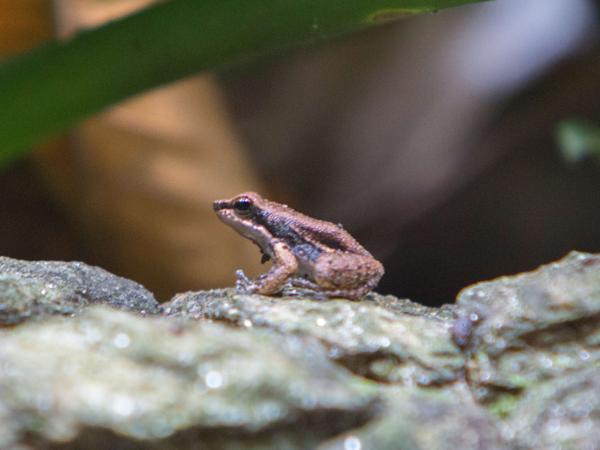
Hermina's Poison Frog
Mannophryne herminae

 Johnstone's Whistling Frog
Eleutherodactylus johnstonei

 Eastern Cane Toad
Rhinella marina

 Puerto Cabello Robber Frog
Strabomantis biporcatus
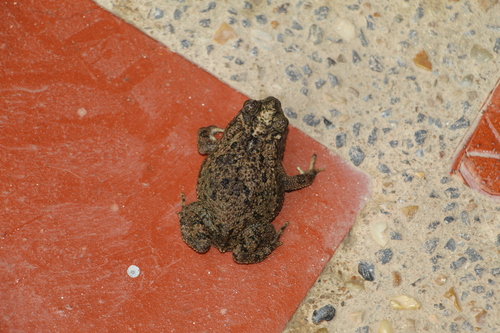
Beebe's Toad
Rhinella beebei

 Spotted Foam-nest Frog
Leptodactylus insularum

Secret Robber Frog
Pristimantis incertus
Global Distribution
Warmer areas are where this animal is recorded most often.
Parks Where Found
| # | Park | Country | Daily sighting probability |
|---|---|---|---|
| 1 | Henri Pittier National Park | 🇻🇪 Venezuela |
More parks will be added in future updates.