



Orange Minivet
Pericrocotus flammeus
Silhouette: PhyloPic · PhyloPic
- KingdomAnimalia (Animals)
- PhylumChordata (Chordates)
- ClassAves (Birds)
- OrderPasseriformes (Perching Birds)
- FamilyCampephagidae (Cuckooshrikes)
- GenusPericrocotus (Minivets)
- SpeciesPericrocotus flammeus (Orange Minivet)
About the Orange Minivet
The orange minivet (Pericrocotus flammeus) is a brightly colored bird in the cuckooshrike family, Campephagidae. It is found all along the Western Ghats and west coast of India and Sri Lanka. It was formerly considered a subspecies of the scarlet minivet which is considered to have a wider distribution in eastern and northern India and South-east Asia. Its natural habitats are temperate forests, subtropical or tropical moist lowland forest, and subtropical or tropical moist montane forest. The orange minivet is a species resident in southern India and Sri Lanka, that feeds primarily on insects while foraging in mixed-species bird flocks or in small single-species groups.
The genus name comes from Ancient Greek peri - 'very'; krokotus 'saffron-coloured'. The species name flammeus has its roots in Latin, meaning 'fiery' or 'flame-coloured' (flamma - 'flame'). The English name of this species was changed from scarlet minivet to orange minivet after the former was assigned to Pericrocotus speciosus following the split of these two species. This is a complex of species from South and South-east Asia which needs more detailed work.
The orange... Wikipedia →
Recent sightings of Orange Minivet in Horton Plains National Park
LIVEiNaturalistClosest Relatives at Horton Plains National Park

 Small Minivet
Pericrocotus cinnamomeus

Black-headed Cuckooshrike
Coracina melanoptera

 Sri Lanka White-eye
Zosterops ceylonensis

 Pied Bushchat
Saxicola caprata

 Yellow-eared Bulbul
Pycnonotus penicillatus

 Hill Swallow
Hirundo domicola

 Dull-blue Flycatcher
Eumyias sordidus

 Large-billed Crow
Corvus macrorhynchos

 Cinereous Tit
Parus cinereus
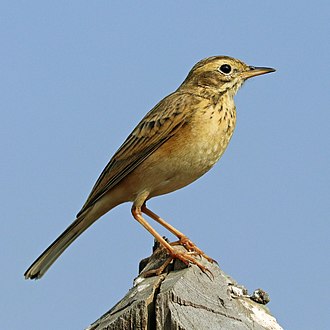
 Oriental Pipit
Anthus rufulus

 Indian Blackbird
Turdus simillimus

 Zitting Cisticola
Cisticola juncidis
Global Distribution
Warmer areas are where this animal is recorded most often.
Parks Where Found
| # | Park | Country | Daily sighting probability |
|---|---|---|---|
| 1 | Periyar National Park | 🇮🇳 India | |
| 2 | Sinharaja Forest Reserve | 🇱🇰 Sri Lanka | |
| 3 | Nagarhole National Park | 🇮🇳 India | |
| 4 | Horton Plains National Park | 🇱🇰 Sri Lanka | |
| 5 | Mudumalai National Park | 🇮🇳 India | |
| 6 | Eravikulam National Park | 🇮🇳 India | |
| 7 | Bandipur National Park | 🇮🇳 India | |
| 8 | Yala National Park | 🇱🇰 Sri Lanka | |
| 9 | Wilpattu National Park | 🇱🇰 Sri Lanka | |
| 10 | Minneriya National Park | 🇱🇰 Sri Lanka |
Quick answers
What are the chances of seeing a Orange Minivet in Horton Plains National Park?
About 30% of wildlife watchers report a Orange Minivet sighting in Horton Plains National Park, based on 175 verified sightings from GBIF citizen-science data.
When is the best time to see Orange Minivet in Horton Plains National Park?
November has the highest sighting rate for Orange Minivet in Horton Plains National Park in our monthly data.