Iberá National Park
🇦🇷 Argentina
🐹 Capybara and Caiman WetlandIberá is the easiest wildlife watching in Argentina. Yacaré caimans line the lagoon edges, capybaras graze in family groups beside the paths, and marsh deer — the largest deer in South America — feed in the open water meadows. All three are recorded on around nine of every ten visits.
-28.254° S 57.473° W
Wildlife
⭐ Iconic Species
 ★
★  Yacare Caiman
Caiman yacare
 ★
★  Marsh Deer
Blastocerus dichotomus
 ★
★  Capybara
Hydrochoerus hydrochaeris
 ★
★  Red-and-green Macaw
Ara chloropterus
📊 Most Spotted

 Giant Wood-Rail
Aramides ypecaha

 Southern Lapwing
Vanellus chilensis

 Great Kiskadee
Pitangus sulphuratus

 Rufous Hornero
Furnarius rufus

 Southern Screamer
Chauna torquata

 Wattled Jacana
Jacana jacana

 Crested Caracara
Caracara plancus

Brazilian Cardinal
Paroaria coronata

Monk Parakeet
Myiopsitta monachus

 Cattle Tyrant
Machetornis rixosa

Great Pampa-Finch
Embernagra platensis

 Campo Flicker
Colaptes campestris
⭐ Iconic Species
📊 Most Spotted

 Black Howler
Alouatta caraya

 Pampas Fox
Lycalopex gymnocercus

 Nine-banded Armadillo
Dasypus novemcinctus

 Crab-eating Fox
Cerdocyon thous

 Brazilian Guinea Pig
Cavia aperea

 Plains Viscacha
Lagostomus maximus

Pampas Deer
Ozotoceros bezoarticus

 Neotropical Otter
Lontra longicaudis

 Collared Peccary
Pecari tajacu

 Jaguar
Panthera onca

 Six-banded Armadillo
Euphractus sexcinctus

Axis Deer
Axis axis
⭐ Iconic Species
📊 Most Spotted
Giant Wood-Rail
Aramides ypecaha
Southern Lapwing
Vanellus chilensis
Great Kiskadee
Pitangus sulphuratus
Rufous Hornero
Furnarius rufus
Southern Screamer
Chauna torquata
Wattled Jacana
Jacana jacana
Crested Caracara
Caracara plancus
Brazilian Cardinal
Paroaria coronata
Monk Parakeet
Myiopsitta monachus
Cattle Tyrant
Machetornis rixosa
Great Pampa-Finch
Embernagra platensis
Campo Flicker
Colaptes campestris
⭐ Iconic Species
📊 Most Spotted

Broad-snouted Caiman
Caiman latirostris

 Argentine Black-and-white Tegu
Salvator merianae

 Yellow Anaconda
Eunectes notaeus

 Urutu Lancehead
Bothrops alternatus

 False Water Cobra
Hydrodynastes gigas

Wagler's Snake
Xenodon merremii

Jaeger's Ground Snake
Erythrolamprus jaegeri

 Striped Worm Lizard
Ophiodes striatus

Patagonian Racer
Philodryas patagoniensis

Rio Tropical Racer
Palusophis bifossatus

Golden Liophis
Erythrolamprus semiaureus

 Tropical House Gecko
Hemidactylus mabouia
📊 Most Spotted

 Cururu Toad
Rhinella diptycha

 Lesser Snouted Tree Frog
Scinax nasicus
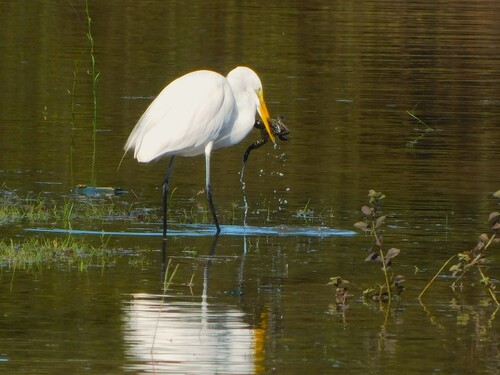
 Wrestler Frog
Leptodactylus luctator

 Montevideo Tree Frog
Boana pulchella

 Uruguay Harlequin Frog
Lysapsus limellum

Chaco Tree Frog
Boana raniceps

Bella Vista Toad
Rhinella dorbignyi

 Hensel's Swamp Frog
Pseudopaludicola falcipes

Oven Frog
Leptodactylus latinasus

Miranda's White-lipped Frog
Leptodactylus macrosternum

Whistling Grass Frog
Leptodactylus fuscus

Brown-bordered Snouted Tree Frog
Scinax fuscomarginatus
Recent sightings in Iberá National Park
LIVEiNaturalistAnimal Events
1Anacondas Bask
Yellow anacondas come out onto the banks and floating vegetation to warm up.
2Marsh Deer and Caimans in the Open
Marsh deer feed in the open water meadows and yacaré caimans line the lagoon edges, both at their peak.
3Macaws and Screamers over the Marsh
Reintroduced green-winged macaws fly between feeding sites, and southern screamers call from the marsh in numbers.
Sighting Calendar
Average chance of spotting the park's most-spotted species, month by month
- 1Anacondas Bask
- 2Marsh Deer and Caimans in the Open
- 3Macaws and Screamers over the Marsh
Sighting Zones
Warmer areas are where all species together are recorded most often.
Essentials
Climate
What visitors saw
From the car, we see caimans, herons, caracaras, capybaras, water buffalo, owls, and many water birds.
In the nearby lake, we spotted our first caiman, and, along the dusty trail, we saw two guazunchos (a type of small dear).
In real time, we were flipping through the pages of a guidebook and checking off every single bird species as seen: roseate spoonbills, white-faced ibis, ringed kingfishers, stilts, storks, caracaras, herons, the strange-tailed tyrant.
During our drive back from the Laguna Ibera, we saw a grey fox, a caracara, and a few rhea birds(an ostrich-like bird native to South America).
Quick answers
What animals can you see in Iberá National Park?
The most likely sightings are Capybara (seen by about 80% of wildlife watchers), Marsh Deer (seen by about 80% of wildlife watchers), Yacare Caiman (seen by about 80% of wildlife watchers), Giant Wood-Rail (seen by about 80% of wildlife watchers), Southern Lapwing (seen by about 80% of wildlife watchers) — among 770 recorded vertebrate species, based on citizen-science data from GBIF.
When is the best time to visit Iberá National Park for wildlife?
September has the highest combined sighting rate for the park's top species in our month-by-month GBIF data. The full sighting calendar on this page shows each species' best months.
Can you see Yacare Caiman in Iberá National Park?
Yes — about 80% of wildlife watchers report a Yacare Caiman sighting in Iberá National Park, based on 482 verified sightings from GBIF citizen-science data.
Can you see Marsh Deer in Iberá National Park?
Yes — about 80% of wildlife watchers report a Marsh Deer sighting in Iberá National Park, based on 405 verified sightings from GBIF citizen-science data.
Can you see Capybara in Iberá National Park?
Yes — about 80% of wildlife watchers report a Capybara sighting in Iberá National Park, based on 498 verified sightings from GBIF citizen-science data.
Can you see Red-and-green Macaw in Iberá National Park?
It's possible but not guaranteed: about 10% of wildlife watchers report a Red-and-green Macaw sighting in Iberá National Park, based on 232 verified sightings from GBIF citizen-science data. Sightings take luck and time in the field.
Where Wildlife Score
How good is this park for seeing wildlife?Biodiversity
GoodHow rich is the wildlife?
Sighting
ExcellentHow likely to see animals?
Experience
Very goodHow easy and pleasant is the visit?
_male_Vicente_Lopez.jpg/330px-Argentine_black_and_white_tegu_(Salvator_merianae)_male_Vicente_Lopez.jpg)

