

Guinle Treefrog
Aplastodiscus leucopygius
Silhouette: Dmitry Bogdanov (vectorized by T. Michael Keesey) · PhyloPic
- KingdomAnimalia (Animals)
- PhylumChordata (Chordates)
- ClassAmphibia (Amphibians)
- OrderAnura (Frogs and Toads)
- FamilyHylidae (Hylid Tree Frogs)
- GenusAplastodiscus (Canebrake Tree Frogs)
- SpeciesAplastodiscus leucopygius (Guinle Treefrog)
About the Guinle Treefrog
Aplastodiscus leucopygius is a species of frog in the family Hylidae. It is endemic to Brazil. A. leucopygius is a medium-sized frog growing to a length of about 4 cm (1.6 in). The snout is rounded, and a single vocal sac is on the throat. The iris is golden, tinged with orange around the edge, and the tympanum is clearly visible. The fingers and toes have large discs on the tips to help the frog retain grip when climbing. The dorsal surface of this frog is smooth and green, with a scattering of white spots, while the ventral surface is granular and cream-coloured with white flecks. The skin above the vent is ornamented by a short, white ridge.
A. leucopygius is an arboreal species and is endemic to the mountains near the south-eastern coast of Brazil at altitudes of 800 to 1,600 metres (2,600 to 5,200 ft) above sea level. It is mainly found in forested areas near streams or temporary pools.
Breeding takes place in the rainy season between December and February. The male calls from trees close to a body of water to attract a female. Often, several males near each other form a chorus. On the arrival, a female selects a male in an... Wikipedia →
Recent sightings of Guinle Treefrog in Itatiaia National Park
LIVEiNaturalistClosest Relatives at Itatiaia National Park

 Teresopolis Treefrog
Aplastodiscus arildae

 Blacksmith Tree Frog
Boana faber

Cope's Eastern Paraguay Tree Frog
Boana polytaenia

Elegant Forest Tree Frog
Dendropsophus elegans

Corcovado Tree Frog
Dendropsophus seniculus

Leopard Tree Frog
Boana pardalis

Semi-lined Tree Frog
Boana semilineata

 Maldonada redbelly toad
Melanophryniscus moreirae

 Yellow Cururu Toad
Rhinella icterica

 Pumpkin Toadlet
Brachycephalus ephippium

 Clay Robber Frog
Haddadus binotatus
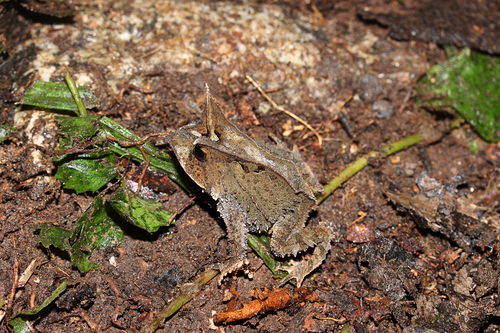
Mantiqueira Smooth-horned Frog
Proceratophrys mantiqueira
Global Distribution
Warmer areas are where this animal is recorded most often.
Parks Where Found
| # | Park | Country | Daily sighting probability |
|---|---|---|---|
| 1 | Itatiaia National Park | 🇧🇷 Brazil |
More parks will be added in future updates.