

Black-footed Tree Rat
Mesembriomys gouldii
Silhouette: T. Michael Keesey · PhyloPic
- KingdomAnimalia (Animals)
- PhylumChordata (Chordates)
- ClassMammalia (Mammals)
- OrderRodentia (Rodents)
- FamilyMuridae (Old World Mice and Rats)
- GenusMesembriomys (Australian Tree Rats)
- SpeciesMesembriomys gouldii (Black-footed Tree Rat)
About the Black-footed Tree Rat
The black-footed tree-rat (Mesembriomys gouldii), also known as Djintamoonga, is one of two endemic Australian rodent species in the genus Mesembriomys. Both the black-footed tree-rat and its congener, the golden-backed tree-rat (M. macrurus), are found in northern Australia. The species is one of the largest murids found in Australia.
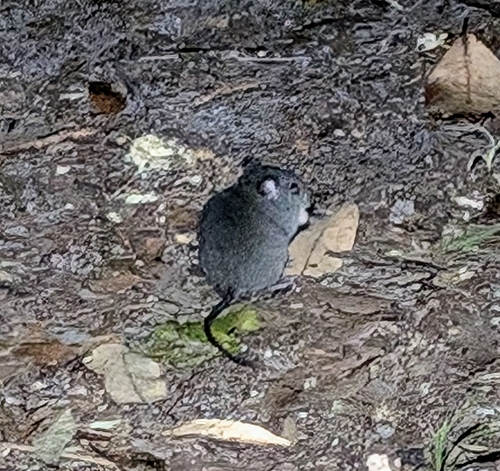
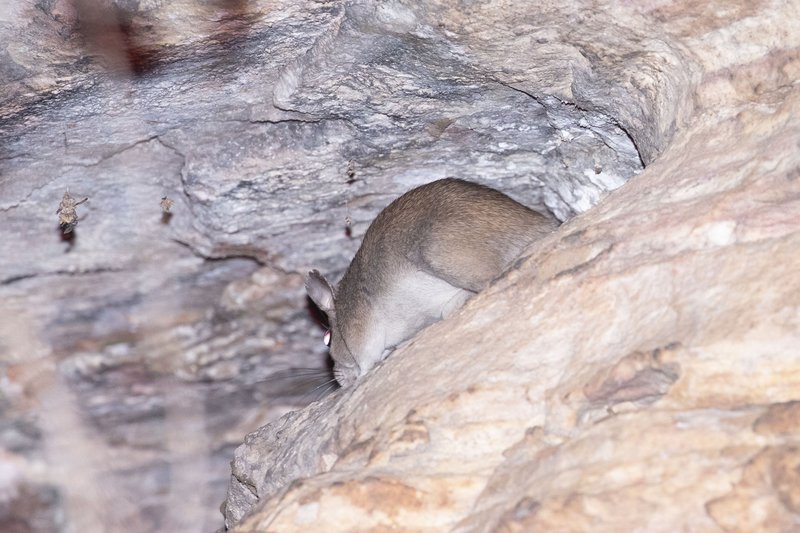
Haematological and blood chemistry research has been performed on the black-footed tree-rat to aid in the captive and natural management of Australian native murids held in captivity for conservation purposes. The tree-rat has a greyish-brown coat that is shaggy and coarse and has a creamy white underbelly. The hind feet are black with well developed pads and strong sharp claws. They have large ears and a long tail with a brush of white hair at the tip. They grow to a mass of 830 grams (29 oz). The head and body length of the tree-rat is typically 250 to 308 millimetres (9.8 to 12.1 in) with a tail length of 100 to 130 millimetres (3.9 to 5.1 in).
Three subspecies of the black-footed tree-rat have been recognised, based on minor morphological differences in skull and foot shape, as well as variation in colouration. Research into the... Wikipedia →
Recent sightings of Black-footed Tree Rat in Kakadu National Park
LIVEiNaturalist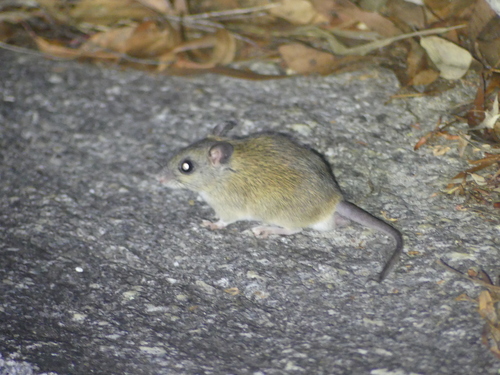



Global Distribution
Warmer areas are where this animal is recorded most often.
Parks Where Found
| # | Park | Country | Daily sighting probability |
|---|---|---|---|
| 1 | Litchfield National Park | 🇦🇺 Australia | |
| 2 | Kakadu National Park | 🇦🇺 Australia |