
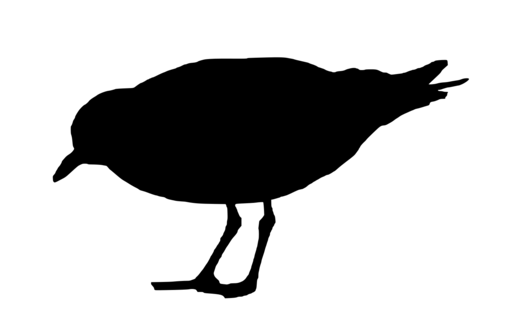
Brown-headed Gull
Chroicocephalus brunnicephalus
Silhouette: Michael Scroggie · PhyloPic
- KingdomAnimalia (Animals)
- PhylumChordata (Chordates)
- ClassAves (Birds)
- OrderCharadriiformes (Shorebirds and Allies)
- FamilyLaridae (Gulls, Terns, and Skimmers)
- GenusChroicocephalus (Masked Gulls and allies)
- SpeciesChroicocephalus brunnicephalus (Brown-headed Gull)
About the Brown-headed Gull
The brown-headed gull (Chroicocephalus brunnicephalus) is a small gull which breeds in the high plateaus of central Asia from Tajikistan to Ordos in Inner Mongolia. It is migratory, wintering on the coasts and large inland lakes of the Indian subcontinent. As is the case with many gulls, was traditionally placed in the genus Larus.
This gull breeds in colonies in large reedbeds or marshes, or on islands in lakes, nesting on the ground. Like most gulls, it is highly gregarious in winter, both when feeding or in evening roosts. It is not a pelagic species, and is rarely seen at sea far from coasts.
This is a bold and opportunist feeder, which will scavenge in towns or take invertebrates in ploughed fields with equal relish. The brown-headed gull is slightly larger than black-headed gull. The summer adult has a pale brown head, lighter than that of black-headed, a pale grey body, and red bill and legs. The black tips to the primary wing feathers have conspicuous white "mirrors". The underwing is grey with black flight feathers. The brown hood is lost in winter, leaving just dark vertical streaks.
This bird takes two years to reach maturity. First year birds have a black terminal tail band, more dark areas in the wings, and, in summer, a less homogeneous hood. This is a noisy species, especially at colonies. Wikipedia →
Recent sightings of Brown-headed Gull in Keoladeo National Park
LIVEiNaturalistClosest Relatives at Keoladeo National Park

 Black-headed Gull
Chroicocephalus ridibundus

 River Tern
Sterna aurantia

 Lesser Black-backed Gull
Larus fuscus

 Whiskered Tern
Chlidonias hybrida

 Gull-billed Tern
Gelochelidon nilotica

Pallas's Gull
Ichthyaetus ichthyaetus

 Indian Skimmer
Rynchops albicollis

 Red-wattled Lapwing
Vanellus indicus

 Bronze-winged Jacana
Metopidius indicus

 Black-winged Stilt
Himantopus himantopus

 Wood Sandpiper
Tringa glareola

Pheasant-tailed Jacana
Hydrophasianus chirurgus
Global Distribution
Warmer areas are where this animal is recorded most often.
Parks Where Found
| # | Park | Country | Daily sighting probability |
|---|---|---|---|
| 1 | Sundarbans National Park | 🇮🇳 India | |
| 2 | Ranthambore National Park | 🇮🇳 India | |
| 3 | Kaziranga National Park | 🇮🇳 India | |
| 4 | Keoladeo National Park | 🇮🇳 India | |
| 5 | Satpura National Park | 🇮🇳 India | |
| 6 | Kaeng Krachan National Park | 🇹🇭 Thailand | |
| 7 | Bandipur National Park | 🇮🇳 India | |
| 8 | Wilpattu National Park | 🇱🇰 Sri Lanka | |
| 9 | Yala National Park | 🇱🇰 Sri Lanka | |
| 10 | Bandhavgarh National Park | 🇮🇳 India | |
| 11 | Jim Corbett National Park | 🇮🇳 India | |
| 12 | Nagarhole National Park | 🇮🇳 India | |
| 13 | Manas National Park | 🇮🇳 India |
Quick answers
What are the chances of seeing a Brown-headed Gull in Keoladeo National Park?
Under 5% of wildlife watchers report a Brown-headed Gull sighting in Keoladeo National Park, based on 18 verified sightings from GBIF citizen-science data.
When is the best time to see Brown-headed Gull in Keoladeo National Park?
October has the highest sighting rate for Brown-headed Gull in Keoladeo National Park in our monthly data.