


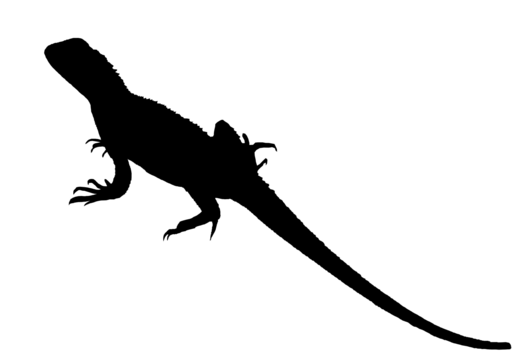
Water Dragon
Physignathus cocincinus
Silhouette: Michael Scroggie · PhyloPic
- KingdomAnimalia (Animals)
- PhylumChordata (Chordates)
- ClassSquamata
- FamilyAgamidae (Dragons)
- GenusPhysignathus
- SpeciesPhysignathus cocincinus (Water Dragon)
About the Water Dragon
Physignathus cocincinus is a species of agamid lizard native to southern China and mainland Southeast Asia. It is commonly known as the Chinese water dragon, Indochinese water dragon, Asian water dragon, Thai water dragon, or green water dragon.
Chinese water dragons are large diurnal lizards adapted for dense subtropical forests replete with unpolluted streams. They are semi-arboreal, roosting at night on branches overlooking streams, which offer an escape route when the lizards are disturbed. Arthropods are their main source of food, though worms, snails, vertebrates, and plants make up a notable portion of the diet as well. Males are territorial towards each other and bear display features such as crests and jowls. Females are oviparous and reproduce sexually in the wild, though at least one captive Chinese water dragon is known to have reproduced via parthenogenesis. Physignathus cocincinus is related to Australasian lizards in the subfamily Amphibolurinae. One amphibolurine, the Australian water dragon (Intellagama lesuerii) is so anatomically and ecologically similar to Physignathus cocincinus that it was once (erroneously) placed in the same genus.
Feral populations introduced to Hong Kong and Taiwan flourish in high densities despite countermeasures in the latter territory. Their populations are also stable (albeit not widespread) in protected areas of Thailand. However, in the rest of their native range, Chinese water dragons have seen sharp population declines in recent decades. They are listed as a Vulnerable species at risk of extinction in the future, based on current trends. The largest threat to the species is overharvesting for meat and the pet trade. Their meat is in high demand in Vietnam, and captive breeding is currently incapable of replacing wild collection by hunters and poachers. Due to their charismatic appearance, captured Chinese water dragons are sold as pets for both local and international markets. Yearly exports to the European Union and the United States number in the tens of thousands, all of which are taken from wild populations. Habitat loss is another source of pressure, as undisturbed streamside forest is converted into cropland or subjected to illegal logging and other human activities. Wikipedia →
Recent sightings of Water Dragon in Khao Yai National Park
LIVEiNaturalistClosest Relatives at Khao Yai National Park

 Emma Gray's Forest Lizard
Calotes emma

 Asian Gliding Lizard
Draco maculatus

 Cardamom Mountains Pricklenape
Acanthosaura cardamomensis

Reeves’ Butterfly Lizard
Leiolepis rubritaeniata

Siamese Blue Crested Lizard
Calotes goetzi

Scale-bellied Tree Lizard
Acanthosaura lepidogaster

Barred Flying Dragon
Draco taeniopterus

Common Butterfly Lizard
Leiolepis belliana

Burmese Green Crested Lizard
Bronchocela burmana
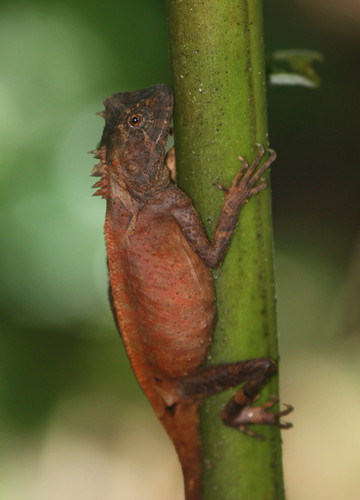
Red Lipped Horned Agamid”
Acanthosaura rubrilabris
Global Distribution
Warmer areas are where this animal is recorded most often.
Parks Where Found
| # | Park | Country | Daily sighting probability |
|---|---|---|---|
| 1 | Khao Yai National Park | 🇹🇭 Thailand | |
| 2 | Cat Tien National Park | 🇻🇳 Vietnam |
Quick answers
What are the chances of seeing a Water Dragon in Khao Yai National Park?
About 40% of wildlife watchers report a Water Dragon sighting in Khao Yai National Park, based on 88 verified sightings from GBIF citizen-science data.
When is the best time to see Water Dragon in Khao Yai National Park?
June has the highest sighting rate for Water Dragon in Khao Yai National Park in our monthly data.