

Eastern Three-lined Skink
Acritoscincus duperreyi
Silhouette: David Orr · PhyloPic
- KingdomAnimalia (Animals)
- PhylumChordata (Chordates)
- ClassSquamata
- FamilyScincidae (Skinks)
- GenusAcritoscincus (Three-lined and Red-throated Skinks)
- SpeciesAcritoscincus duperreyi (Eastern Three-lined Skink)
About the Eastern Three-lined Skink
The eastern three-lined skink (Acritoscincus duperreyi), also known commonly as the bold-striped cool-skink, is a species of skink, a lizard in the family Scincidae. The species is endemic to Australia. A. duperreyi has been extensively studied in the context of understanding the evolution of learning, viviparity in lizards, and temperature- and genetic-sex determination. A. duperreyi is classified as a species of "Least Concern" by the IUCN.
The species has also been placed in the genus Bassiana, with two other species of skink: B. trilineata and B. palynota. Micro-genetic analyses have revealed that the genus Bassiana began to diversify during the Miocene, suggesting that these three lineages started to form between 16.2 and 9.7 million years ago. Individual species in the genus began to diversify as well through the Miocene and into the Early Pleistocene. Within A. duperreyi, population-level diversification between the population on Tasmania, Kangaroo Island, and mainland Australia likely took place during the Upper Pliocene through the Early Pleistocene. Genetic evidence suggests that there are seven distinct lineages of A. duperreyi: five on mainland Australia,... Wikipedia →
Recent sightings of Eastern Three-lined Skink in Kosciuszko National Park
LIVEiNaturalistClosest Relatives at Kosciuszko National Park
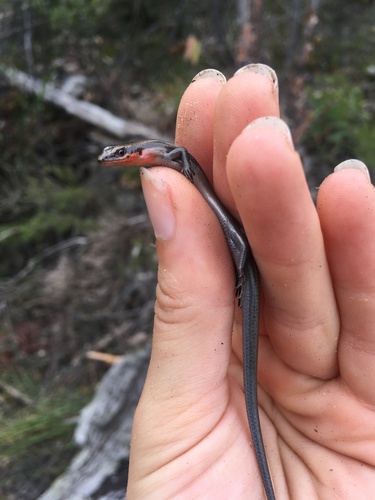
 Red-throated Cool-skink
Acritoscincus platynotus

Blotched Bluetongue
Tiliqua nigrolutea

 Cunningham's Skink
Egernia cunninghami

Southern Water Skink
Eulamprus heatwolei

 Entrecasteaux's Skink
Pseudemoia entrecasteauxii

 Pale-flecked Garden Sunskink
Lampropholis guichenoti

Cool-temperate Water Skink
Eulamprus tympanum
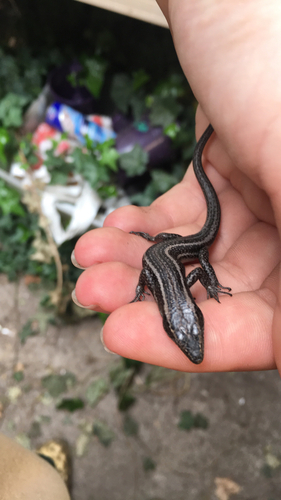
Trunk-climbing Cool-skink
Pseudemoia spenceri
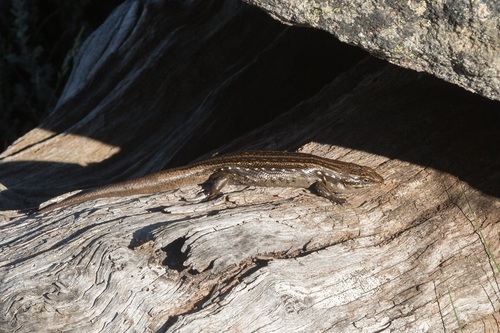
Guthega Skink
Liopholis guthega

Alpine Meadow-skink
Eulamprus kosciuskoi

Black Crevice-skink
Egernia saxatilis

Copper-tailed Ctenotus
Ctenotus taeniolatus
Global Distribution
Warmer areas are where this animal is recorded most often.
Parks Where Found
| # | Park | Country | Daily sighting probability |
|---|---|---|---|
| 1 | Wilsons Promontory National Park | 🇦🇺 Australia | |
| 2 | Kosciuszko National Park | 🇦🇺 Australia | |
| 3 | Grampians National Park | 🇦🇺 Australia | |
| 4 | Great Otway National Park | 🇦🇺 Australia | |
| 5 | Freycinet National Park | 🇦🇺 Australia | |
| 6 | Blue Mountains National Park | 🇦🇺 Australia |
Quick answers
What are the chances of seeing a Eastern Three-lined Skink in Kosciuszko National Park?
About 10% of wildlife watchers report a Eastern Three-lined Skink sighting in Kosciuszko National Park, based on 10 verified sightings from GBIF citizen-science data.
When is the best time to see Eastern Three-lined Skink in Kosciuszko National Park?
April has the highest sighting rate for Eastern Three-lined Skink in Kosciuszko National Park in our monthly data.