



Entrecasteaux's Skink
Pseudemoia entrecasteauxii
Silhouette: Oliver Griffith · PhyloPic
- KingdomAnimalia (Animals)
- PhylumChordata (Chordates)
- ClassSquamata
- FamilyScincidae (Skinks)
- GenusPseudemoia (Pseudemoia Grass Skinks)
- SpeciesPseudemoia entrecasteauxii (Entrecasteaux's Skink)
About the Entrecasteaux's Skink
Pseudemoia entrecasteauxii, also known commonly as Entrecasteaux's skink, the southern grass skink, the tussock cool-skink, and the tussock skink, is a species of lizard in the family Scincidae. The species is endemic to Australia.
P. entrecasteauxii is found in the south-east of the continent of Australia, as well as in Tasmania and the islands of Bass Strait. Although it occurs in a variety of habitats, P. entrecasteauxii is most commonly found in open grassy woodlands.
The southern grass skink has a lifespan of about 5 or 6 years. P. entrecasteauxii grows up to 7.5 cm (3.0 in) in length (not including the tail). Male skinks change colouration during the breeding season. The specific name, entrecasteauxii, is in honor of French naval officer and explorer Antoine Bruni d'Entrecasteaux.
The southern grass skink has become a model species for reproductive biology in reptiles because it gives birth to live young and exhibits non-invasive epitheliochorial placentation. Unlike the majority of live bearing reptiles, Pseudemoia develop complex placentae, which provide a substantial... Wikipedia →
Recent sightings of Entrecasteaux's Skink in Kosciuszko National Park
LIVEiNaturalistClosest Relatives at Kosciuszko National Park
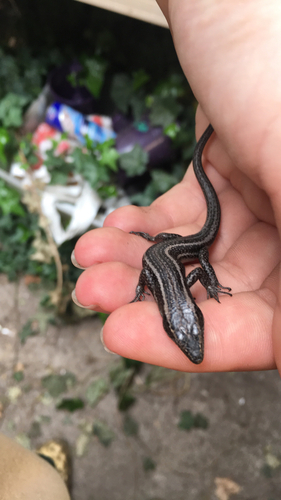
 Trunk-climbing Cool-skink
Pseudemoia spenceri

Tussock Skink
Pseudemoia pagenstecheri

Rawlinson's Window-eyed Skink
Pseudemoia rawlinsoni

 Blotched Bluetongue
Tiliqua nigrolutea

 Cunningham's Skink
Egernia cunninghami

Southern Water Skink
Eulamprus heatwolei

 Pale-flecked Garden Sunskink
Lampropholis guichenoti

Cool-temperate Water Skink
Eulamprus tympanum
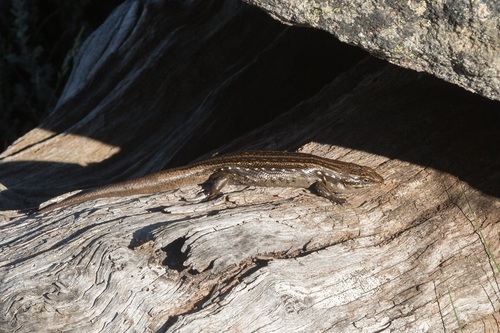
Guthega Skink
Liopholis guthega

Alpine Meadow-skink
Eulamprus kosciuskoi

Black Crevice-skink
Egernia saxatilis

Eastern Three-lined Skink
Acritoscincus duperreyi
Global Distribution
Warmer areas are where this animal is recorded most often.
Parks Where Found
| # | Park | Country | Daily sighting probability |
|---|---|---|---|
| 1 | Kosciuszko National Park | 🇦🇺 Australia | |
| 2 | Grampians National Park | 🇦🇺 Australia | |
| 3 | Great Otway National Park | 🇦🇺 Australia | |
| 4 | Blue Mountains National Park | 🇦🇺 Australia | |
| 5 | Maria Island National Park | 🇦🇺 Australia | |
| 6 | Flinders Chase | 🇦🇺 Australia | |
| 7 | Cradle Mountain-Lake St Clair National Park | 🇦🇺 Australia |
Quick answers
What are the chances of seeing a Entrecasteaux's Skink in Kosciuszko National Park?
About 30% of wildlife watchers report a Entrecasteaux's Skink sighting in Kosciuszko National Park, based on 60 verified sightings from GBIF citizen-science data.
When is the best time to see Entrecasteaux's Skink in Kosciuszko National Park?
March has the highest sighting rate for Entrecasteaux's Skink in Kosciuszko National Park in our monthly data.