

Coastal Taipan
Oxyuranus scutellatus
Silhouette: SeismicShrimp · PhyloPic
- KingdomAnimalia (Animals)
- PhylumChordata (Chordates)
- ClassSquamata
- FamilyElapidae (Elapid Snakes)
- GenusOxyuranus (Taipans)
- SpeciesOxyuranus scutellatus (Coastal Taipan)
About the Coastal Taipan
The coastal taipan (Oxyuranus scutellatus), or common taipan, is a species of extremely venomous snake in the family Elapidae. Described by Wilhelm Peters in 1867, the species is native to the coastal regions of northern and eastern Australia and the island of New Guinea. The second-longest venomous snake in Australia, the coastal taipan averages around 2.0 m (6.6 ft) long, with the longest specimens reaching 2.9 m (9.5 ft) in length. It has light olive or reddish-brown upperparts, with paler underparts. The snake is considered to be a least-concern species according to the International Union for Conservation of Nature.
The coastal taipan is found in a wide range of habitats, from monsoon forests to open woodland, as well as human-modified habitats such as sugarcane fields. It mainly hunts and eats small mammals, and opportunistically takes bird prey. The species is oviparous.
According to most toxicological studies, this species is the third-most venomous land snake in the world after the inland taipan and eastern brown snake. Its venom is predominantly neurotoxic and coagulopathic. German naturalist Wilhelm Peters described the coastal taipan as Pseudechis scutellatus... Wikipedia →
Recent sightings of Coastal Taipan in Lamington National Park
LIVEiNaturalistClosest Relatives at Lamington National Park

 Red-bellied Black Snake
Pseudechis porphyriacus

Black-bellied Swamp Snake
Hemiaspis signata

 Eastern Tiger Snake
Notechis scutatus

Small-eyed Snake
Cryptophis nigrescens

Dwarf Crowned Snake
Cacophis krefftii

Golden Crowned Snake
Cacophis squamulosus

Rough-scaled Snake
Tropidechis carinatus

Bandy Bandy
Vermicella annulata

Yellow-faced Whipsnake
Demansia psammophis

Stephen's Banded Snake
Hoplocephalus stephensii

Eastern Brown Snake
Pseudonaja textilis
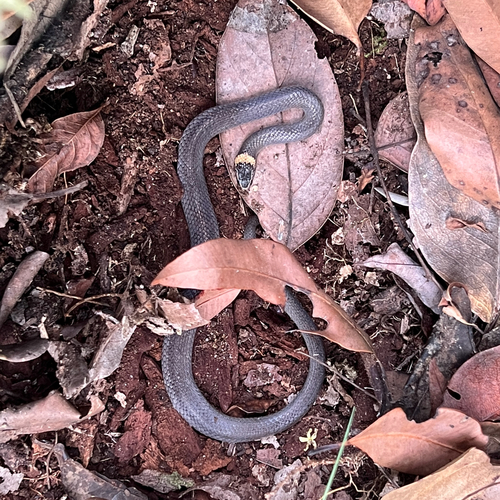
White-crowned Snake
Cacophis harriettae
Global Distribution
Warmer areas are where this animal is recorded most often.
Parks Where Found
| # | Park | Country | Daily sighting probability |
|---|---|---|---|
| 1 | Kakadu National Park | 🇦🇺 Australia | |
| 2 | Litchfield National Park | 🇦🇺 Australia | |
| 3 | Lamington National Park | 🇦🇺 Australia |