
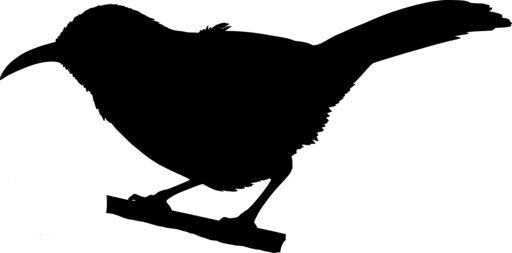
Rusty-cheeked Scimitar-Babbler
Pomatorhinus erythrogenys
Silhouette: Jiekun He · PhyloPic
- KingdomAnimalia (Animals)
- PhylumChordata (Chordates)
- ClassAves (Birds)
- OrderPasseriformes (Perching Birds)
- FamilyTimaliidae (Tree-Babblers, Scimitar-Babblers, and Allies)
- GenusPomatorhinus (Eyebrowed Scimitar-Babblers)
- SpeciesPomatorhinus erythrogenys (Rusty-cheeked Scimitar-Babbler)
About the Rusty-cheeked Scimitar-Babbler
The rusty-cheeked scimitar babbler (Erythrogenys erythrogenys) is a passerine bird in the babbler family Timaliidae that is found in the Himalayas from northeast Pakistan to Bhutan. It was formerly considered as conspecific with the red-eyed scimitar babbler that is found in eastern Myanmar and northwestern Thailand.
The rusty-cheeked scimitar babbler was formally described in 1831 by the Irish zoologist Nicholas Vigors under the binomial name Pamatorhynus erythrogenys in John Gould's book "Century of Birds from the Himalaya Mountains". The description was accompanied by a hand coloured illustration drawn by Elizabeth Gould. In 1924 the type locality was restricted to "Shimla–Almora". The specific epithet combines the Ancient Greek ερυθρος/eruthros meaning "red" with γενυος/genuos meaning "cheek". The rusty-cheeked scimitar babbler is now one of seven scimitar babblers placed in the genus Erythrogenys. The species was formerly regarded as conspecific with the red-eyed scimitar babbler (Erythrogenys imberbis) that is found in eastern Myanmar and northwestern Thailand. The red-eyed scimitar babbler is now considered as a separate species based on the differences in morphology... Wikipedia →
Recent sightings of Rusty-cheeked Scimitar-Babbler in Langtang National Park
LIVEiNaturalistClosest Relatives at Langtang National Park

 Streak-breasted Scimitar-Babbler
Pomatorhinus ruficollis

Slender-billed Scimitar-Babbler
Pomatorhinus superciliaris

White-browed Scimitar-Babbler
Pomatorhinus schisticeps

Gray-throated Babbler
Stachyris nigriceps

 Large-billed Crow
Corvus macrorhynchos

 Blue Whistling-Thrush
Myophonus caeruleus

Streaked Laughingthrush
Trochalopteron lineatum

Rufous Sibia
Heterophasia capistrata

 Green-backed Tit
Parus monticolus

 Grey-hooded Warbler
Phylloscopus xanthoschistos

Blue-fronted Redstart
Phoenicurus frontalis

Variegated Laughingthrush
Trochalopteron variegatum
Global Distribution
Warmer areas are where this animal is recorded most often.
Parks Where Found
| # | Park | Country | Daily sighting probability |
|---|---|---|---|
| 1 | Jim Corbett National Park | 🇮🇳 India | |
| 2 | Royal Manas National Park | 🇧🇹 Bhutan | |
| 3 | Langtang National Park | 🇳🇵 Nepal | |
| 4 | Khangchendzonga National Park | 🇮🇳 India | |
| 5 | Chitwan National Park | 🇳🇵 Nepal |
Quick answers
What are the chances of seeing a Rusty-cheeked Scimitar-Babbler in Langtang National Park?
About 10% of wildlife watchers report a Rusty-cheeked Scimitar-Babbler sighting in Langtang National Park, based on 29 verified sightings from GBIF citizen-science data.
When is the best time to see Rusty-cheeked Scimitar-Babbler in Langtang National Park?
June has the highest sighting rate for Rusty-cheeked Scimitar-Babbler in Langtang National Park in our monthly data.