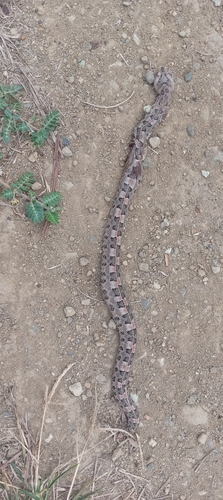

Manabí Hognose Viper
Porthidium arcosae
Silhouette: Steven Traver · PhyloPic
- KingdomAnimalia (Animals)
- PhylumChordata (Chordates)
- ClassSquamata
- FamilyViperidae (Vipers)
- GenusPorthidium (Hognosed Vipers)
- SpeciesPorthidium arcosae (Manabí Hognose Viper)
About the Manabí Hognose Viper
Porthidium arcosae, or the Manabí hognose pitviper, is an endangered species of hognose pit viper endemic to the central Pacific coast of Ecuador. Originally considered a subspecies of P. lansbergii, P. arcosae was elevated to species rank in 1993.
Porthidium arcosae is a small, triangular headed snake with an upturned snout and alternating beige and brown rectangular markings along its dorsal side. In terms of total length (snout to tail tip) males can reach around 77 cm, with females reaching around 63 cm.
This snake can be distinguished from similar species via its various scale morphologies. As with all pitvipers, Porthidium archosae is venomous. Its venom is hemotoxic and causes intense pain, inflammation, and hematomas in humans, but does not appear to be deadly and may be recoverable without the use of antivenom - although this is not covered extensively and is fairly controversia]. They only bite if harassed, instead having evolved to be camouflaged first and foremost.
Accurate to March 2026, Porthidium arcosae is considered endangered due to its small habitat range which is shrinking and lowering in quality and the threat of... Wikipedia →
Recent sightings of Manabí Hognose Viper in Machalilla National Park
LIVEiNaturalistClosest Relatives at Machalilla National Park


Global Distribution
Warmer areas are where this animal is recorded most often.
Parks Where Found
| # | Park | Country | Daily sighting probability |
|---|---|---|---|
| 1 | Machalilla National Park | 🇪🇨 Ecuador |
More parks will be added in future updates.