Main Ridge Forest Reserve
🇹🇹 Trinidad and Tobago
🐦 Blue-backed Manakin Lek SpectacleSituated on the steep tropical rainforest slopes of Tobago, Main Ridge Forest Reserve stands as a legally safeguarded mountain sanctuary of dense greenery and damp walking trails. Towering hardwood trees, giant ferns, and tangled vines cloak the steep terrain, creating a dense canopy that shelters specialized island wildlife along muddy mountain footpaths.
11.271° N 60.657° W
Wildlife
⭐ Iconic Species
 ★
★  White-tailed Sabrewing
Campylopterus ensipennis
 ★
★  Trinidad Motmot
Momotus bahamensis
 ★
★  Blue-backed Manakin
Chiroxiphia pareola
 ★
★  Rufous-vented Chachalaca
Ortalis ruficauda
📊 Most Spotted

 Bananaquit
Coereba flaveola

 Barred Antshrike
Thamnophilus doliatus

 Orange-winged Parrot
Amazona amazonica

 Rufous-tailed Jacamar
Galbula ruficauda

 Grenada Tree Anole
Anolis richardii

 Trinidad Ameiva
Ameiva atrigularis

 Tropical Kingbird
Tyrannus melancholicus

Rufous-breasted Hermit
Glaucis hirsutus

Blue-gray Tanager
Thraupis episcopus

 Turniptail Gecko
Thecadactylus rapicauda

 Eastern Cane Toad
Rhinella marina

Copper-rumped Hummingbird
Saucerottia tobaci
📊 Most Spotted

 Red-tailed Squirrel
Sciurus granatensis

 Jamaican Fruit-eating Bat
Artibeus jamaicensis

 Crested Agouti
Dasyprocta leporina

 Brazilian Spiny Tree Rat
Makalata didelphoides
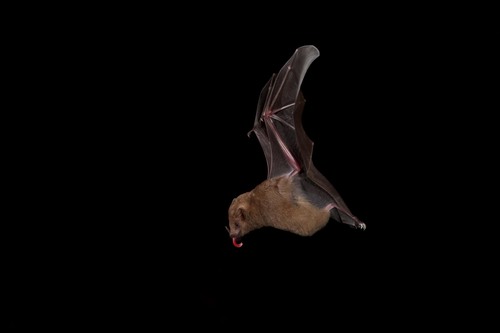
 Miller's long-tongued bat
Glossophaga longirostris

Flat-faced Fruit-eating Bat
Artibeus planirostris

 Seba's Short-tailed Bat
Carollia perspicillata

 Nine-banded Armadillo
Dasypus novemcinctus

Geoffroy's tailless bat
Anoura geoffroyi

 Robinson's Mouse Opossum
Marmosa robinsoni

Gervais's Fruit Eating Bat
Artibeus cinereus

 Attenborough's Myotis
Myotis attenboroughi
⭐ Iconic Species
★ White-tailed Sabrewing
Campylopterus ensipennis
★ Trinidad Motmot
Momotus bahamensis
★ Blue-backed Manakin
Chiroxiphia pareola
★ Rufous-vented Chachalaca
Ortalis ruficauda
📊 Most Spotted
Bananaquit
Coereba flaveola
Barred Antshrike
Thamnophilus doliatus
Orange-winged Parrot
Amazona amazonica
Rufous-tailed Jacamar
Galbula ruficauda
Tropical Kingbird
Tyrannus melancholicus
Rufous-breasted Hermit
Glaucis hirsutus
Blue-gray Tanager
Thraupis episcopus
Copper-rumped Hummingbird
Saucerottia tobaci

White-lined Tanager
Tachyphonus rufus

 Rufous-breasted Wren
Pheugopedius rutilus

Crested Oropendola
Psarocolius decumanus

 Yellow-legged Thrush
Turdus flavipes
📊 Most Spotted
Grenada Tree Anole
Anolis richardii
Trinidad Ameiva
Ameiva atrigularis
Turniptail Gecko
Thecadactylus rapicauda

 Tropical House Gecko
Hemidactylus mabouia

Common House Gecko
Hemidactylus frenatus

 Eyespot Gecko
Gonatodes ocellatus

 Dormilona
Corallus ruschenbergerii

 Green Iguana
Iguana iguana

Boa Constrictor
Boa constrictor
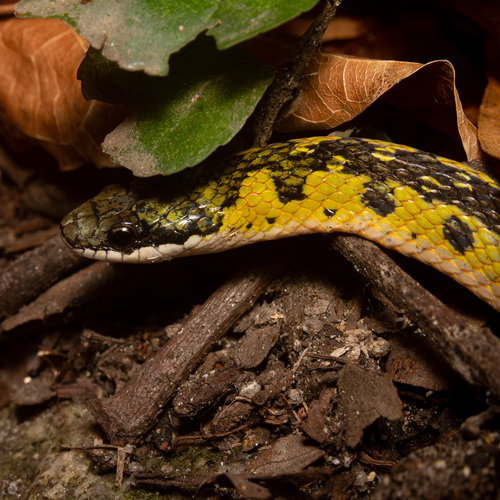
 Black-backed Snake
Erythrolamprus melanotus
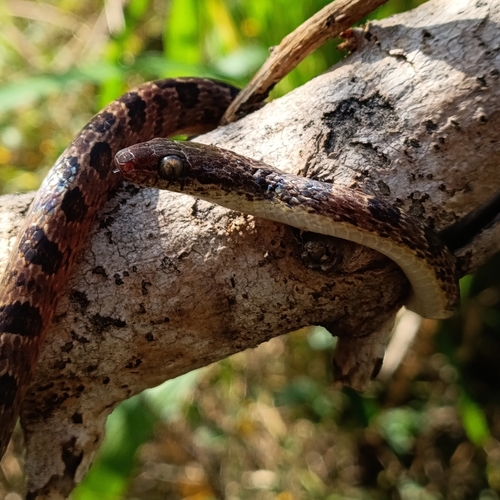
 Venezuelan Cat-eyed Snake
Leptodeira ashmeadii

Cloudy Snail-eating Snake
Sibon nebulatus
📊 Most Spotted
Eastern Cane Toad
Rhinella marina

 Charlotteville Robber Frog
Pristimantis charlottevillensis

 Smooth-skinned Ditch Frog
Leptodactylus validus
Bloody Bay Litter Frog
Pristimantis turpinorum

Lesser Antilles Robber Frog
Pristimantis urichi

 Banana Tree Dwelling Frog
Boana platanera

Mount Tucuche Tree Frog
Flectonotus fitzgeraldi

Whistling Grass Frog
Leptodactylus fuscus

 Eastern Glass Frog
Hyalinobatrachium orientale

Red Snouted Tree Frog
Scinax ruber

 Forest Chirping Frog
Adenomera hylaedactyla

 Guayaquil Dwarf Frog
Engystomops pustulosus
Recent sightings in Main Ridge Forest Reserve
LIVEiNaturalistAnimal Events
1Blue-backed Manakin Lek Displays
Male Blue-backed Manakins gather at communal leks along Gilpin Trace, performing coordinated jump-and-wing-snap courtship dances
2Endemic Glass Frog Chorus
Once the rains set in, male Tobago glass frogs call from Heliconia leaves over Main Ridge's forest streams
3Sea Turtle Nesting
Leatherbacks (Tobago hosts one of the world's largest nesting populations) nest on northeast-Tobago beaches around Charlotteville, with hawksbills nesting onward.


Sighting Calendar
Average chance of spotting the park's most-spotted species, month by month
- 1Blue-backed Manakin Lek Displays
- 2Endemic Glass Frog Chorus
- 3Sea Turtle Nesting
Sighting Zones
Warmer areas are where all species together are recorded most often.
Essentials
Climate
Quick answers
What animals can you see in Main Ridge Forest Reserve?
The most likely sightings are Trinidad Motmot (seen by about 90% of wildlife watchers), Bananaquit (seen by about 90% of wildlife watchers), Blue-backed Manakin (seen by about 80% of wildlife watchers), Barred Antshrike (seen by about 80% of wildlife watchers), Orange-winged Parrot (seen by about 80% of wildlife watchers) — among 471 recorded vertebrate species, based on citizen-science data from GBIF.
When is the best time to visit Main Ridge Forest Reserve for wildlife?
January has the highest combined sighting rate for the park's top species in our month-by-month GBIF data. The full sighting calendar on this page shows each species' best months.
Can you see White-tailed Sabrewing in Main Ridge Forest Reserve?
Yes — about 70% of wildlife watchers report a White-tailed Sabrewing sighting in Main Ridge Forest Reserve, based on 414 verified sightings from GBIF citizen-science data.
Can you see Trinidad Motmot in Main Ridge Forest Reserve?
Yes — about 90% of wildlife watchers report a Trinidad Motmot sighting in Main Ridge Forest Reserve, based on 668 verified sightings from GBIF citizen-science data.
Can you see Blue-backed Manakin in Main Ridge Forest Reserve?
Yes — about 80% of wildlife watchers report a Blue-backed Manakin sighting in Main Ridge Forest Reserve, based on 523 verified sightings from GBIF citizen-science data.
Can you see Rufous-vented Chachalaca in Main Ridge Forest Reserve?
Yes — about 70% of wildlife watchers report a Rufous-vented Chachalaca sighting in Main Ridge Forest Reserve, based on 396 verified sightings from GBIF citizen-science data.
Where Wildlife Score
How good is this park for seeing wildlife?Biodiversity
GoodHow rich is the wildlife?
Sighting
Very goodHow likely to see animals?
Experience
Very goodHow easy and pleasant is the visit?


