


Northern Cat-eyed Snake
Leptodeira septentrionalis
Silhouette: PhyloPic · PhyloPic
- KingdomAnimalia (Animals)
- PhylumChordata (Chordates)
- ClassSquamata
- FamilyColubridae (Colubrid Snakes)
- GenusLeptodeira (Cat-eyed Snakes)
- SpeciesLeptodeira septentrionalis (Northern Cat-eyed Snake)
About the Northern Cat-eyed Snake
Leptodeira septentrionalis, the northern cat-eyed snake, is a species of medium-sized, slightly venomous snake, found from southern Texas to Costa Rica. The northern cat eye is medium size (up to 1 m [3.3 ft]). In general females are slightly longer than males. They have smooth scales, with a dark brown line or spot beside the eye and dark brown blotches (which can fuse to form a zigzag) running down their backs. These spots may vary in pattern geographically. Its head is distinctly wider than its neck and it has large bulging eyes with reddish irises and light brown elliptical pupils.
The northern cat eye is primarily arboreal and entirely nocturnal. At night, it hunts for frogs and their eggs and tadpoles; it is particularly known for feeding on those of the red-eyed tree frog. It swallows eggs, tadpoles, and small frogs alive but kills larger frogs with mild venom from its enlarged, grooved rear fangs. It will also consume lizards, toads, salamanders, small fish, and mice. When threatened it is able to flatten its head and spread its jaws although it rarely bites people.
The Northern cat eye is oviparous and produces... Wikipedia →
Recent sightings of Northern Cat-eyed Snake in Montes Azules Biosphere Reserve
LIVEiNaturalistClosest Relatives at Montes Azules Biosphere Reserve

 Red Coffee Snake
Ninia sebae

 Blunthead Tree Snake
Imantodes cenchoa

Speckled Racer
Drymobius margaritiferus

Mexican Parrot Snake
Leptophis mexicanus

Puffing Snake
Phrynonax poecilonotus

Chicken Snake
Spilotes pullatus
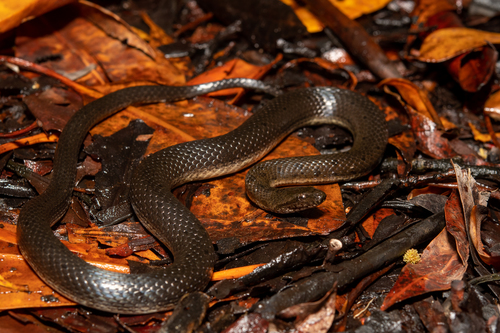
Orangebelly Swamp Snake
Tretanorhinus nigroluteus

Black-striped Snake
Coniophanes imperialis

 Central American Milksnake
Lampropeltis abnorma

False Fer-de-lance
Xenodon rabdocephalus

Dryad Snake
Mastigodryas melanolomus
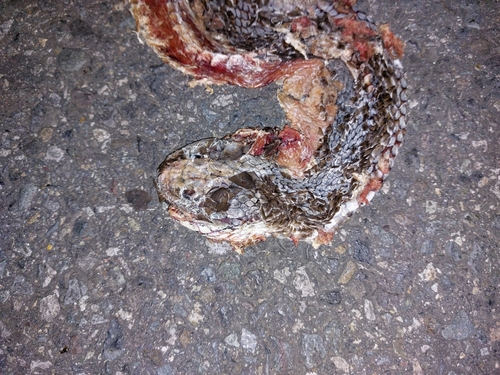
Neotropical Whip Snake
Masticophis mentovarius
Global Distribution
Warmer areas are where this animal is recorded most often.
Parks Where Found
| # | Park | Country | Daily sighting probability |
|---|---|---|---|
| 1 | Pico Bonito National Park | 🇭🇳 Honduras | |
| 2 | Calakmul Biosphere Reserve | 🇲🇽 Mexico | |
| 3 | Montes Azules Biosphere Reserve | 🇲🇽 Mexico | |
| 4 | El Triunfo | 🇲🇽 Mexico | |
| 5 | Cockscomb Basin Wildlife Sanctuary | 🇧🇿 Belize | |
| 6 | Tikal National Park | 🇬🇹 Guatemala | |
| 7 | Sian Ka'an Biosphere Reserve | 🇲🇽 Mexico | |
| 8 | Cañón del Sumidero National Park | 🇲🇽 Mexico |
Quick answers
What are the chances of seeing a Northern Cat-eyed Snake in Montes Azules Biosphere Reserve?
About 10% of wildlife watchers report a Northern Cat-eyed Snake sighting in Montes Azules Biosphere Reserve, based on 10 verified sightings from GBIF citizen-science data.
When is the best time to see Northern Cat-eyed Snake in Montes Azules Biosphere Reserve?
July has the highest sighting rate for Northern Cat-eyed Snake in Montes Azules Biosphere Reserve in our monthly data.