


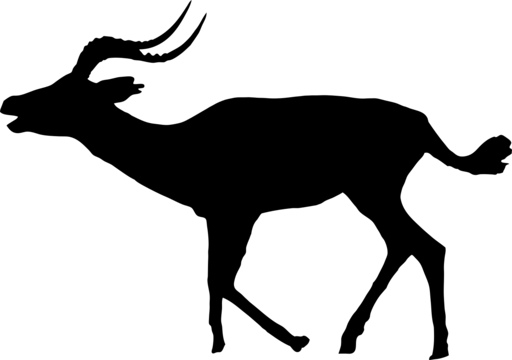
Oribi
Ourebia ourebi
Silhouette: [unknown] · PhyloPic
- KingdomAnimalia (Animals)
- PhylumChordata (Chordates)
- ClassMammalia (Mammals)
- OrderArtiodactyla (Even-toed Ungulates and Cetaceans)
- FamilyBovidae (Bovids)
- GenusOurebia (Oribis)
- SpeciesOurebia ourebi (Oribi)
About the Oribi
The oribi (Ourebia ourebi) is a small antelope found in eastern, southern and western Africa. The sole member of its genus, it was described by the German zoologist Eberhard August Wilhelm von Zimmermann in 1783. While this is the only member in the genus Ourebia, eight subspecies are identified. The oribi reaches nearly 50–67 centimetres (20–26 in) at the shoulder and weighs 12–22 kilograms (26–49 lb). It possesses a slightly raised back, and long neck and limbs. The glossy, yellowish to rufous brown coat contrasts with the white chin, throat, underparts and rump. Only males possess horns; the thin, straight horns, 8–18 centimetres (3.1–7.1 in) long, are smooth at the tips and ringed at the base.
Typically diurnal, the oribi is active mainly during the day. Small herds of up to four members are common; males defend their group's territory, 25–100 hectares (62–247 acres) large. It is primarily a grazer, and prefers fresh grasses but also browses occasionally. A seasonal breeder, the time when mating occurs varies geographically. Unlike all other small antelopes, oribi can exhibit three types of mating systems, depending on the habitat – polyandry, polygyny and polygynandry. Gestation lasts for six to seven months, following which a single calf is born; births peak from November to December in southern Africa. Weaning takes place at four to five months.
The oribi occurs in a variety of habitats – from savannahs, floodplains and tropical grasslands with 10–100 centimetres (3.9–39.4 in) tall grasses to montane grasslands at low altitudes, up to 2,000 metres (6,600 ft) above the sea level. This antelope is highly sporadic in distribution, ranging from Senegal in the west to Ethiopia and Eritrea in the east and southward to Angola and the Eastern Cape (South Africa). The oribi has been classified as Least Concern by the IUCN; numbers have declined due to agricultural expansion and competition from livestock. Wikipedia →
Recent sightings of Oribi in Niokolo-Koba National Park
LIVEiNaturalistClosest Relatives at Niokolo-Koba National Park

 Northern Bushbuck
Tragelaphus scriptus

 Waterbuck
Kobus ellipsiprymnus

 Kob
Kobus kob

 Roan Antelope
Hippotragus equinus

 Red-Flanked Duiker
Cephalophus rufilatus

 Bush Duiker
Sylvicapra grimmia

 African Buffalo
Syncerus caffer

 Common Hippopotamus
Hippopotamus amphibius

 Common Warthog
Phacochoerus africanus
Global Distribution
Warmer areas are where this animal is recorded most often.
Parks Where Found
| # | Park | Country | Daily sighting probability |
|---|---|---|---|
| 1 | Murchison Falls National Park | 🇺🇬 Uganda | |
| 2 | Kidepo Valley National Park | 🇺🇬 Uganda | |
| 3 | Akagera National Park | 🇷🇼 Rwanda | |
| 4 | Niokolo-Koba National Park | 🇸🇳 Senegal | |
| 5 | Gorongosa National Park | 🇲🇿 Mozambique | |
| 6 | Masai Mara National Reserve | 🇰🇪 Kenya | |
| 7 | Serengeti National Park | 🇹🇿 Tanzania | |
| 8 | Kafue National Park | 🇿🇲 Zambia | |
| 9 | Liwonde National Park | 🇲🇼 Malawi | |
| 10 | Ruaha National Park | 🇹🇿 Tanzania | |
| 11 | Addo Elephant National Park | 🇿🇦 South Africa |
Quick answers
What are the chances of seeing a Oribi in Niokolo-Koba National Park?
About 40% of wildlife watchers report a Oribi sighting in Niokolo-Koba National Park, based on 11 verified sightings from GBIF citizen-science data.
When is the best time to see Oribi in Niokolo-Koba National Park?
February has the highest sighting rate for Oribi in Niokolo-Koba National Park in our monthly data.