

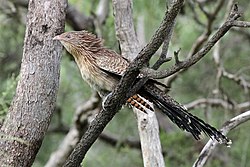
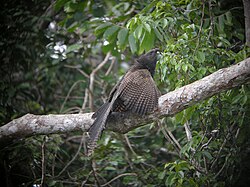


Pheasant Coucal
Centropus phasianinus
Silhouette: Nicolas Huet le Jeune and Jean-Gabriel Prêtre (vectorized by T. Michael Keesey) · PhyloPic
- KingdomAnimalia (Animals)
- PhylumChordata (Chordates)
- ClassAves (Birds)
- OrderCuculiformes (Cuckoos)
- FamilyCuculidae (Cuckoos)
- GenusCentropus (Coucals)
- SpeciesCentropus phasianinus (Pheasant Coucal)
About the Pheasant Coucal
The pheasant coucal (Centropus phasianinus) is a species of cuckoo in the family Cuculidae. It is found in Australia, Timor and New Guinea. Its natural habitats are subtropical or tropical moist lowland forests and subtropical or tropical mangrove forests. It has adapted well to canefields in northern Australia. The pheasant coucal is unusual among Australian cuckoos in that it incubates and raises its own young instead of laying its eggs in the nest of another species.
The ornithologist John Latham described the pheasant coucal as Cuculus phasianinus in 1801, based on a drawing by Thomas Watling. Six subspecies are recognised, two of which are found in Australia with an abrupt demarcation between them occurring around the Burdekin River in Central Queensland. South is the nominate subspecies phasianinus, while north is the subspecies melanurus, which is larger in size and has darker and more prominent black bands on its rectrices. The little known subspecies mui is found in eastern Timor, and has distinctive white plumage of its upperparts, head and breast. The remaining three subspecies are found in New Guinea, and all have darker plumage than other forms. Subspecies... Wikipedia →
Recent sightings of Pheasant Coucal in Nitmiluk National Park
LIVEiNaturalistClosest Relatives at Nitmiluk National Park


Global Distribution
Warmer areas are where this animal is recorded most often.
Parks Where Found
| # | Park | Country | Daily sighting probability |
|---|---|---|---|
| 1 | Kakadu National Park | 🇦🇺 Australia | |
| 2 | Daintree National Park | 🇦🇺 Australia | |
| 3 | Litchfield National Park | 🇦🇺 Australia | |
| 4 | Nitmiluk National Park | 🇦🇺 Australia | |
| 5 | Springbrook National Park | 🇦🇺 Australia | |
| 6 | Lamington National Park | 🇦🇺 Australia | |
| 7 | Noosa National Park | 🇦🇺 Australia | |
| 8 | Booderee National Park | 🇦🇺 Australia | |
| 9 | Royal National Park | 🇦🇺 Australia |
Quick answers
What are the chances of seeing a Pheasant Coucal in Nitmiluk National Park?
About 20% of wildlife watchers report a Pheasant Coucal sighting in Nitmiluk National Park, based on 75 verified sightings from GBIF citizen-science data.
When is the best time to see Pheasant Coucal in Nitmiluk National Park?
November has the highest sighting rate for Pheasant Coucal in Nitmiluk National Park in our monthly data.