

Creeping Vole
Microtus oregoni
Silhouette: Edwin Price · PhyloPic
- KingdomAnimalia (Animals)
- PhylumChordata (Chordates)
- ClassMammalia (Mammals)
- OrderRodentia (Rodents)
- FamilyCricetidae (Hamsters, Voles, Lemmings, and Allies)
- GenusMicrotus (Meadow Voles)
- SpeciesMicrotus oregoni (Creeping Vole)
About the Creeping Vole
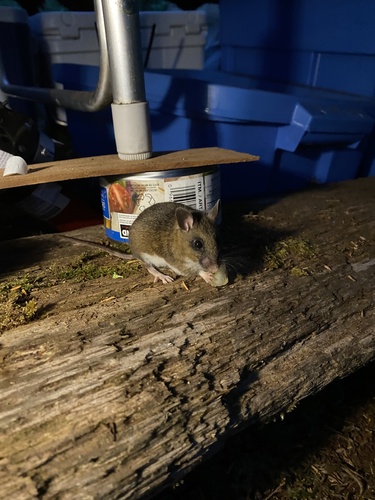
The creeping vole (Microtus oregoni), sometimes known as the Oregon meadow mouse, is a small rodent in the family Cricetidae. Ranging across the Pacific Northwest of North America, it is found in forests, grasslands, woodlands, and chaparral environments. The small-tailed, furry, brownish-gray mammal was first described in the scientific literature in 1839, from a specimen collected near the mouth of the Columbia River. The smallest vole in its range, it weighs around 19 g (11⁄16 oz). At birth, they weigh 1.6 g (1⁄16 oz), are naked, pink, unable to open their eyes, and the ear flaps completely cover the ear openings. Although not always common throughout their range, there are no major concerns for their survival as a species.
The animal was described in 1839 by John Bachman. The original scientific name was Arvicola oregoni with a common name of the Oregon meadow mouse. The type specimen was an older male collected November 2, 1836 near the mouth of the Columbia River in Oregon. The specimen had been submitted to Bachman for review by John Kirk Townsend. Subsequent authorities state that it was collected at Astoria, Oregon, which is at the mouth of the Columbia... Wikipedia →
Recent sightings of Creeping Vole in Olympic National Park
LIVEiNaturalistClosest Relatives at Olympic National Park

 Townsend's Vole
Microtus townsendii

 Deer Mouse
Peromyscus maniculatus

 Bushy-tailed Wood Rat
Neotoma cinerea

 Muskrat
Ondatra zibethicus
Northwestern Deermouse
Peromyscus keeni

 Southern Red-backed Vole
Myodes gapperi

 Douglas' Squirrel
Tamiasciurus douglasii

 Olympic Marmot
Marmota olympus

 Yellow-pine Chipmunk
Tamias amoenus

Townsend's Chipmunk
Tamias townsendii

American Red Squirrel
Tamiasciurus hudsonicus

 Eastern Gray Squirrel
Sciurus carolinensis
Global Distribution
Warmer areas are where this animal is recorded most often.
Parks Where Found
| # | Park | Country | Daily sighting probability |
|---|---|---|---|
| 1 | Olympic National Park | 🇺🇸 United States |
More parks will be added in future updates.